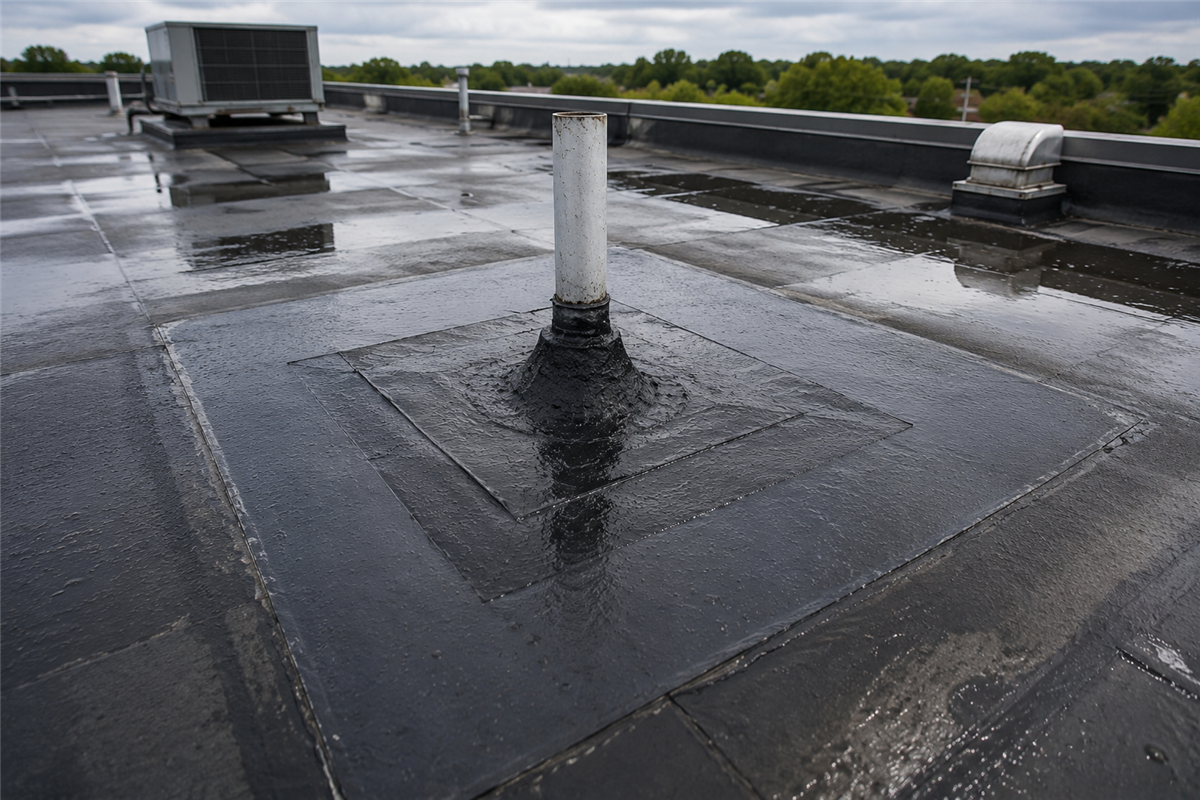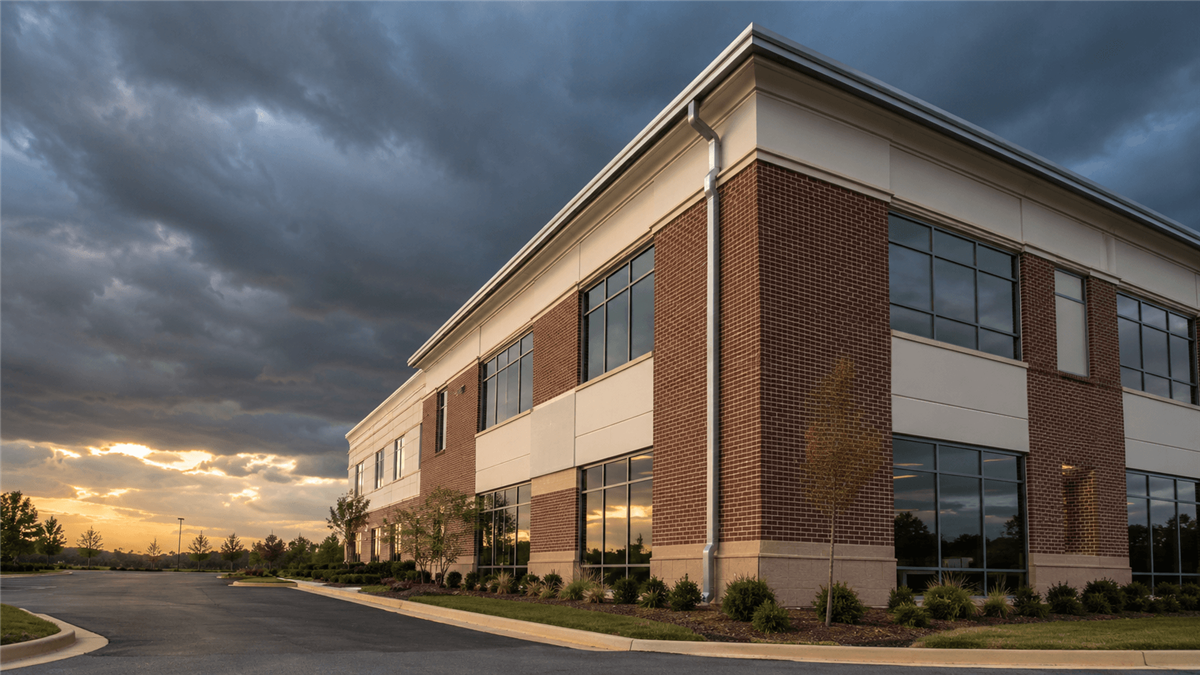
| Preparing commercial gutters for storm season involves a specific sequence of tasks: inspecting for structural issues like sag and seam separation, clearing debris, testing drainage flow, resealing joints with commercial-grade sealant, and documenting everything with timestamped photos for insurance purposes. Pairing these steps with a structured roof asset management program that includes scheduled inspections and condition scoring prevents the slow, compounding failures that turn minor gutter problems into major structural damage during heavy rain events. |
A clogged commercial gutter does more than cause water stains. It can compromise your roof membrane, saturate insulation, and lead to structural repairs that run into the tens of thousands. Most of that damage? Completely preventable.
With NOAA forecasting continued Atlantic storm activity and insurance underwriters digging deeper into building maintenance records, preparing commercial gutters for storm season belongs on this month's punch list.
This guide covers the full process: inspection sequence, debris management, flashing checks, and the documentation you need for insurance purposes. Whether you manage a single office building or a portfolio of retail centers and multi-family properties across the DMV region, you'll get a step-by-step approach you can act on today. You'll also find a framework that turns this from a last-minute scramble into a repeatable routine you can hand off to your maintenance team.
Why Commercial Gutters Fail During Storms
Most commercial gutter failures don't happen because of the storm itself. They happen because of what was already wrong before the first drop of rain fell. When you understand how the failure chain works, you can step in at the right stage and catch a minor issue before it turns into a five-figure repair.
Hidden Damage That Compounds Over Time
Commercial gutters on low-slope roofs face a different set of stresses than residential systems. Higher water volumes, longer horizontal runs, and constant exposure to HVAC condensation all wear down components in ways that aren't obvious from ground level. A hairline crack in a gutter seam might sit unnoticed for two full seasons. During that stretch, water seeps behind the fascia board, softens the substrate, and quietly rots the connection point between the gutter and the roof edge.
Debris buildup follows a similar pattern. According to Citywide Custom Gutters, wet leaves cling together and form thick mats that block water flow, and when drainage is restricted, overflow hits the roof, siding, and foundation. On a commercial building, that overflow volume is significantly larger, and the damage stacks up faster than most property managers expect. Sealant degradation around brackets, corrosion at downspout transitions, and micro-shifts from thermal expansion all build quietly between inspection cycles.
| The gutters that fail during storms rarely fail suddenly. They fail slowly over months, then all at once when the load exceeds what the weakened system can handle. |
How Drainage Failures Escalate Into Structural Problems
When a commercial gutter can't move water off the roof fast enough, the consequences reach well beyond water stains. Standing water backs up behind blocked drains and pools on the membrane surface. That ponding adds weight the roof deck wasn't designed to carry on a sustained basis, stresses flashing terminations, and speeds up membrane deterioration through constant moisture contact.
Once water breaches the membrane, it saturates the insulation layer underneath. Saturated insulation loses its thermal performance and adds dead weight that grows with every subsequent rain event. Over time, this cascading failure path moves from the gutter system to the membrane, through the insulation, and into the deck structure itself. At that point, you're no longer talking about gutter maintenance. You're looking at a capital roof replacement conversation that could have been avoided with consistent drainage system upkeep. That's exactly why preparing commercial gutters for storm season belongs on your operational calendar, not in your emergency response plan.
Preparing Commercial Gutters for Storm Season: A Step-by-Step Guide
Understanding why gutters fail is useful, but knowing exactly what to do about it, and in what order, is where the real payoff comes. Here's the sequence we recommend for commercial properties, whether you're managing a single warehouse or a dozen retail buildings across Northern Virginia and Maryland.
Step 1: Conduct a Full Visual and Structural Inspection
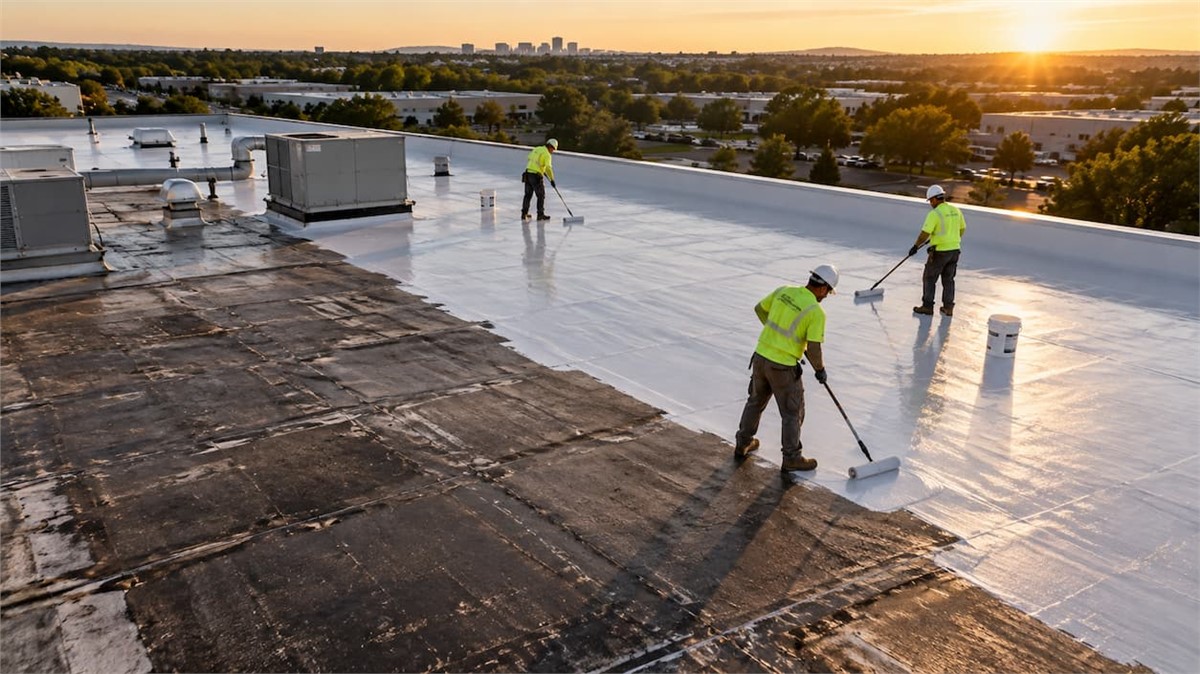
Start on the roof, not from the ground. Walk the full perimeter and examine every gutter run, downspout connection, and scupper opening. You're looking for visible sag, bracket separation, rust spots, and any sections where the gutter has pulled away from the fascia or roof edge. On low-slope commercial buildings, pay close attention to internal drains and the areas where the membrane meets the gutter line. That transition zone absorbs the most punishment over time.
While you're up there, check the pitch of each gutter run. Even a minor shift in slope, sometimes caused by thermal cycling or building settling, can turn a functioning gutter into a standing-water trap. If water isn't moving toward the downspout during a hose test, the pitch needs correction before storm season hits.
Step 2: Clear Debris and Test Drainage Flow
Remove all debris by hand or with a commercial gutter vacuum. Leaves, roofing granules, HVAC particulate, and bird nesting material all pile up between service visits. Once the channel is clean, run water through the entire system with a hose to confirm flow rate and spot any slow areas. Watch downspout exits at ground level closely. Restricted flow at the bottom usually means there's a clog further up the line that you can't see from the rooftop.
Step 3: Check Flashing, Seams, and Connection Points
Gutter seams and flashing terminations are where most leaks start. Inspect every joint for sealant cracking, separation, or corrosion. On commercial systems with long horizontal runs, thermal expansion and contraction put serious stress on these connection points across multiple seasons. Reseal any suspect joints with a commercial-grade polyurethane sealant. Silicone works for quick patches, but it won't hold up to the sustained water volume that commercial gutters handle.
Here's a quick breakdown of the most common sealant options for commercial gutter repairs, including where each one performs best and where it falls short:
Sealant Comparison for Commercial Gutter Repairs
| Sealant Type | Best Use Case | Durability | Limitations |
| Silicone | Temporary spot repairs | 1–3 years | Poor adhesion on wet surfaces; not paintable |
| Polyurethane | Seam and joint sealing on commercial runs | 5–10 years | Requires dry surface for application; longer cure time |
| Butyl rubber tape | Lap seams and sheet metal overlaps | 7–15 years | Difficult to apply in cold temperatures |
Step 4: Evaluate Gutter Guards and Protection Systems
If your building has gutter guards or screens, inspect them for damage, displacement, and debris buildup sitting on top of the guard itself. A guard that's shifted out of position can actually make drainage worse by deflecting water over the gutter edge instead of into it. According to Gingerich Guttering's seasonal maintenance guide, regular cleaning remains essential even with guards installed. They reduce debris accumulation, but they don't eliminate the need for hands-on maintenance.
Step 5: Document Conditions for Insurance Readiness
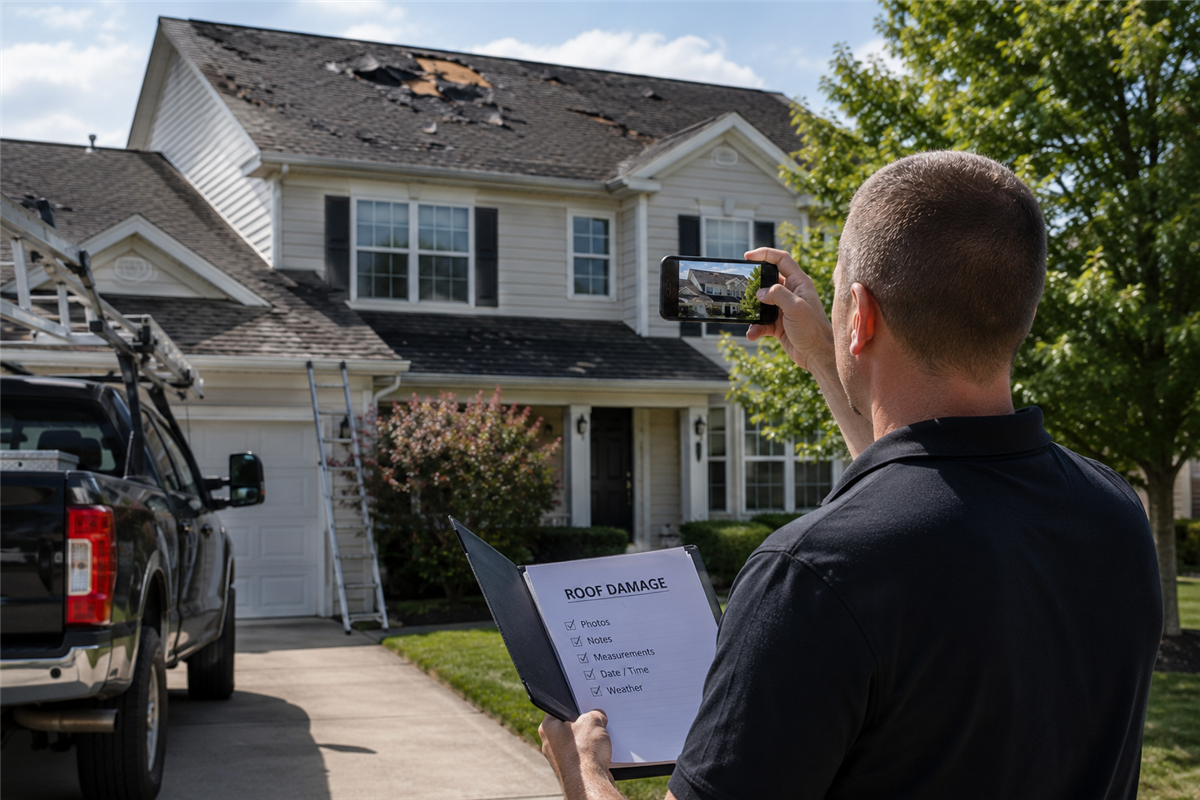
This step gets skipped constantly, and it costs property owners real money when claims get filed. Photograph every gutter section, downspout, and connection point. Record dates, note any repairs you've completed, and store everything in a centralized file tied to the property address. When a storm hits and you need to file a claim, having timestamped pre-storm documentation gives your adjuster a clear baseline to work from and puts you in a much stronger position during the settlement process.
| Preparing commercial gutters for storm season is about preventing water damage and building the documentation trail that protects your claim if damage does occur. |
DIY Maintenance vs. Professional Gutter Services
Not every gutter issue needs a contractor on-site. But not every task should fall to your building engineer armed with a ladder and a leaf blower, either. Understanding where that line sits can save you real money and prevent problems that snowball when the wrong person handles the wrong job.
What Property Managers Can Handle In-House
Your maintenance team can absolutely own the routine work. Ground-level downspout inspections, clearing visible debris from accessible gutter runs, and documenting conditions with photos and dates all belong in-house. If your building is single-story with safe roof access and your team has fall protection training, basic debris removal and hose-flow testing are reasonable tasks to keep on the internal calendar.
What matters most here is consistency. A quarterly walkthrough where someone checks downspout discharge points, looks for overflow staining on exterior walls, and flags anything unusual keeps small problems from going unnoticed. When you're preparing commercial gutters for storm season, these routine checks create the baseline that tells you whether conditions have shifted since the last service cycle.
| The goal of in-house maintenance isn't to replace professional service. It's to catch changes between professional visits so nothing sits unaddressed for months. |
When to Bring In a Certified Commercial Contractor
Once you move past surface-level cleaning, the risk-reward equation changes. Multi-story buildings, internal drainage systems on low-slope roofs, corroded flashing repairs, and gutter re-pitching all demand specialized equipment, fall protection systems, and experience reading how water behaves across a commercial roof assembly. A missed detail at a scupper transition or a poorly sealed gutter joint can cause more damage than the original problem.
Even with NOAA forecasting a below-normal Atlantic hurricane season, it only takes one significant rain event to expose a drainage weakness. That's why professional assessments matter regardless of seasonal predictions.
Here's a step-by-step decision process to help you determine when it's time to escalate from in-house maintenance to a certified contractor:
- Assess building height and access complexity: If your property is two stories or taller, or has parapet walls that limit safe roof-edge access, a licensed contractor with proper rigging should handle all gutter work.
- Identify the scope of the issue: Surface debris is an in-house job. Corroded brackets, separated seams, standing water in gutter channels, or visible sagging all point to structural problems that need professional diagnosis.
- Check warranty requirements: Many commercial roofing warranties require that maintenance and repairs be performed by certified contractors. Sending your maintenance crew onto the membrane could void coverage without anyone realizing it.
- Evaluate insurance documentation needs: If you're performing pre-storm prep specifically to strengthen an insurance claim position, a certified inspector's report carries far more weight with adjusters than internal maintenance logs.
- Review the last professional inspection date: If more than six months have passed since a certified roofer evaluated your drainage system, schedule one before storm season arrives, not after.
Following this sequence keeps your team focused on what they do well while making sure that higher-risk work gets handled by someone with the right certifications, insurance, and equipment to do it safely and correctly.
Is Your Commercial Roof a Managed Asset or a Future Emergency?
NV Roofing's complimentary inspection gives you a full condition report, capital risk assessment, and remaining service life estimate. A $2,400 value at no cost.
Claim My Free Inspection →
How a Roof Asset Management Program Protects Your Entire Drainage System
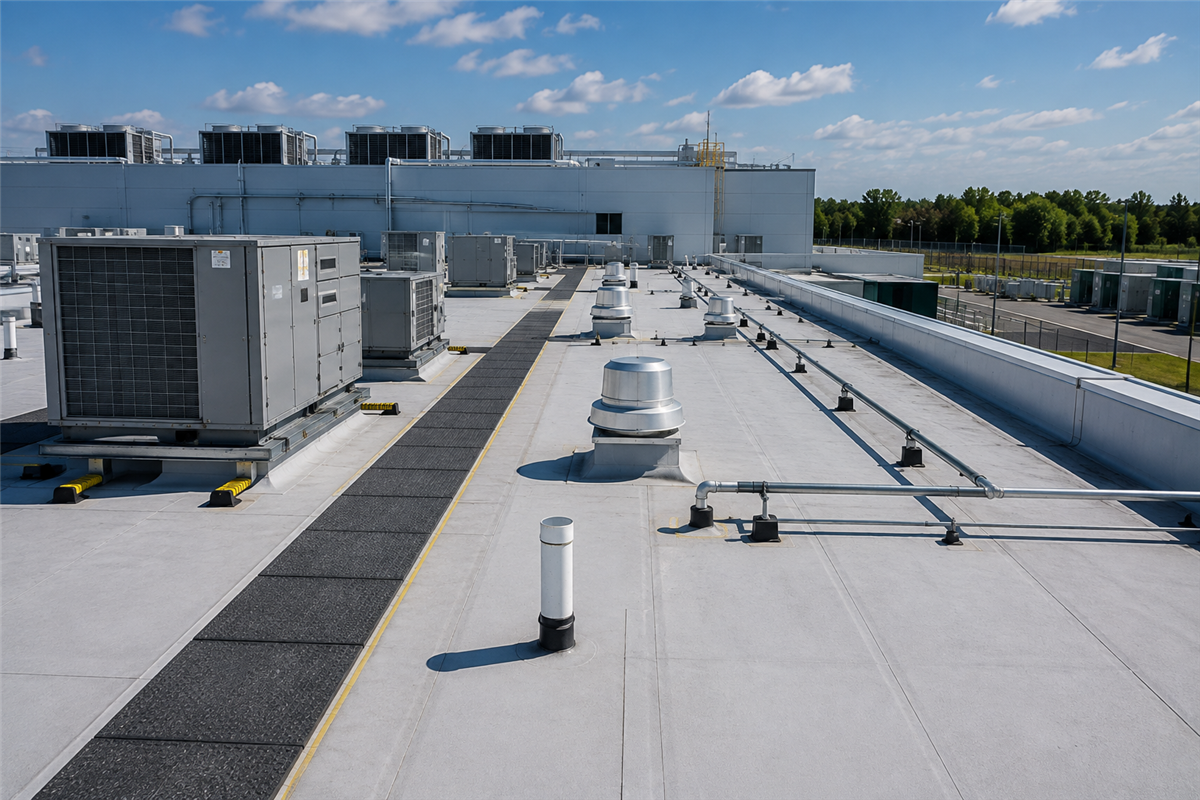
Gutters are one piece of a larger drainage assembly that includes the membrane, internal drains, scuppers, flashing, and the deck underneath. Treating gutter prep as a standalone task misses the bigger picture, and that's where a structured roof management program changes the equation entirely.
From Reactive Repairs to Predictable Maintenance With VAMP
Most commercial property managers are stuck in a familiar cycle: something breaks, someone calls a contractor, and the bill lands at three to five times what preventive work would have cost. NV Roofing's Value Asset Management Program (VAMP) was built specifically to break that cycle for commercial properties across the DMV region.
VAMP treats your roof, including the entire drainage system, as a capital asset. Certified inspectors evaluate every component twice a year (spring and fall), plus after any significant storm event. That means your gutters, flashing terminations, scuppers, and downspout connections get examined on a structured schedule alongside the membrane, insulation, and sheet metal systems. Nothing gets checked in a vacuum.
| When your gutter inspection happens as part of a full roof system evaluation, you catch the problems that live at the intersection of components, the exact spots where failures actually start. |
Using RCI Scores and Capital Planning to Stay Ahead of Storm Damage
Every VAMP inspection produces a Roof Condition Index (RCI) score, a numeric rating that tracks your roof's health over time. That score includes drainage performance, so if gutter pitch has shifted or a scupper is underperforming, the data shows it before storm season puts it to the test. For property managers running multi-building portfolios, RCI rankings let you compare buildings side by side and direct your budget where it matters most.
Here's how a reactive approach stacks up against the VAMP program across the factors that actually affect your bottom line:
Reactive Maintenance vs. VAMP Approach
| Factor | Reactive Maintenance | VAMP Program |
| Inspection frequency | After failure or complaint | Minimum twice per year + post-storm |
| Drainage system coverage | Gutters checked in isolation | Full system: membrane, drains, flashing, gutters |
| Budget planning | Unplanned emergency spending | Annual CapEx forecasts with repair cost estimates |
| Insurance positioning | No documented history | Timestamped reports and condition baselines |
| Expected roof lifespan | ~20 years | 40+ years |
That last column is what turns preparing commercial gutters for storm season from a one-off scramble into a built-in part of your property management workflow. VAMP's centralized portfolio database stores every inspection finding, repair record, and condition trend, exactly the documentation insurance underwriters want to see when you file a claim. NV Roofing is currently offering a complimentary commercial roof inspection (valued at $2,400) for qualifying properties up to 100,000 square feet in Northern Virginia, Maryland, and Washington, D.C. No obligation attached. Contact us to schedule yours before the next storm hits.
Keep Your Commercial Property Storm-Ready Year After Year
The difference between a gutter system that holds up during heavy rain and one that sends water into your building almost always comes down to what happened in the weeks before the storm. Every step covered here, from walking the perimeter and testing flow to sealing joints and building your documentation file, takes your drainage system from a question mark to a known quantity. That's the position you want to be in when the forecast turns ugly.
If you manage commercial properties in the DMV region, block time on your calendar right now for a full drainage review. Get your maintenance team on the routine tasks, bring in a certified contractor for the structural work, and make sure every finding is documented and stored where you can actually find it. The property managers who treat this as a recurring operating task instead of a seasonal emergency are the ones who avoid the six-figure surprises.
FAQs
How often should commercial gutters be professionally inspected during storm season?
At minimum, schedule a certified inspection in spring before storm season begins and again in fall, with an additional assessment after any significant weather event that brings heavy rain or high winds.
Can clogged gutters actually void my commercial roofing warranty?
Yes, many commercial roof warranties require documented, ongoing maintenance performed by certified professionals, and neglecting drainage upkeep can give the manufacturer grounds to deny a warranty claim.
What is the biggest mistake property managers make when preparing commercial gutters for storm season?
Skipping the documentation step is the most costly oversight because without timestamped photos and repair records, insurance adjusters have no pre-storm baseline to support your claim after damage occurs.
How does standing water in gutters lead to structural roof damage?
Blocked gutters cause water to pool on the membrane, which adds sustained weight the roof deck was not designed to carry and accelerates deterioration of the insulation and structural components underneath.
Should I rely on gutter guards to reduce the work involved in preparing commercial gutters for storm season?
Gutter guards slow debris accumulation but do not eliminate the need for hands-on cleaning and flow testing, since displaced guards can actually redirect water over the gutter edge and cause worse drainage problems.
Subscribe to NV Roofing's Blog