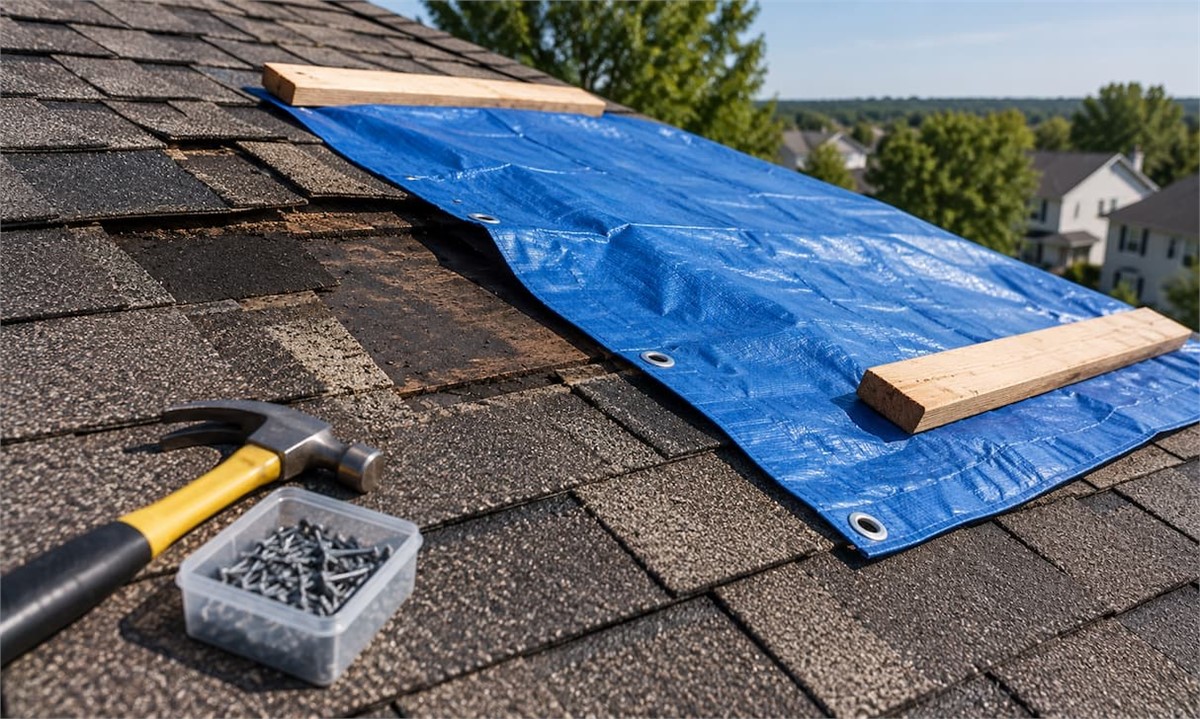
| Wind damage to a roof can start at winds as low as 45 mph, often showing up as lifted shingle edges, broken sealant bonds, and loosened flashing rather than obviously missing shingles. To protect a wind-damaged roof from costly secondary water damage, inspect the perimeter and edges after any significant storm, document everything with photos and written reports for insurance, and get a professional assessment to determine whether a targeted repair or full replacement is the right move. |
Most roof wind damage doesn't announce itself. You won't always see missing shingles scattered across the yard. Instead, you get lifted edges, cracked sealant strips, and tiny gaps that let water in slowly over weeks or months. That's the kind of damage that leads to expensive repairs because nobody catches it early enough.
A wind-damaged roof can start deteriorating at speeds as low as 45 mph, which the DMV region hits multiple times per year during storm season. This guide covers how to spot the damage (even when it's not obvious from the ground), what to document for your insurance claim, and when a repair makes more sense than a full replacement. Whether you own a home in Northern Virginia or manage a commercial property in the D.C. metro area, the steps here will help you act before a small problem turns into a big one.
What Wind Speeds Cause Roof Damage?
Not every windstorm looks dramatic, but even moderate gusts can compromise your roof's integrity. The threshold is lower than most homeowners expect. Sustained winds around 45 mph can begin lifting shingle edges, and once that process starts, the damage compounds with every gust that follows. For context, the National Severe Storms Laboratory (NSSL) classifies a thunderstorm as “severe” when winds gust above 57.5 mph, and straight-line winds from thunderstorms can exceed 120 mph. The DMV region sees storms in that range regularly, especially between late spring and early fall.
The “Peeling” Effect and Why It Matters
Think of your roof like a deck of cards laid flat. Wind doesn't hit a roof evenly. It accelerates as it moves over the edges and ridgeline, creating a low-pressure zone that pulls upward on roofing materials. This is the “peeling” effect, and it follows the same aerodynamic principle that lifts an airplane wing.
Once a single shingle tab lifts, the adhesive seal underneath breaks. That exposed edge catches the next gust like a sail, pulling the shingle further or ripping it off entirely. Here are the areas where roof wind damage typically begins:
- Corners and perimeter edges: Wind pressure concentrates at these points, making them the first to fail.
- Ridgeline and hip caps: These sit at the highest point and face wind from multiple directions.
- Flat commercial roofs: The same peeling principle applies to membrane seams and flashing along parapet walls, where uplift forces are strongest.
| Roof wind damage almost always starts at the edges and works inward. If you're going to inspect one area after a storm, check the perimeter first. |
Why Wind Damage Isn't Always Obvious
A wind-damaged roof doesn't always mean shingles scattered across your yard. In many cases, the real problem is a broken sealant bond that you can't see from street level. The shingle looks fine from 30 feet away, but it's no longer adhered to the one beneath it. Water gets underneath during the next rain, soaks into the decking, and you don't notice a problem until a ceiling stain appears weeks later.
Older roofs are especially prone to this kind of hidden failure. Asphalt shingles lose flexibility over time, and their adhesive strips weaken with UV exposure. A gust that wouldn't faze a five-year-old roof can cause real problems on one that's 15 or 20 years old. The same goes for commercial buildings with aging membrane systems, where wind can separate seams without tearing the material itself. That's exactly why a post-storm inspection matters even when everything looks intact from the ground. Catching a wind-damaged roof early, before water infiltration begins, can save thousands in interior repairs down the line.
How to Identify Roof Wind Damage
Knowing what to look for separates a quick fix from a six-month leak you never noticed. Roof wind damage shows up differently depending on the roofing material, the building type, and where the wind hit hardest. Here's how to read the signs so you can act before a small problem turns into a big one.
Visible Signs on Asphalt Shingles
Asphalt shingles are the most common residential roofing material in the DMV area, and they tend to give you the clearest visual clues after a storm. Walk around the perimeter of your home and look up. Curled or lifted shingle tabs are the number one giveaway. When wind gets underneath a shingle, it breaks the adhesive seal strip, and that tab stays raised even after the wind dies down. You'll also want to check for creased shingles, which look like someone folded them in half. Those creases compromise the waterproof barrier and will eventually crack open, letting moisture straight through to the decking.
Granule loss is another telltale sign of a wind-damaged roof. Check your gutters and downspouts for an unusual buildup of dark, sand-like material. A few granules washing off over time is normal, but a heavy deposit after a storm means the shingle surface has been scoured and is now exposed to UV breakdown that shortens its lifespan considerably.
Hidden Damage You Might Miss
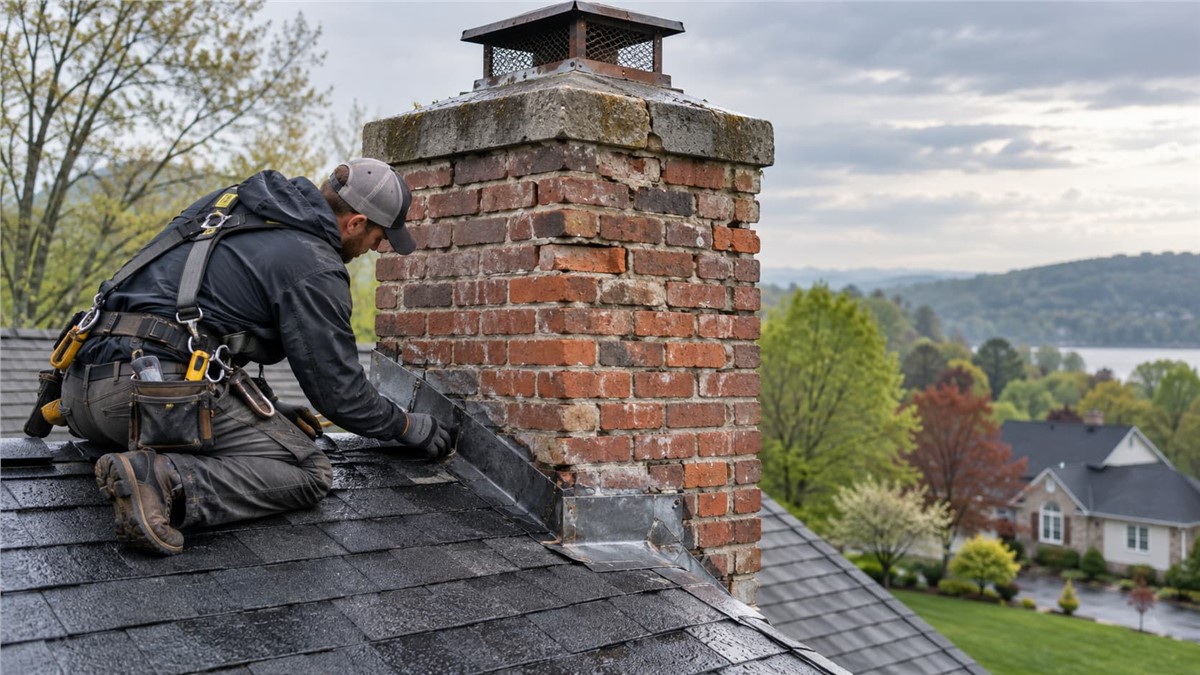
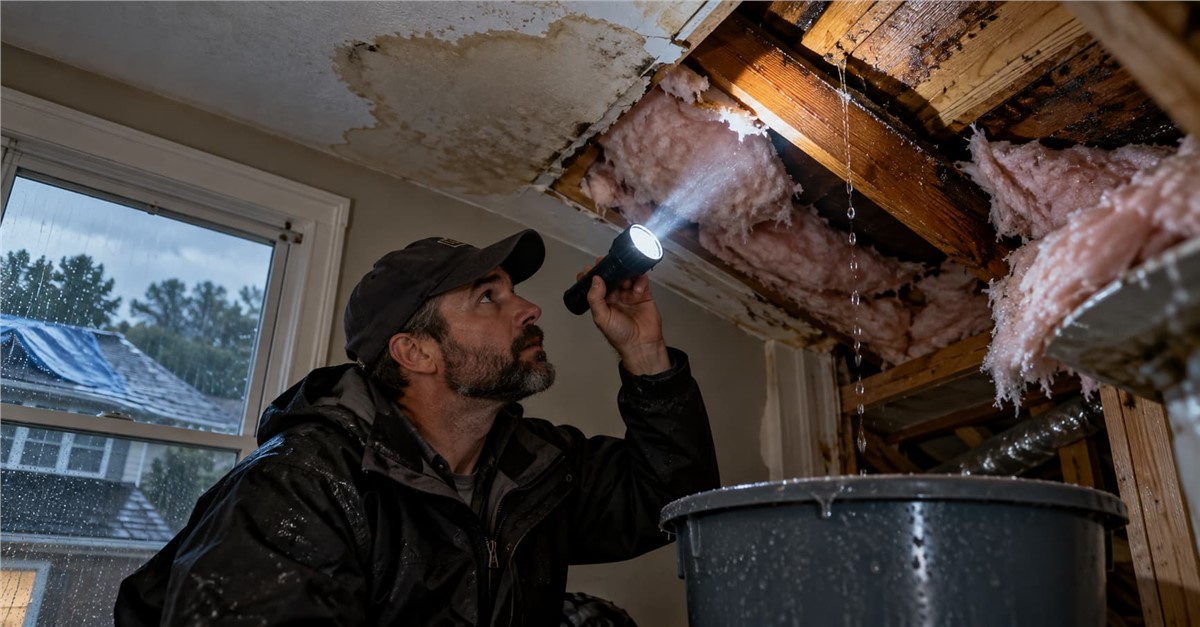
This is where things get tricky. Wind can loosen flashing around vents, chimneys, and skylights without visibly tearing anything. From ground level, everything looks fine. But the seal is broken, and water finds its way in during the next rain. Inside the house, look for water stains on ceilings or walls, particularly in the attic. Damp insulation or a musty smell up there often points back to a compromised roof that sustained damage weeks earlier.
| The most expensive wind damage repairs we see aren't from missing shingles. They're from small breaches that go undetected for months, allowing moisture to rot the decking underneath. |
Here are common hidden signs of roof wind damage that homeowners frequently overlook:
- Loosened flashing: gaps around chimneys, vents, or skylights that aren't visible from ground level
- Lifted nail heads: nails that have backed out slightly, creating entry points for water
- Compromised underlayment: the protective layer beneath the shingles can shift or tear during high winds without any exterior sign
- Attic moisture: damp spots, discolored wood, or mold growth on the underside of the roof deck
Flat and Commercial Roof Warning Signs
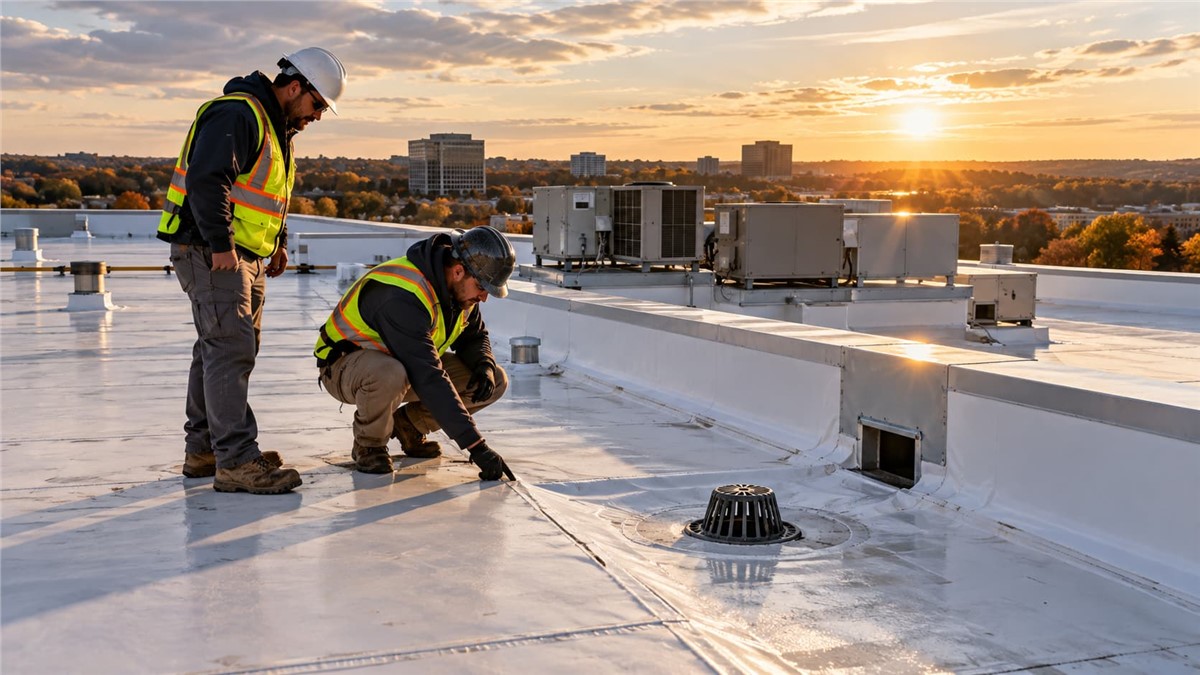
Commercial and flat roofs present a different set of challenges. Wind doesn't peel shingles here because there usually aren't any. Instead, look for lifted or bubbling membrane seams, displaced edge metal (coping or drip edge), and pooling water in new areas that drained properly before the storm. HVAC units and rooftop equipment can shift during high winds, tearing the membrane around their bases. On multi-story buildings, these issues are invisible from the ground, which makes scheduled inspections after storm events essential for property managers who want to catch a wind-damaged roof before it becomes a full-blown leak.
When to Schedule a Professional Inspection
A good rule of thumb: if sustained winds in your area exceeded 50 mph, or if you notice any of the signs above, get a professional on the roof. The National Weather Service classifies winds above 58 mph as “damaging,” but plenty of roof wind damage occurs below that threshold, especially on older roofs or buildings with deferred maintenance.
Don't rely on a visual check from the driveway. A trained inspector can identify lifted nail heads, compromised underlayment, and early-stage membrane separation that you simply can't see without getting up there. For homeowners, scheduling an inspection within a few days of a major storm protects both your roof and your ability to file a timely insurance claim. For commercial property managers, post-storm inspections should be part of your standard operating procedure, not something you get around to when a tenant reports a ceiling stain.
Documenting Wind Damage for Insurance Claims
Finding the damage is only half the battle. If you want your insurance company to cover the repair or replacement, you need to document everything properly before you touch anything. A weak claim with vague photos and no timeline is the fastest way to get underpaid or denied outright.
What Your Insurance Company Needs to See
Insurance adjusters aren't just looking for proof that your roof is damaged. They need evidence that wind caused the damage, that it happened during a specific weather event, and that the damage wasn't pre-existing. That distinction matters more than most homeowners and property managers realize, and it's where many claims fall apart.
Here's the documentation process that gives your claim the strongest foundation:
- Take wide-angle photos of every side of your building immediately after the storm, even areas that look fine, so you have a complete baseline to reference later.
- Capture close-ups of specific damage: lifted shingles, displaced flashing, granule accumulation in gutters, and any debris that struck the roof.
- Record the date, time, and weather conditions, and save any severe weather alerts you received on your phone or email.
- Schedule a professional roof inspection within a few days and request a written report with annotated photos that identify each damaged area.
- Make temporary repairs (like tarping an exposed area) to prevent further water intrusion, keep all receipts, and photograph the temporary fix before and after.
- File your claim promptly, as most homeowner policies in Virginia, Maryland, and D.C. require you to report damage within a reasonable timeframe (often within one year, though sooner is always better).
Following these steps creates a paper trail that connects the wind-damaged roof directly to the storm event. That's exactly what adjusters need to approve coverage, and it removes the guesswork that leads to disputes or lowball payouts.
| Can wind damage a roof without removing shingles? Absolutely. Broken sealant bonds, loosened flashing, and cracked underlayment are all common forms of roof wind damage that leave shingles visually intact but functionally compromised. |
Repair vs. Replacement: Making the Right Call
Not every wind-damaged roof needs a full tear-off. The decision comes down to how widespread the damage is, the age of your existing roof, and what your insurance policy actually covers.
This table breaks down the key factors that typically determine whether a repair or full replacement is the better path forward:
| Factor | Repair Usually Makes Sense | Replacement Usually Makes Sense |
| Damage extent | Isolated to one slope or small section | Spread across multiple slopes or areas |
| Roof age | Under 10 years old | Over 15 years with general wear |
| Decking condition | No water infiltration to substrate | Rotted or warped decking underneath |
| Insurance coverage | Claim covers targeted repairs | Claim covers full replacement (ACV or RCV) |
A professional inspection report helps here because it gives both you and your adjuster objective data to work from. For commercial properties, the calculus often includes tenant impact and long-term asset value, which means replacement sometimes makes more financial sense even when repairs are technically possible. Having that written assessment in hand puts you in a much stronger position during the claims process, regardless of which direction you go.
Is Your Commercial Roof a Managed Asset or a Future Emergency?
NV Roofing's complimentary inspection gives you a full condition report, capital risk assessment, and remaining service life estimate. A $2,400 value at no cost.
Claim My Free Inspection →
How NV Roofing Handles Wind-Damaged Roof Repairs
Identifying roof wind damage is one thing. Getting it fixed correctly, and fast, is another. At NV Roofing, we've been handling storm-related repairs across Northern Virginia, Maryland, and Washington, D.C. since 1963. Our process is built around minimizing disruption while making sure nothing gets overlooked.
Our Storm Damage and Emergency Response Process
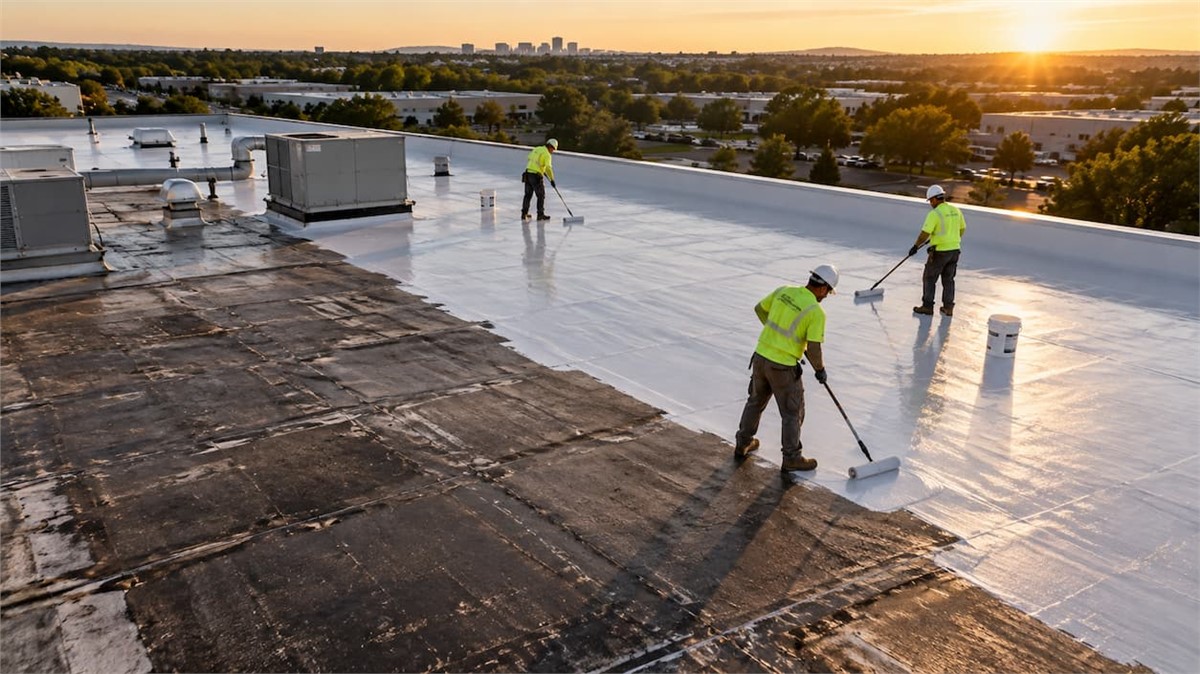
When a wind-damaged roof needs attention, waiting days for a callback isn't an option. This is especially true for commercial properties where a leak can disrupt tenants, damage inventory, or create liability concerns. Our storm damage and emergency response teams deploy quickly to assess the situation, secure exposed areas, and develop a repair plan tailored to the building and the specific damage involved.
For commercial clients (property managers, building owners, asset management firms), the process follows these steps:
- Initial assessment and emergency tarping: We stabilize the roof to prevent further water intrusion while the full scope of damage is evaluated.
- Detailed inspection and documentation: Our team photographs all affected areas, maps the damage, and prepares reports formatted for insurance submissions.
- Scope of work and scheduling: We present a clear repair plan with transparent pricing, then coordinate the timeline around your building's operations so tenants and business activities face minimal interruption.
- Repair execution and final walkthrough: Once the work is complete, we inspect every repair point with you and confirm the roof is sealed and performing as it should.
This same process applies to residential homeowners, scaled to fit the project. Either way, you get clear communication at every step.
Long-Term Protection Through Maintenance Programs
Fixing wind damage after it happens is necessary. But catching vulnerabilities before the next storm is where you save real money. Our NV Priority Plus maintenance program gives commercial property managers scheduled inspections, priority repair service, and ongoing condition reporting that extends roof life and reduces emergency costs over time.
| A maintenance program doesn't just protect your roof. It protects your budget by turning unpredictable emergency repairs into planned, manageable expenses. |
Here's how a reactive-only approach compares to a maintenance-based program when it comes to protecting your roof from wind damage and other storm-related issues:
Reactive Repairs vs. Maintenance Program
| Factor | Reactive Repairs Only | NV Priority Plus Program |
| Inspection frequency | After damage occurs | Scheduled (seasonal and post-storm) |
| Response priority | Standard queue | Priority scheduling |
| Cost predictability | Unpredictable spikes | Planned annual budgeting |
| Roof lifespan impact | Shortened by deferred issues | Extended through early intervention |
| Documentation for asset reporting | Ad hoc | Ongoing condition reports provided |
Whether you're managing an apartment complex, an office building, or a retail center, having a partner who already knows your roof's history makes all the difference when a storm hits. Contact Us to discuss your property's needs.
Protect Your Roof Before the Next Storm
A wind-damaged roof doesn't announce itself with some obvious, dramatic sign. It usually starts small: a lifted shingle edge, a broken adhesive seal, or a piece of flashing that shifted just enough for nobody to notice. hen water finds its way through. The gap between a simple repair and a serious, expensive problem almost always depends on how fast you catch it and act. Know what to look for, document what you find with photos and notes, and get a qualified roofer up there before the next rain turns a small opening into real structural damage.
If you own your home, make it a habit to inspect after every significant storm instead of waiting until something leaks. If you're responsible for commercial properties, schedule those inspections into your regular maintenance calendar and stick to them. Roof wind damage doesn't care about your schedule or your budget, and your response shouldn't wait either. The single best thing you can do right now is step outside, look up, and start paying attention to what your roof might already be trying to show you.
FAQs
What wind speed causes roof damage?
Roof damage can begin with sustained winds as low as 45 mph, particularly on older roofs where shingle adhesive has weakened over time. Gusts above 58 mph are classified as damaging by the National Weather Service, but the actual threshold depends on your roof's age, material, and overall condition.
Does homeowners insurance cover a wind-damaged roof?
Most standard homeowners policies cover wind damage as a named peril, but your claim needs clear documentation linking the damage to a specific storm event. Coverage amounts vary depending on whether your policy pays actual cash value or replacement cost value, so review your policy details before filing.
Can wind damage a roof without removing shingles?
Yes, wind frequently breaks the adhesive bond beneath shingles, loosens flashing, or separates membrane seams without visibly tearing or displacing any materials. This hidden damage is often more costly in the long run because it allows water infiltration to go undetected for weeks or months.
How long do I have to file an insurance claim for roof wind damage?
Most policies in Virginia, Maryland, and D.C. require damage to be reported within one year, but filing within days of the storm significantly strengthens your claim. Delays make it harder to prove the damage resulted from a specific weather event rather than general wear.
Should I repair or replace my wind-damaged roof?
If the damage is limited to a small section and your roof is under 10 years old with solid decking, a targeted repair is usually the better choice. Replacement makes more sense when damage spans multiple areas, the roof is past its midlife, or the decking underneath has started to deteriorate from moisture exposure.
Subscribe to NV Roofing's Blog