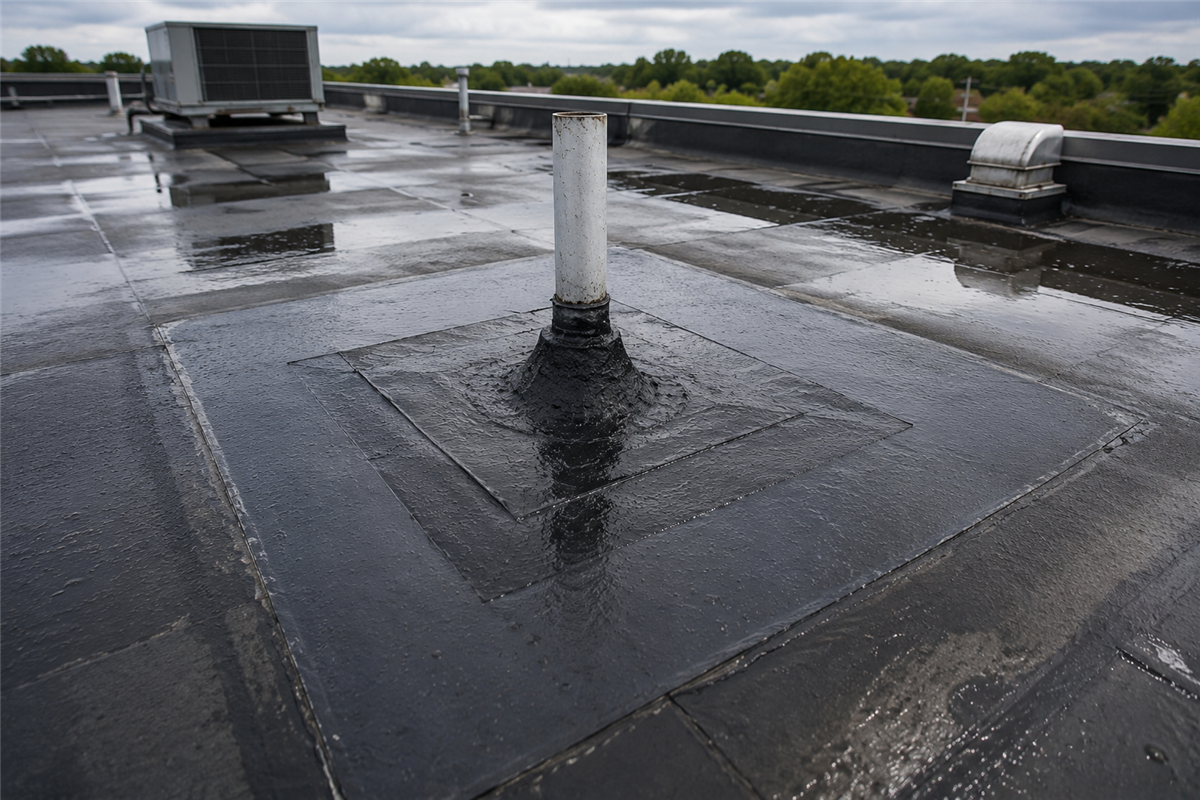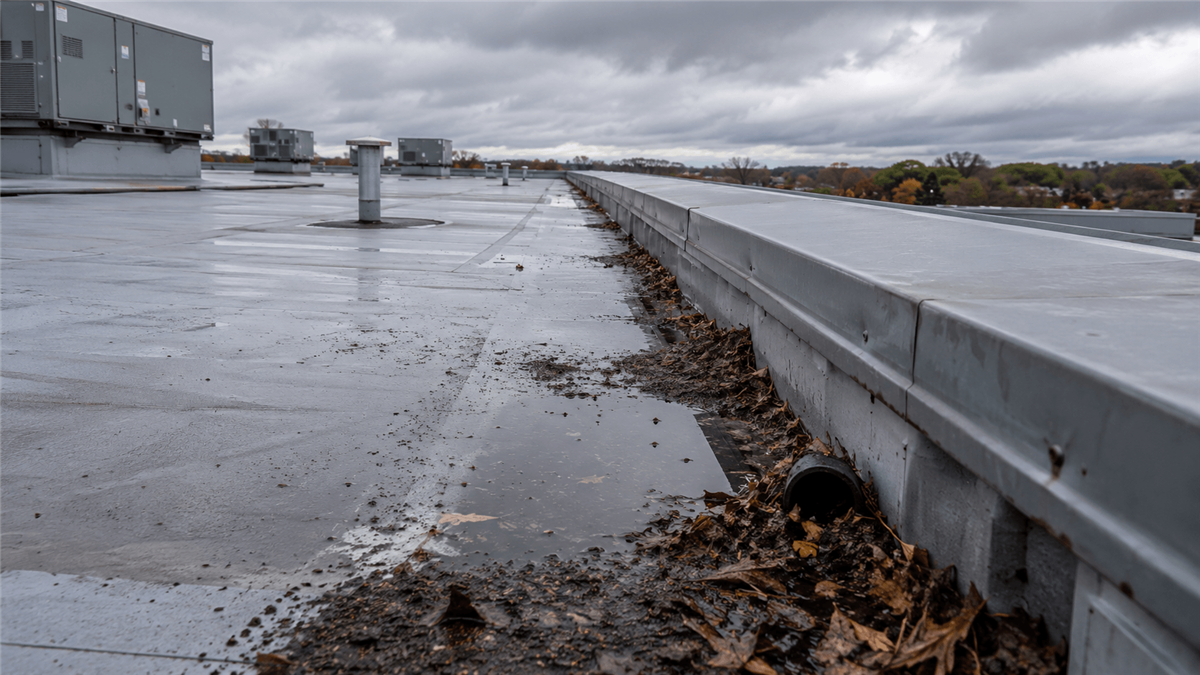
| Preparing commercial gutters for storm season involves inspecting for damage, clearing debris, verifying proper slope and drainage flow, resealing connection points, and documenting conditions on a recurring schedule before heavy weather hits. Preventive maintenance costs a fraction of emergency repairs, which can run into five figures when factoring in water intrusion remediation, tenant disruption, and insurance exposure. |
A clogged gutter on a house is annoying. A clogged gutter on a commercial building is a five- or six-figure repair bill. When heavy rain hits a neglected drainage system on a 20,000-square-foot roof, water pools, backs up under flashing, saturates insulation, and finds its way into occupied spaces. In the DMV region, where spring and summer storms regularly dump inches of rain in a single afternoon, that risk is real and expensive.
Preparing commercial gutters for storm season takes a deliberate plan and consistent follow-through. This guide gives you a step-by-step maintenance checklist, breaks down the actual cost difference between reactive and preventive approaches, and explains exactly what to inspect before the first major storm hits. Whether you manage one building or an entire portfolio, you'll finish with a clear action plan to protect your property and your budget.
Why Storm Season Hits Commercial Properties Harder
Residential roofs shed water across a few hundred square feet. Commercial roofs collect it across thousands. That difference in scale changes everything about how storms affect a building and how quickly gutter problems turn into real property damage.
The Cost of Water Intrusion on Commercial Buildings
When water enters a commercial structure, the damage doesn't stay in one room or behind a single patch of drywall. It spreads horizontally through ceiling systems, saturates insulation above occupied tenant spaces, and reaches electrical and HVAC components that are expensive to repair or replace. For property managers and building owners in Northern Virginia, Maryland, and Washington, D.C., even a single storm event can trigger insurance claims, tenant complaints, lease disputes, and emergency remediation costs that far exceed the price of routine gutter maintenance.
Then there's business interruption. A retail tenant who has to close for water damage cleanup isn't just unhappy. They're reviewing their lease terms and wondering who's responsible. An office tenant dealing with ceiling stains and musty air starts questioning the building's management. The financial exposure goes well beyond the repair invoice, and it tends to land squarely on the property owner's desk.
| On a commercial building, a gutter failure during a heavy storm doesn't just cause water damage. It creates liability, disrupts tenants, and erodes trust in property management. |
How Gutter Failures Escalate Into Structural Damage
A failing gutter on a commercial building rarely causes one isolated problem. It sets off a chain reaction. Water that overflows or backs up behind fascia boards works its way into the roof deck, where it softens wood substrates and corrodes metal decking over time. In winter, trapped moisture freezes and expands, widening gaps in flashing and seals that were previously watertight.
Overflowing gutters also dump water directly against the building's foundation. On large commercial structures, the volume is significant enough to cause serious issues. Here are the most common consequences of uncontrolled water dumping at the foundation line:
- Soil erosion: concentrated water flow displaces soil around footings, undermining the building's structural support over time.
- Foundation settling: uneven moisture levels cause differential movement in the foundation, leading to cracks in walls, floors, and load-bearing elements.
- Basement or lower-level flooding: water pooling against foundation walls finds every gap, seam, and weak point, turning lower levels into liability zones.
All of these problems trace back to drainage that wasn't directing water away from the structure. Preparing commercial gutters for storm season addresses these risks before they compound into structural concerns that require major capital expenditure rather than a manageable maintenance line item.
The pattern is predictable: minor gutter issues survive one storm, worsen through the next, and become emergencies by the third. For anyone managing a property portfolio, that pattern is worth breaking early.
A Step-by-Step Commercial Gutter Maintenance Checklist
Knowing that gutter failures cause damage is one thing. Knowing exactly what to check, and in what order, is what actually prevents it. This checklist follows the sequence that experienced commercial roofing crews use when preparing commercial gutters for storm season. Work through each step before heavy weather arrives, and you'll catch problems while they're still minor repairs instead of emergency calls.
Inspect Gutters and Downspouts for Visible Damage
Start with a full visual walkthrough of every gutter run and downspout on the building. On commercial properties, gutters are typically larger gauge aluminum or galvanized steel, and they take a beating from thermal expansion, wind-driven debris, and ladder contact during other maintenance work. You're looking for cracks, dents, rust spots, separated joints, and sections that have pulled away from the fascia.
Pay special attention to downspout connections. These joints handle the highest water volume and are usually the first to fail. If a downspout elbow is cracked or a bracket has loosened, that single point can dump hundreds of gallons against your foundation during a heavy storm. On multi-story buildings, use binoculars or a drone for upper sections before sending anyone up a ladder. It's faster, safer, and gives you photo documentation from the start.
Clear Debris and Check for Blockages
Debris buildup is the most common and most preventable cause of gutter failure on commercial buildings. Leaves, roofing granules, bird nesting material, and wind-blown trash accumulate fast, especially in interior corners and at downspout openings. Remove everything by hand or with a commercial gutter vacuum, then flush the entire system with a hose to confirm water moves freely through every section.
| A gutter that looks clear from the ground can still be 30% blocked at the downspout inlet. Always confirm flow, not just appearance. |
For flat-roof commercial buildings with internal drains rather than perimeter gutters, the same principle applies. Clear strainer baskets, check drain bowls for sediment, and make sure secondary overflow drains are completely unobstructed. These backup drains are your last line of defense during heavy rainfall, and they're often neglected because they rarely activate under normal conditions.
Evaluate Gutter Alignment and Slope
Gutters need consistent slope toward each downspout to drain properly. The general standard is a quarter-inch of drop for every ten feet of gutter run. On a commercial building with 60- or 80-foot runs, even a slight sag in the middle creates standing water that accelerates corrosion and adds weight the hangers weren't designed to hold long-term.
Check alignment by pouring water at the farthest point from each downspout and watching its path. Here's what to look for during this test:
- Pooling water: indicates a sag or low spot where hangers have stretched or pulled loose
- Water traveling in the wrong direction: means the slope has reversed, often due to settling or fascia deterioration
- Overflowing at midpoints: suggests the gutter capacity is inadequate or a partial blockage exists downstream
On older buildings, fascia board rot can cause entire sections to shift, so inspect the mounting surface while you're checking slope. A perfectly aligned gutter won't stay that way if the wood behind it is soft.
Test Drainage Flow and Downspout Discharge Points
Once gutters are clean and properly sloped, run a full-volume flow test. Use a hose at maximum output (or two hoses on larger systems) and observe every downspout discharge point. Water should exit cleanly and flow away from the building's foundation. If it pools near the base of the structure, you need splash blocks, downspout extensions, or underground drain tie-ins to redirect it.
Also check that downspouts discharge into the correct stormwater management system. Many commercial properties in the DMV region are subject to local stormwater regulations. Downspouts that discharge onto sidewalks, parking areas, or neighboring properties can create liability issues on top of the water damage risk. A quick check now avoids a compliance headache later.
Assess Flashing, Seals, and Connection Points
Where gutters meet the roofline, flashing and sealant create the barrier that keeps water from getting behind the system. Over time, caulk dries out, flashing lifts, and thermal movement opens gaps. Inspect every transition point where the gutter attaches to the roof edge, where sections join together, and where downspouts connect to the gutter trough.
The sealant you choose matters more than most people realize. Here are the right matches for common gutter materials:
- Aluminum gutters: silicone-based sealants perform best and maintain flexibility through temperature swings
- Galvanized steel gutters: polyurethane sealants offer stronger adhesion and better resistance to corrosion at the bond line
Avoid generic household caulk. It won't hold up under the thermal cycling that commercial gutters experience across seasons, and you'll end up redoing the work within a year.
Document Conditions and Schedule Repairs
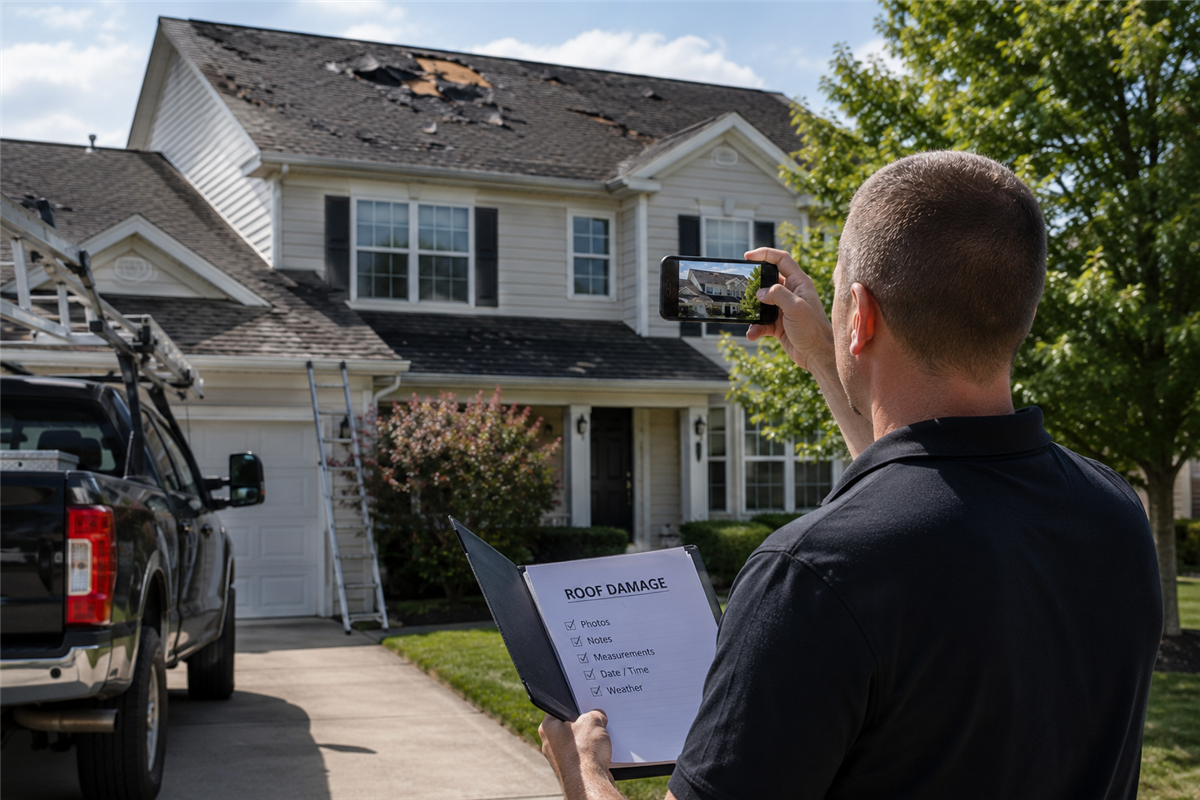
Every inspection should produce a written record. Photograph problem areas, note their location on a building diagram, and classify each issue using a simple priority system:
- Fix now: active leaks, separated joints, or failed downspout connections that will cause damage in the next storm
- Monitor: early-stage rust, minor sealant gaps, or slight misalignment that hasn't yet caused performance issues
- Schedule for next maintenance window: cosmetic concerns, aging components nearing end of life, or upgrades that would improve performance
This documentation serves two purposes. First, it gives your maintenance team or contractor a clear scope of work with no guesswork. Second, it creates a history that helps you track recurring problems and plan capital improvements before small issues become expensive ones.
If you manage multiple properties, a standardized inspection form keeps reporting consistent across your portfolio. That consistency makes it much easier to compare building conditions, prioritize budgets, and justify maintenance spending to ownership or investors. When preparing commercial gutters for storm season becomes a repeatable process with documented results, it stops being reactive and starts protecting your bottom line.
Reactive vs. Preventive Gutter Maintenance: What Actually Saves Money
Property managers already know that emergency repairs cost more than scheduled ones. But when it comes to gutter maintenance on commercial buildings, the gap between reactive and preventive spending is wider than most people expect. Understanding the actual numbers helps you make a stronger case for budget allocation, whether you're presenting to ownership, investors, or your own accounting team.
Comparing Costs and Outcomes
Reactive gutter maintenance means waiting until something fails, then scrambling to fix it. That usually happens during or right after a storm, which is exactly when every contractor in the region is booked and emergency service rates kick in. You're paying premium labor costs, overnight shipping on parts, and often covering interior damage remediation on top of the gutter repair itself.
Preventive maintenance flips that equation. You're scheduling inspections and minor repairs during slower periods when contractors have availability and pricing is standard. The work itself is simpler too, because you're catching small issues (a loose bracket, a cracked seal) before they turn into large ones, like a detached gutter section dumping water into a tenant space.
Reactive vs. Preventive Gutter Maintenance: Cost and Outcome Comparison
The table below breaks down how reactive and preventive approaches compare across the factors that matter most to your bottom line and daily operations.
| Factor | Reactive Approach | Preventive Approach |
| Typical repair cost per incident | $2,000–$15,000+ (includes interior damage) | $200–$1,500 per scheduled visit |
| Contractor availability | Limited during storm season | Scheduled during off-peak periods |
| Tenant disruption | High (leaks, closures, complaints) | Minimal to none |
| Gutter system lifespan | Shortened by repeated failures | Extended through consistent upkeep |
| Insurance and liability exposure | Higher claim frequency, potential rate increases | Documented maintenance supports claims |
The math is straightforward. Two or three scheduled maintenance visits per year cost a fraction of a single emergency repair that includes water damage remediation. And that doesn't account for the softer costs: tenant turnover, reputation damage, and the time your team spends managing a crisis instead of running operations.
Preparing Commercial Gutters for Storm Season With a Maintenance Schedule
A maintenance schedule only works if it's tied to your building's actual conditions and the regional weather pattern. In the DMV area, preparing commercial gutters for storm season means completing gutter work before the spring storms ramp up in April and again before fall storms arrive in October. Here's a practical annual schedule that keeps your drainage systems ready:
- Late February or early March: Conduct a full gutter and downspout inspection using the checklist from the previous section. Document all findings with photos and a condition report.
- Mid-March: Complete all repairs identified during the inspection, including bracket adjustments, sealant replacement, and debris removal.
- Late June: Perform a mid-season check after the first round of heavy spring storms to catch any new damage or blockages before summer thunderstorms intensify.
- September: Schedule a fall inspection to clear leaf buildup and address any wear from summer weather before the fall storm cycle begins.
- December: Run a year-end review of all inspection records to identify recurring issues and plan capital improvements for the following year's budget.
Following this cadence means you're never more than a few months away from a professional set of eyes on your drainage system, and you're always heading into storm season with confidence rather than concern.
| The cheapest gutter repair is the one you schedule three months before you need it. |
Is Your Commercial Roof a Managed Asset or a Future Emergency?
NV Roofing's complimentary inspection gives you a full condition report, capital risk assessment, and remaining service life estimate. A $2,400 value at no cost.
Claim My Free Inspection →
How NV Roofing Supports Commercial Properties Before Storm Season
Having a checklist is a good start. Having a team that actually executes it on a predictable schedule, across every building you manage, is what keeps properties protected. NV Roofing's commercial division works alongside property managers, building owners, and asset management firms in the DMV region to handle exactly that.
Commercial Gutter and Drainage Services
NV Roofing installs, repairs, and maintains heavy-duty gutter systems engineered for commercial structures. That includes large-gauge aluminum and galvanized steel gutters on office buildings, apartment complexes, retail centers, and industrial facilities. The scope goes well beyond the gutter trough itself. Downspout routing, discharge point grading, flashing replacement at roof-to-gutter transitions, and tie-ins to stormwater management systems are all part of the work.
For buildings that have dealt with repeated water intrusion, NV Roofing's team evaluates whether the existing gutter sizing and layout actually match the roof's drainage demands. A gutter system that worked fine when a building was constructed 25 years ago may be undersized today after roof modifications, HVAC additions, or changes in surrounding landscaping that redirect runoff toward areas the original design never accounted for.
| The right gutter system isn't just about capacity. It's about how that capacity matches the specific drainage patterns of your roof, your building's footprint, and your site grading. |
NV Priority Plus: A Proactive Maintenance Partnership
NV Roofing's NV Priority Plus program is built for property managers who want gutter and roof maintenance handled on a set schedule rather than scrambled together after damage has already occurred. The program includes recurring inspections, documented condition reports, priority scheduling for repairs, and direct access to NV Roofing's commercial team when storm damage demands a fast response.
Here's how it stacks up against managing maintenance on an ad hoc basis:
NV Priority Plus vs. Ad Hoc Maintenance
| Factor | NV Priority Plus | Ad Hoc Maintenance |
| Inspection Frequency | Scheduled seasonally | Only after problems appear |
| Repair Scheduling | Priority access, faster turnaround | Subject to contractor availability |
| Condition Documentation | Consistent reports across visits | Inconsistent or nonexistent |
| Storm Damage Response | Rapid-response team deployment | Competing with all other service calls |
| Long-Term Cost Impact | Lower total spend over roof lifecycle | Higher emergency and repair costs |
For anyone managing multi-family complexes, office parks, or mixed-use properties in Northern Virginia, Maryland, or Washington, D.C., having a maintenance partner who already knows your buildings, your gutter systems, and your drainage weak points makes preparing commercial gutters for storm season far more efficient. You're not starting from scratch every spring. You're building on documented history and a team that understands your properties inside and out.
If your properties need a gutter assessment or a maintenance plan before the next round of storms, Contact Us to schedule a consultation with NV Roofing's commercial team.
Keep Your Property Protected Before the Next Storm
Gutter maintenance on a commercial building isn't glamorous work, but it's the kind of work that separates well-managed properties from the ones hemorrhaging money on avoidable repairs. The buildings that hold up best through storm season are the ones where someone walked the roof line in March, fixed the loose bracket, replaced the dried-out sealant, and confirmed every downspout was draining clear. That effort costs a fraction of what a single water intrusion event will run you in remediation, tenant disruption, and insurance headaches.
If you haven't inspected your gutter systems yet this year, that's your next move. Pull up the checklist from this guide, hand it off to your maintenance team or your contractor, and get it scheduled before the forecast gives you a reason to wish you had. Preparing commercial gutters for storm season is one of those tasks where the window between “we should handle this” and “we should have handled this” closes faster than most people expect.
FAQs
How often should commercial gutters be inspected during the year?
Commercial gutter systems should be professionally inspected at least three to four times per year, with visits timed before spring storms, after the heaviest rainfall period, before fall leaf season, and at year-end for planning purposes.
What is the recommended gutter slope for proper drainage on commercial buildings?
The standard is a quarter-inch of drop for every ten feet of gutter run, which ensures water moves consistently toward downspouts without pooling or reversing direction.
Can preparing commercial gutters for storm season reduce insurance costs?
Documented preventive maintenance creates a record that supports insurance claims and can help avoid rate increases tied to frequent water damage incidents. Insurers often look favorably on properties with consistent upkeep histories when evaluating risk.
What are signs that a commercial gutter system is undersized for a building's roof?
Frequent overflows during moderate rain, water spilling over at midpoints rather than just at blockages, and repeated fascia or soffit damage are common indicators that the gutter capacity no longer matches the roof's drainage load.
When is the best time of year to start preparing commercial gutters for storm season in the Mid-Atlantic region?
Late February through early March is the ideal window, giving your team enough time to complete inspections and finish all necessary repairs before heavy spring storms typically begin in April.
Subscribe to NV Roofing's Blog