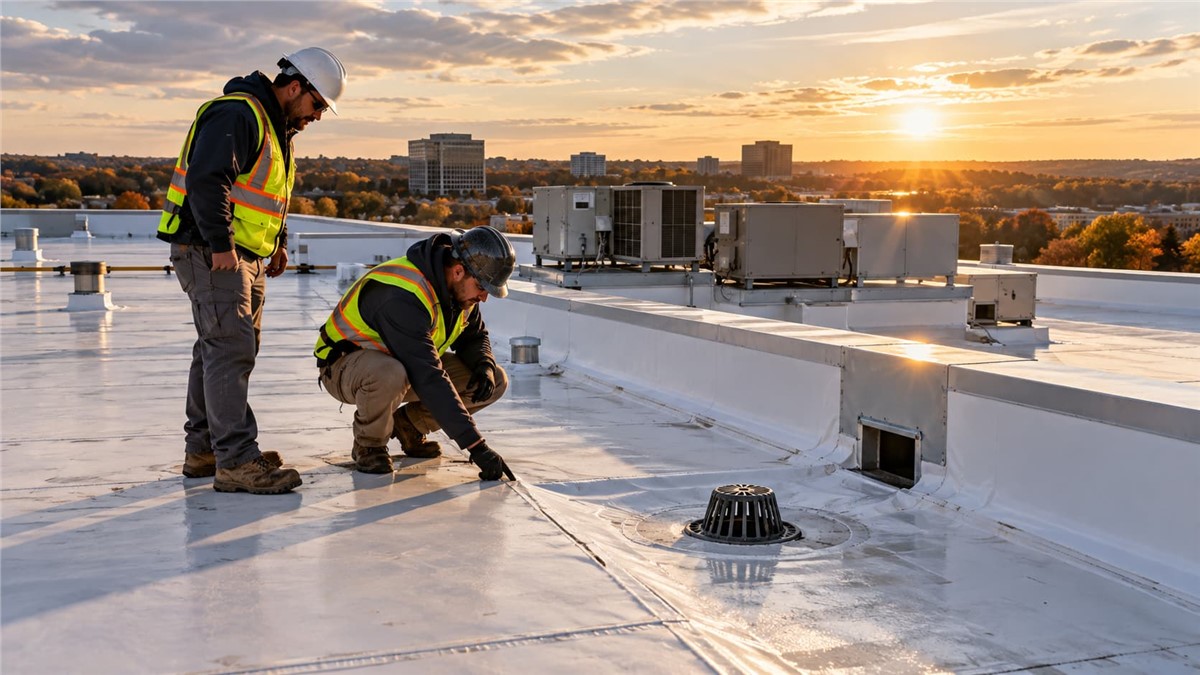
Low slope roofing covers roofs with a pitch of 3:12 or less and relies on continuous watertight membranes like TPO, EPDM, PVC, modified bitumen, built-up roofing, spray foam, or coatings, each with different costs, lifespans ranging from about 7 to 30 years, and best-fit uses. The longest-lasting low slope roofing systems combine proper drainage of at least 1/4 inch per foot, certified installation with careful seam and flashing work, and spring and fall inspections, and owners should compare them by cost per year of service rather than upfront price. |
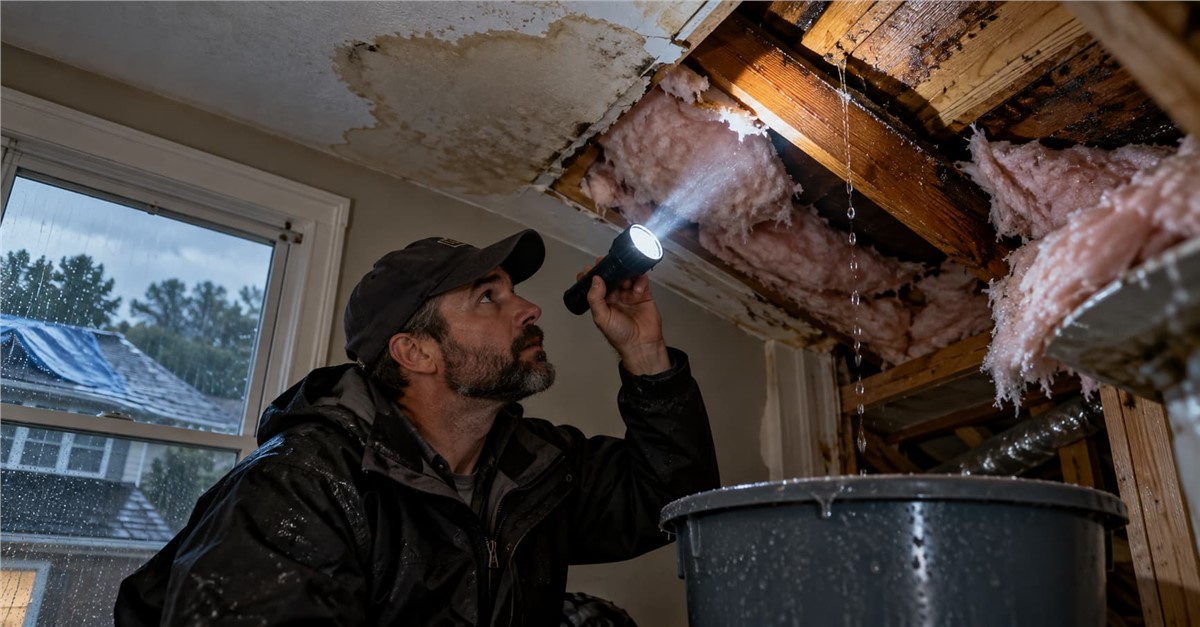
Water doesn't care what you paid for your roof. On a low-pitch surface, it sits and waits, finding every weak seam, split, or sloppy flashing detail. That's why low slope roofing decisions matter more than most property owners realize. Choose the wrong membrane or cut corners on drainage, and you're looking at ponding, interior leaks, and a replacement years too early.
The options aren't simple. Trade coverage from Roofing Contractor sorts these systems into six groups: single-ply membranes, built-up roofs, modified bitumen, spray polyurethane foam, vegetative systems, and coatings. Each one reacts differently to humid DMV summers, freeze-thaw winters, and foot traffic. This guide breaks down TPO, EPDM, PVC, and the rest by cost, lifespan, and maintenance. You'll also get a step-by-step framework for choosing a system, plus the installation details that decide whether your roof lasts decades or leaks within a few seasons.
What Is Low Slope Roofing and Where Does It Fit?
Before you compare membranes or collect replacement quotes, figure out what kind of roof you actually have. Pitch drives almost every other decision: which materials the code allows, how water gets off the surface, and how many years the system can realistically deliver.
Low Slope vs Flat vs Steep Slope Roofs
Roof pitch is expressed as rise over run. A 3:12 roof rises 3 inches for every 12 inches of horizontal distance. The industry generally treats anything at or below 3:12 as low slope and anything above it as steep slope.
Low slope roofing covers any roof with a pitch of 3:12 or less. These roofs depend on continuous, watertight membranes rather than overlapping materials like shingles. |
”Flat” is really just a figure of speech. Almost every so-called flat roof on a DMV apartment building, retail strip, or rowhouse addition has a slight pitch built in, even if you can't see it from the sidewalk. Steep roofs shed water through gravity and overlapping layers. Low-pitch roofs can't rely on overlap, so the membrane itself has to keep every drop out.
Minimum Slope Requirements Under the Building Code
Virginia, Maryland, and D.C. all build their roofing rules on the International Building Code and International Residential Code, with local amendments layered on top. Here are the minimum slopes for the most common low slope roofing materials and their steep-slope neighbor:
- Single-ply membranes and modified bitumen: TPO, EPDM, PVC, and mod-bit systems need at least 1/4 inch per foot, or roughly a 2 percent slope.
- Built-up roofs: These follow the same 1/4:12 minimum, though coal-tar systems are allowed as low as 1/8:12.
- Asphalt shingles: Shingles can't be installed below 2:12, and any roof between 2:12 and 4:12 requires a double layer of underlayment.
Reroofing projects get some breathing room. An existing roof can usually keep its current slope as long as it still drains properly. That's why contractors often install tapered insulation during a replacement, adding pitch exactly where water tends to collect without rebuilding the deck.
Why Drainage Makes or Breaks a Low-Pitch Roof
Standing water causes more trouble on low-pitch roofs than almost anything else. The standard benchmark for ponding is water still sitting on the surface 48 hours after the rain stops. It adds real weight (one inch of water across 100 square feet comes to about 520 pounds), it accelerates membrane aging, and it can give manufacturers a reason to deny warranty claims.
Reliable drainage comes down to three components working together: enough slope, drains or scuppers in the right locations, and crickets that divert water away from HVAC curbs and parapet walls. If one piece is missing, the other two can't make up for it. A single clogged scupper can turn a well-designed roof into a shallow pond overnight, so routine inspections after heavy storms and leaf season are worth putting on the calendar.
Comparing Membrane Systems: TPO, EPDM, PVC, and More
Every low slope roofing system has the same job: keep standing water from finding its way inside. The difference is in how each one does it. Some depend on heat-welded seams, some stack layer after layer for backup protection, and a few have no seams at all. Here's how each option performs on DMV buildings, where it earns its keep, and where it tends to let owners down.
TPO (Thermoplastic Polyolefin)
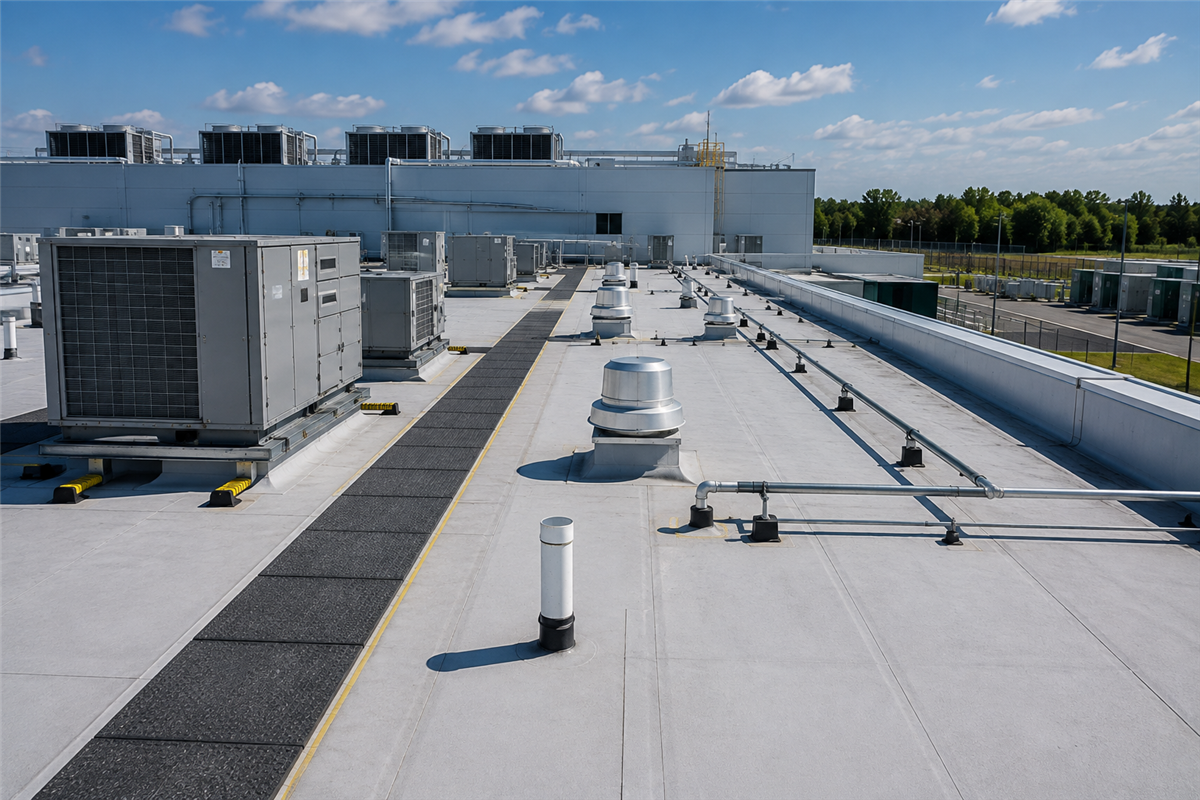
TPO is the single-ply membrane you'll spot on most new office parks, retail centers, and warehouses. It's usually white, which bounces sunlight away and trims cooling costs through sticky Virginia summers. Crews join the sheets with hot-air welders, so the seams melt together into one continuous surface rather than depending on adhesive or tape.
Thickness makes a real difference. Most commercial projects call for 45, 60, or 80-mil sheets, and the thicker options stand up better when HVAC techs are walking the roof every few months. The catch is that formulations vary from one manufacturer to the next (GAF, Carlisle SynTec, and Johns Manville among them), so a product's track record and the installer's certification carry a lot of weight.
TPO is also finding its way into newer roof assemblies. According to All Weather Insulated Panels on RoofersCoffeeShop, its OneDek system combines a single insulated roof deck panel with a PVC or TPO membrane, replacing separate steel decking and layers of ISO board, and comes with a 20-year deck-through-membrane weathertightness warranty.
EPDM Rubber
EPDM is the black rubber sheet that's been protecting flat roofs for decades. It stays pliable in cold weather, so it handles freeze-thaw cycles without much complaint, and its oversized sheets mean fewer seams across large, open roof areas.
Those seams are taped or glued instead of welded, and that's where most EPDM trouble begins. Seam tape can lose its grip over the years, and the membrane can shrink, tugging away from parapet walls and penetrations. EPDM can be fully adhered, mechanically fastened, or ballasted with stone. The black surface soaks up heat, though white EPDM is available if energy bills are a concern. On simple roofs with only a handful of penetrations, EPDM is still a reliable, budget-friendly choice.
PVC Membranes
PVC looks a lot like TPO and goes down the same way, with heat-welded seams. Where it pulls ahead is chemical resistance. PVC holds up against grease, oils, and many industrial exhausts that break down other membranes. That's why NV Roofing recommends it for restaurants, food processing plants, and any building where kitchen exhaust fans vent straight onto the roof.
Keep two caveats in mind. PVC usually costs more than TPO, and it reacts badly with asphalt, so it needs a separation layer when installed over an old bituminous roof. Sika Sarnafil is one of the long-standing manufacturers in this category.
The best membrane on paper fails fast with a poor installer. On low-slope roofs, seam quality and flashing details decide lifespan more than the brand on the roll. |
Modified Bitumen
Modified bitumen is essentially asphalt that's been reinforced and toughened with polymers. It's sold in rolls, often topped with a granulated cap sheet, and you'll see it all over DC row homes, porch roofs, and smaller commercial buildings.
It comes in two main types. SBS (rubber-modified) sheets stay flexible in the cold and can be torched, cold-applied, or self-adhered. APP (plastic-modified) sheets are usually torch-applied and tolerate heat well. Torching on an occupied building carries fire risk, which is why many property managers now lean toward self-adhered or cold-applied systems. Mod bit also shrugs off foot traffic and punctures better than thinner single-ply sheets, a real plus on roofs that see frequent service calls.
Built-Up Roofing (BUR)
BUR is the classic “tar and gravel” roof: alternating layers of roofing felt and hot asphalt (or coal tar), finished with gravel or a cap sheet. Its biggest strength is redundancy. If the top layer gets damaged, several more are still protecting the building underneath.
That backup protection has its costs. BUR is heavy, so the structure needs to be able to carry it. Installation involves hot kettles, fumes, and plenty of labor, all of which can disrupt tenants. Leaks are harder to pinpoint, too, since water can travel between plies before it shows up indoors. Plenty of older government and institutional buildings across the region still have BUR, and many of them are strong candidates for restoration instead of a full tear-off.
Spray Polyurethane Foam and Roof Coatings
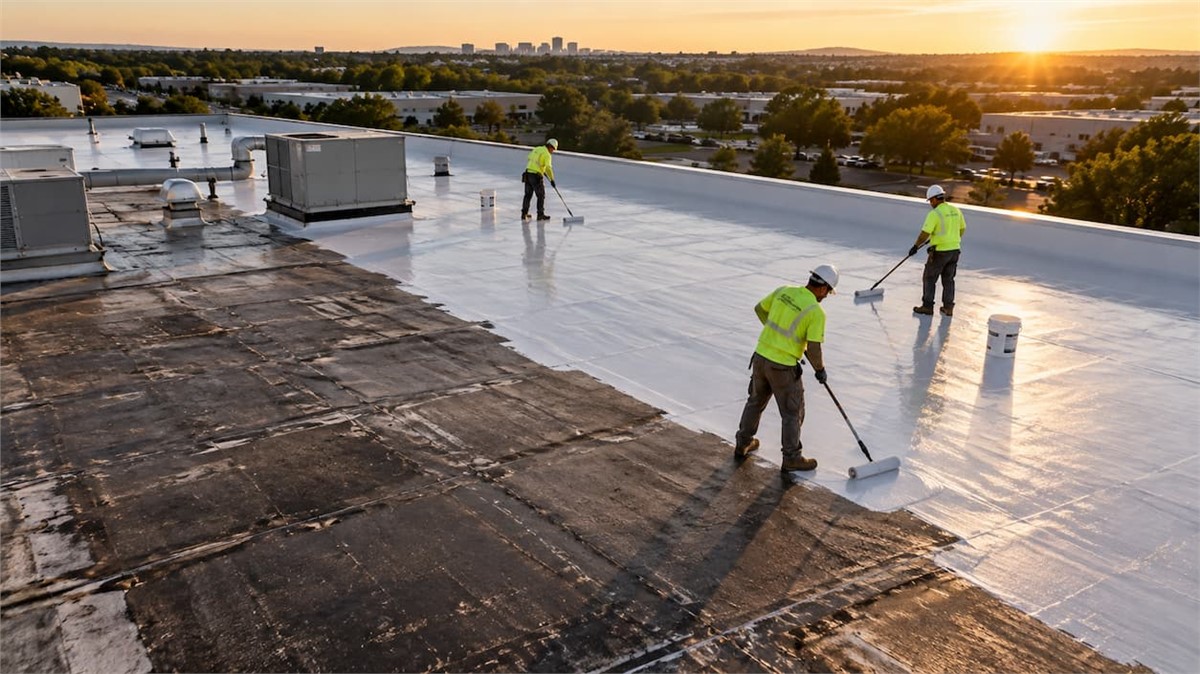
SPF goes on as a liquid and expands into a rigid, seamless layer that both insulates and waterproofs. Because crews can build it up thicker in low spots, it's a good way to improve drainage on roofs that pond. Foam does break down under UV light, though, so it always needs a protective coating that gets renewed on a regular schedule.
Coatings also work on their own as a restoration option for aging metal, BUR, mod bit, or single-ply roofs. Here's how the three main coating chemistries compare:
- Acrylic coatings: affordable and reflective, but they don't tolerate standing water, so they're best on roofs that drain cleanly.
- Silicone coatings: resistant to ponding water and UV exposure, though they attract dirt and are difficult to recoat with anything except more silicone.
- Polyurethane coatings: tough and impact-resistant, which makes them a solid match for roofs with heavy foot traffic.
Any coating is only as good as the roof beneath it. If the insulation is wet, sealing over it locks the moisture in and accelerates deck damage. Before you seriously consider any coating bid, insist on an infrared or core-cut moisture survey first.
How to Choose, Install, and Maintain the Right System
Understanding the materials gets you halfway there. The rest comes down to matching a system to your building, making sure it goes on correctly, and planning for the years after the crew packs up. Here's how to handle each piece.
A Step-by-Step Framework for Choosing a Low Slope Roofing System
Plenty of poor roofing decisions begin with the lowest number on a bid and work backward from there. Reverse that habit. Before you compare proposals, work through these steps in order:
- Record the condition of the current roof, including how many layers are on it, the deck type, structural load limits, and any insulation that has taken on water.
- Note everything that happens up top, from HVAC service visits and kitchen exhaust to solar arrays or tenant amenity space.
- Be honest about how long you'll own the building, because a five-year hold and a 25-year hold call for very different budgets.
- Narrow the field to two or three systems suited to your exposure, and request manufacturer-backed warranties rather than coverage from the contractor alone.
- Verify that the installer holds current certification with that manufacturer, since many system warranties depend on it.
- Make maintenance part of the decision from the start, with inspections on the calendar every spring and fall.
Sticking to this order protects you from two expensive mistakes: paying for a premium membrane your building doesn't need, or buying one that can't stand up to what actually happens on your roof.
Installation Details That Prevent Leaks and Ponding
When we track down leaks on low slope roofing, the source is usually a transition point rather than the open field of the membrane. Walls, curbs, drains, and roof edges are where the quality of the workmanship really shows.
A few details deserve your attention on any project. Base flashings at parapets and curbs should rise high enough to stay clear of standing water and wind-driven rain, and 8 inches is the common industry target. Drains perform best when set into a recessed sump, which guides water into the drain instead of letting it collect around the rim. Edge metal has to be fastened securely against wind uplift, because a loose perimeter gives the wind a starting point to peel the membrane back. On welded systems, a careful crew probes every seam once it cools, finding cold welds before they show up as stains on someone's ceiling.
It's also worth asking about a cover board between the insulation and the membrane. It improves puncture resistance and makes future repairs much cleaner.
The cheapest roof is the one that reaches its full service life without emergency calls, and that's rarely the one with the lowest bid. |
Cost and Lifespan Expectations Over the Roof's Life
So how long does a low slope roof last? According to The Roofing Brief's lifespan report, which draws on InterNACHI and NAHB data, expected service life varies quite a bit from one material to the next. The table below summarizes those estimates:
Estimated Service Life of Low Slope Roofing Materials
| |
Material | Estimated Lifespan |
TPO | 7 to 20 years |
EPDM | 15 to 25 years |
Modified Bitumen | About 20 years |
Built-Up Roofing | About 30 years |
Aluminum Roof Coating | 3 to 7 years before recoating |
Look at how wide the TPO range is. That gap has more to do with installation quality, product formulation, and ongoing care than with the material itself. The report also makes clear that these numbers are planning guidelines, not guarantees.
When you build your budget, measure cost per year of service instead of the price on day one. A system that costs more upfront but lasts ten years longer with only minor repairs will often outperform the bargain option you end up replacing early. Add in energy savings from reflective surfaces, recoating cycles, and the tenant disruption that comes with a tear-off, and the better choice usually becomes obvious.
Is Your Commercial Roof a Managed Asset or a Future Emergency?
NV Roofing's AM-Pro assessment gives you a full condition report, capital risk assessment, and remaining service life estimate. A $2,400 value at no cost.
Claim My Free AMP Assessment →
Partnering with NV Roofing for Commercial Roof Projects
Choosing the right membrane solves only part of the problem. You also need a crew that installs it correctly, maintains it on schedule, and answers the phone when a storm rolls through. NV Roofing has served commercial properties across Northern Virginia, Maryland, and D.C. since 1963. Our Commercial Division works as an asset management partner for property managers, building owners, and asset management firms who need roofs that hold up and budgets that hold steady.
Installation, Restoration, and Coatings Built for Minimal Disruption
Our crews install, repair, restore, and coat low slope roofing on office buildings, apartment complexes, industrial facilities, and retail spaces. Every project is planned around your tenants. We set up phased work zones and clear staging areas, and we build schedules that keep loading docks, entrances, and parking open whenever possible. Your occupants keep working, and your phone stays quiet.
Safety planning is built into that schedule from day one. Rooftop work follows OSHA's fall protection standard for construction, which sets the requirements for protecting workers at height. For you, that translates to fewer liability concerns and a jobsite that keeps occupants out of harm's way.
If an aging roof still has a sound deck and dry insulation, a restoration coating can delay a full tear-off by years and free up capital for other priorities. If moisture testing tells a different story, we'll say so plainly and recommend replacement. You get a straight answer based on what's actually under the membrane.
NV Priority Plus Maintenance for Longer Roof Life
Most low-slope failures start small: a lifted seam, a cracked pitch pocket, a scupper clogged with leaves. NV Priority Plus catches those problems early through scheduled inspections, timely repairs, and priority service when something does go wrong. The payoff is a roof that lasts longer and capital budgets you can actually forecast.
A small seam repair caught during a scheduled inspection costs far less than the ceiling tiles, inventory, and tenant goodwill lost to a leak nobody saw coming. |
Storm Response, Gutters, and Drainage Support
DMV storms find every weak point on a flat roof. Our rapid-response teams stabilize damaged roofs quickly, which helps businesses avoid extended downtime and protects their standing with tenants and customers. We also install heavy-duty gutter systems sized for commercial structures, keeping water moving off the roof and away from foundations and exterior walls.
Each service we offer is tied to a specific problem property managers run into on low slope roofs.
Matching Commercial Services to Common Low Slope Roof Problems
The table below pairs common roof situations with the NV Roofing service that fits and what that service fixes.
| ||
Roof Situation | NV Roofing Service | What It Addresses |
Membrane at end of service life | Roof installation | New system with proper slope, drains, and flashing |
Aging roof with a sound deck | Restoration and coatings | Extended service life without a full tear-off |
Recurring small leaks | NV Priority Plus | Scheduled inspections and priority repairs |
Wind or hail damage | Storm and emergency response | Fast stabilization and reduced downtime |
Overflowing edges or wall staining | Gutters and drainage | Heavy-duty water management that prevents intrusion |
Ready to talk through your building's roof, budget, and timeline? Contact us
Picking a Roof That Pays You Back
Low slope roofing pays off for owners who look past the day the crew packs up and leaves. The membrane you pick matters, and so do drainage, the skill of the person welding the seams, and whether anyone actually walks the roof a couple of times a year. TPO, EPDM, PVC, mod bit, BUR, and coatings can all last for decades when they're matched to the right building. Put one on the wrong building, or hand the job to an uncertified crew, and even a premium system will let you down.
Start by getting an honest look at the roof you already have. Book a moisture survey, keep track of how long water sits after a hard rain, and dig out any old warranty documents. Once you have that information, you can compare bids based on what each roof costs per year over its expected life, which tells you far more than the upfront number. It also helps you pick a system that lines up with how long you expect to hold onto the property.
FAQs
What is considered a low slope roof?
A roof is classified as low slope when it rises 3 inches or less for every 12 inches of horizontal distance. At that pitch, water drains too slowly for overlapping shingles, so the roof needs a continuous waterproof membrane.
What is the best material for low slope roofing on a commercial building?
The right choice depends on how the roof is used. TPO is a strong all-around pick for energy savings, PVC handles grease and chemical exhaust from restaurants, EPDM suits simple roofs in cold climates, and modified bitumen stands up well to frequent foot traffic.
Can you put asphalt shingles on a low slope roof?
Shingles are permitted on pitches as low as 2:12, but roofs between 2:12 and 4:12 need a double layer of underlayment for added leak protection. Anything flatter than 2:12 calls for a membrane system such as TPO, EPDM, or modified bitumen.
How long does low slope roofing typically last?
Most systems deliver roughly 15 to 30 years of service, with built-up roofs often reaching the high end and TPO varying widely based on product quality. Proper installation, good drainage, and twice-yearly inspections have the biggest impact on whether a roof reaches its full lifespan.
What is the difference between a low slope roof and a flat roof?
A truly flat roof is rare because water would have nowhere to go, so most roofs called "flat" are actually low slope roofs with a subtle pitch of at least 1/4 inch per foot. That slight angle, often created with tapered insulation, moves water toward drains and scuppers to prevent ponding.
Subscribe to NV Roofing's Blog