How much snow can a roof hold depends on weight rather than depth, and DMV design snow loads range from 25 psf in Alexandria to 30 psf in Loudoun and Montgomery counties and a listed 35 psf in Prince George’s County (confirm locally), which equals roughly two feet of fresh powder but only about 5 to 7 inches of ice. Sleet, rain-soaked snow, drifts on flat roofs, and aging or modified framing can push a roof past its limit sooner, so watch for sagging ceilings, sticking doors, and creaking sounds, rake snow from the ground, and call a professional for two-story, flat, or icy roofs.
When Winter Storm Fern hit the DMV, some neighborhoods got 3 inches or more of sleet on top of the snow. From the driveway, that icy crust looks harmless. On a roof, it can weigh several times more than fresh powder. So how much snow can a roof hold before it’s in trouble? Two things decide it: the weight sitting up there and the design load your local building code requires.
This guide explains what “psf” (pounds per square foot) means and why sleet and packed snow outweigh fresh fluff. You’ll get the design snow loads for Alexandria and Loudoun, Montgomery, and Prince George’s counties. You’ll also learn the warning signs of an overloaded roof, the extra risks flat roofs face, and how to clear snow without damaging shingles or membranes. Know your number now, so the next storm doesn’t leave you guessing.
How Much Snow Can a Roof Hold? It Depends on Weight
Snow totals get reported in inches, but your rafters feel pounds. Two roofs buried under the same depth can be carrying very different loads, depending on what fell and how it settled. So any honest answer to how much snow can a roof hold starts with weight, measured in pounds per square foot (psf).
What Psf Means and How Codes Set Snow Loads
Building codes begin with a ground snow load, which is the weight expected on flat, open ground in your area. Engineers then adjust that figure for your specific roof using ASCE 7, the standard that residential and commercial codes reference. Those adjustments factor in wind exposure, how much heat escapes through the attic, how important the building is, and the pitch of the roof. A steep, warm roof tends to shed snow, while a low-slope roof in a sheltered spot holds onto it.
A design snow load is the minimum weight a roof must be built to handle. Think of it as a planning benchmark with safety margins built in, rather than the exact point where a roof gives way.
Fresh Snow vs. Packed Snow vs. Sleet vs. Ice
Density is what turns a harmless blanket of snow into a real load. Roofers and engineers rely on a few rough rules of thumb, and each of the examples below works out to about 5 psf:
- Fresh snow: Light, fluffy snow reaches about 5 psf at a depth of 10 to 12 inches.
- Packed snow: Settled or compacted snow hits that same weight at roughly 3 to 5 inches.
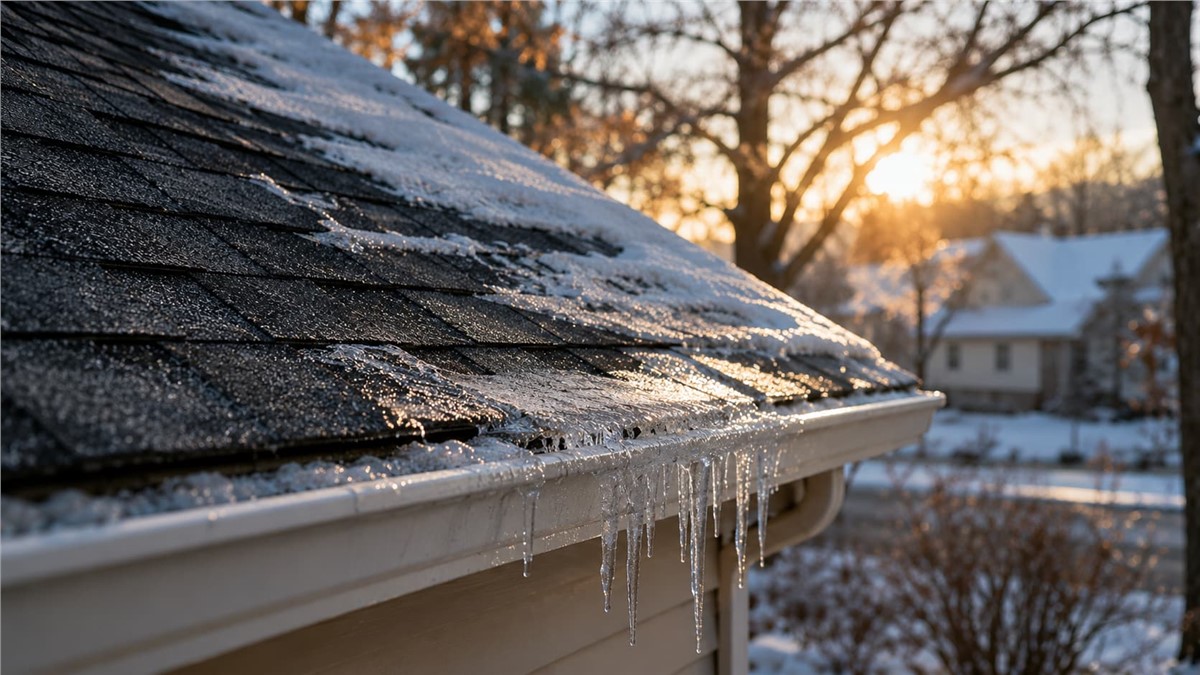
- Ice: Just 1 inch of ice adds about 5 psf, since water weighs about 62.4 pounds per cubic foot.
Sleet lands somewhere between packed snow and solid ice. Its density changes from storm to storm, so the safest approach is to assume it weighs a lot more than it looks.
Why Layered Storms Like Winter Storm Fern Add Up Fast
Fern’s combination of snow topped with sleet is exactly the kind of storm that catches homeowners off guard. If 3 inches of sleet packed down close to ice density, it could add around 15 psf on its own, before you even count the snow underneath. Picture stacking bricks on a pillow.
Rain makes the situation worse. A snowpack soaks up water like a sponge, so a cold drizzle after the storm piles on weight without adding any visible depth. A roof that looked fine on Saturday morning can be carrying far more by Sunday night, which is why it pays to watch the forecast after the snow stops, too.
DMV Design Snow Loads by County
If you’ve ever looked up at a sagging gutter after a storm and wondered how much snow can a roof hold, your local building code has a starting answer. Every jurisdiction in the DMV adopts a code with a design snow load, the weight per square foot that new roofs must be built to carry. The figures below cover four local areas. Use them as a baseline only. An engineer adjusts each number for roof slope, wind exposure, and how warm the attic runs, so the load your roof was designed for may be a little higher or lower.
Alexandria
Alexandria sets its design snow load at 25 psf, the lowest of the four areas here. Using the rule-of-thumb densities from the previous section, that equals about 5 inches of solid ice or roughly 2 feet of fresh, fluffy snow.
Two feet of powder sounds like plenty of margin. Once sleet or freezing rain soaks into that snowpack, though, the same roof reaches its limit much faster. Many Alexandria homes, especially in Old Town and Del Ray, were also built long before modern snow load maps existed. A rowhouse framed in the 1940s was never checked against today’s 25 psf requirement. For questions about a specific property, contact the city’s Department of Code Administration.
Loudoun County
Loudoun uses a design snow load of 30 psf. The western part of the county sits at higher elevation and usually collects more snow than the eastern suburbs, but the single county-wide figure is what applies to permitted construction.
Homes in newer subdivisions around Ashburn, Brambleton, or Leesburg were most likely built to this standard. Older or modified roofs are harder to judge. Finished attics, added solar panels, and rooftop HVAC units all use up some of the capacity that would otherwise carry snow. Loudoun’s Department of Building and Development keeps permit records, so you can check what was approved for your home.
Montgomery County
Montgomery County also uses 30 psf. That works out to about 6 inches of ice, or a far thinner layer of sleet over compacted snow than most homeowners expect.
The county has a large share of mid-century homes in Bethesda, Silver Spring, and Wheaton, plus plenty of low-slope additions and townhouse rows with shared flat sections. Flat and low-slope areas hold snow longer and are more prone to drifting, so they deserve extra attention after a big storm. The county’s Department of Permitting Services can confirm which load applied when your home or addition was permitted.
Prince George’s County
A Maryland state table lists Prince George’s County at 35 psf, which would make it the highest of the four. Treat that number with caution. Code adoptions and local amendments change over time, and a value in a state reference table doesn’t always match what the county enforces at the permit counter.
Before you rely on the 35 psf figure for Prince George’s County, confirm the current design snow load with the county’s Department of Permitting, Inspections and Enforcement (DPIE) or a licensed structural engineer.
That same caution applies to every number in this section. Your county sets the minimum, but your roof’s real capacity depends on how it was built, when it was built, and what has happened to it since. If your home is older, has been renovated, or carries added equipment, a licensed structural engineer can give you a reliable answer for your specific roof.
Warning Signs Your Roof Is Carrying Too Much Snow
Roofs almost never collapse without warning. An overloaded roof usually gives off signals hours or even days before it fails, and the first ones tend to appear inside the house. If you know where to look, you give yourself time to act.
How Much Snow Can a Roof Hold After Years of Wear?
The county numbers above describe a roof as it was designed and built. Decades later, the framing holding up that roof may be weaker than it was on day one. A slow leak can soften sheathing and rafter ends. Termites or carpenter ants can hollow out wood you’ll never see. An old storm may have cracked a truss that nobody ever went up to check.
Unpermitted renovations change the picture too. A rafter cut to make room for a skylight, or a bearing wall removed to open up a kitchen, can quietly reroute how weight travels down to the foundation. New roofs come with a safety cushion built in, and rot, past damage, and undocumented work all chip away at it. So for an older home, the honest answer to how much snow can a roof hold is “less than the code says.” Exactly how much less is something only an inspection can tell you.
A 30 psf design load describes your roof on the day it passed inspection. Forty winters later, its real capacity could be noticeably lower.
Red Flags Inside and Outside Your Home
Overloaded framing usually bends before it breaks, and that movement leaves visible marks. During or right after a heavy storm, grab a flashlight and a pair of binoculars and work through this quick check:
- Ceilings: Shine a flashlight across top-floor ceilings at a low angle. New cracks, bulges, or sagging drywall near the center of a room point to framing that’s bending overhead.
- Doors: Open and close the interior doors upstairs. A door that suddenly sticks or won’t latch may have a frame being pushed out of square from above.
- Sounds: Listen for creaking, popping, or sharp cracks. Those noises come from wood fibers working under strain.
- Attic: If the attic is quiet and safe to enter, look for bowed rafters, split wood, nails backing out of the sheathing, and fresh water stains from meltwater.
- Roofline: Step outside and scan the roof from the street with binoculars. A dipping ridge, gutters pulling away from the fascia, or a wavy roof surface all deserve a closer look.
- Emergencies: If you see active sagging or hear loud cracking, get everyone out of the rooms below and call 911 before you do anything else.
Ten minutes of checking can catch a problem while there’s still time to clear the snow or get the framing braced.
Why Flat Roofs Face Extra Risk
Low-slope roofs don’t shed snow. Wind pushes it around and piles it up instead. Drifts build against parapets, taller walls, and the step where a two-story house meets a one-story addition. Those drift zones and valleys can carry several times the average load found on the rest of the roof, which means one corner can be in real trouble while the middle looks perfectly fine.
Ponding makes things worse. When meltwater can’t reach a drain or scupper, it pools. The deck sags a little under the water, that low spot collects even more, and the cycle keeps feeding itself. On DMV townhouse rows with shared flat sections, a neighbor’s clogged drain or heavy drift can shift load onto your side as well. Keep an eye out for standing water you can see from an upper window, and for ceiling stains that line up with low spots on the roof.
How to Protect Your Roof Before and After a Storm
You can’t control what falls from the sky, but you can control how your roof handles it. If you’ve ever looked up during a heavy snowfall and wondered how much snow can a roof hold, the honest answer depends on the roof’s design, its age, and the type of snow piling up. What you can count on is that a little prep in the fall and careful clearing after a storm reduce the load and the damage that comes with it.
Step-by-Step Guide to Safe Snow Removal
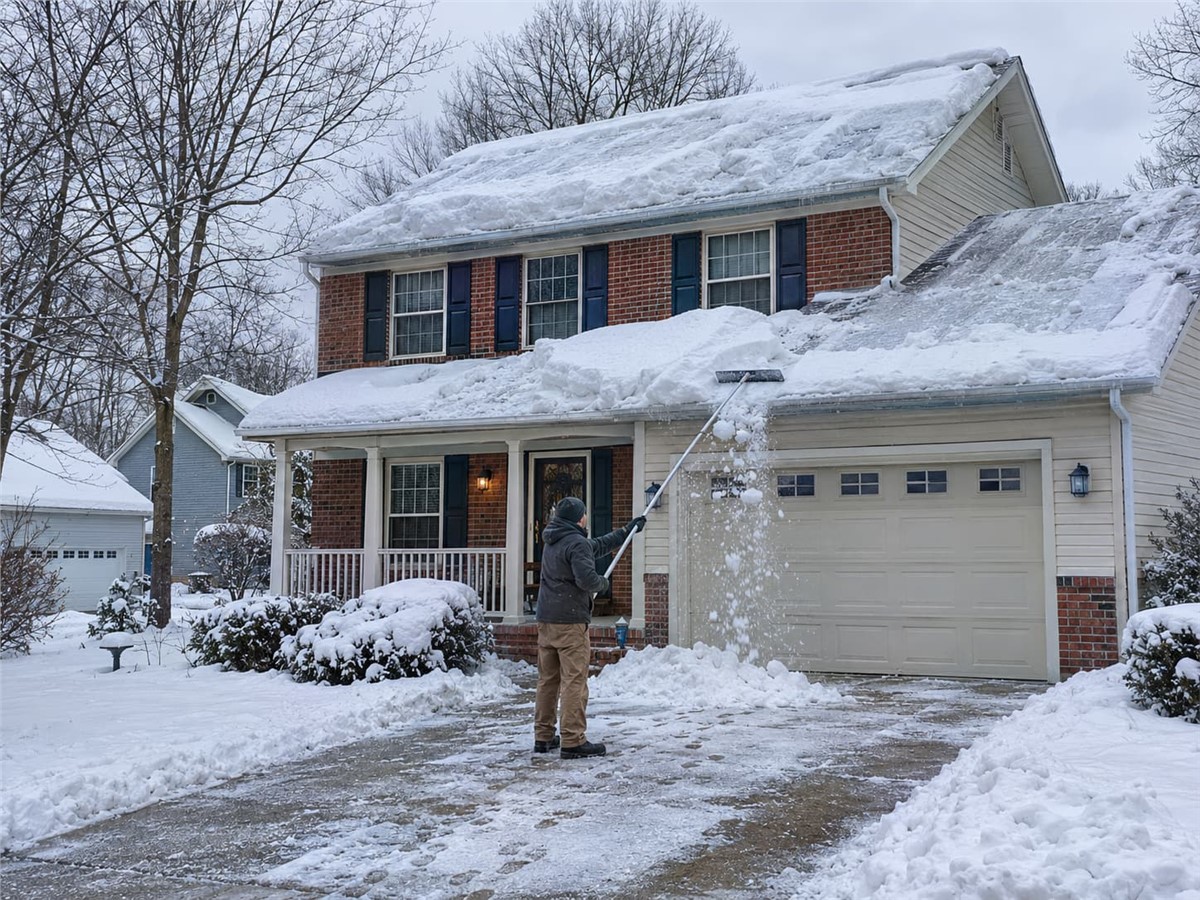
If you decide to clear snow yourself, work from the ground whenever you can. Wet, packed snow weighs far more than fresh powder, so the goal is to lighten the load gradually without hurting yourself or the shingles. Here’s the process roofers recommend for pitched roofs:
- Use the right tool: Grab a roof rake with an extendable pole, and stand on solid ground well away from the eave line so falling snow can’t bury you.
- Check for power lines: Look up before you start and keep the pole clear of power lines and the service drop that feeds your house.
- Work in thin passes: Pull snow down a little at a time, starting at the edge and working upward, so you never yank a heavy slab loose all at once.
- Leave a thin layer: Stop with an inch or two left on the surface. Scraping down to the shingles strips their protective granules and can crack tabs that turn brittle in the cold.
- Keep the load balanced: Clear both sides of a ridge as evenly as you can, since lopsided removal shifts stress onto one side of the framing.
- Clear the landing zone: Shovel the fallen snow away from foundation walls, dryer vents, and exit doors before it refreezes into a hard, heavy pile.
Flat roofs call for a different approach. Walking on a loaded low-slope roof adds your body weight to an already stressed structure, and metal shovels or ice picks can puncture the membrane in a single swing. Never chip at ice on a flat roof. A small puncture today becomes a leak once the thaw arrives.
Pre-Season Prep for Gutters, Drains, and Flashing
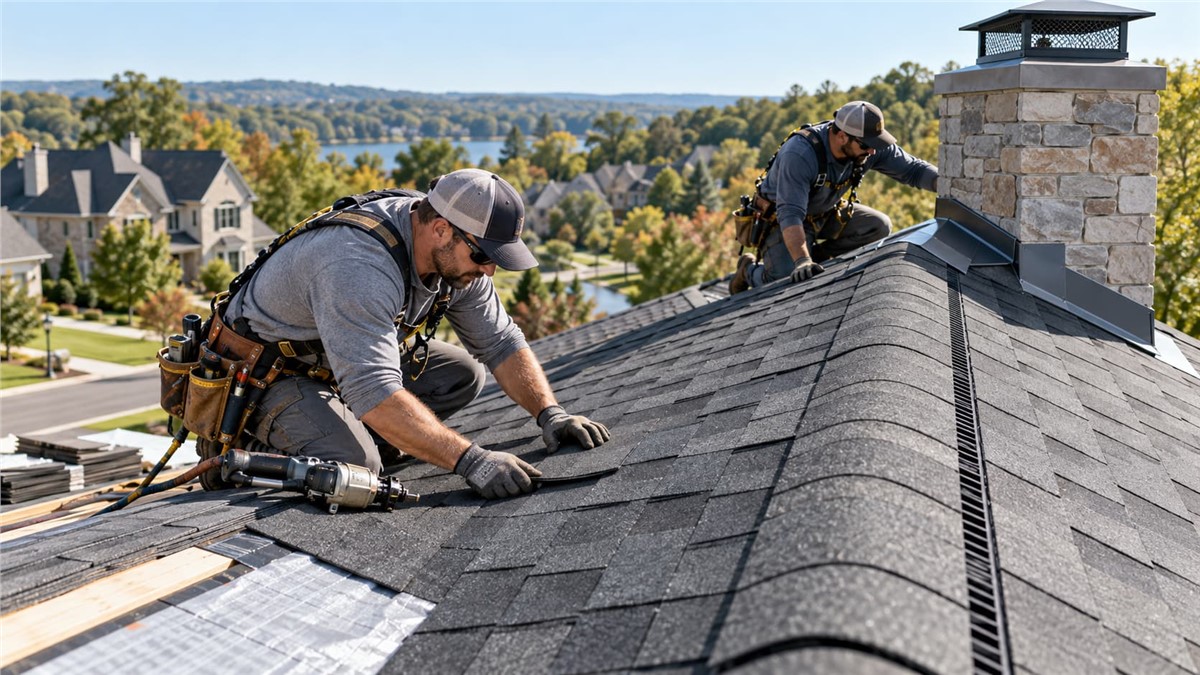
Most winter roof trouble starts with water that has nowhere to go. Clean gutters and downspouts once the leaves have dropped, and on flat roofs, clear scuppers and internal drains so meltwater can’t pond and refreeze into extra weight. While you’re up there (or while your roofer is), check the flashing around chimneys, vents, skylights, and parapet walls for gaps or lifted edges. Trim any branches hanging over the roof as well, because ice-coated limbs get heavy fast and can snap right onto your shingles.
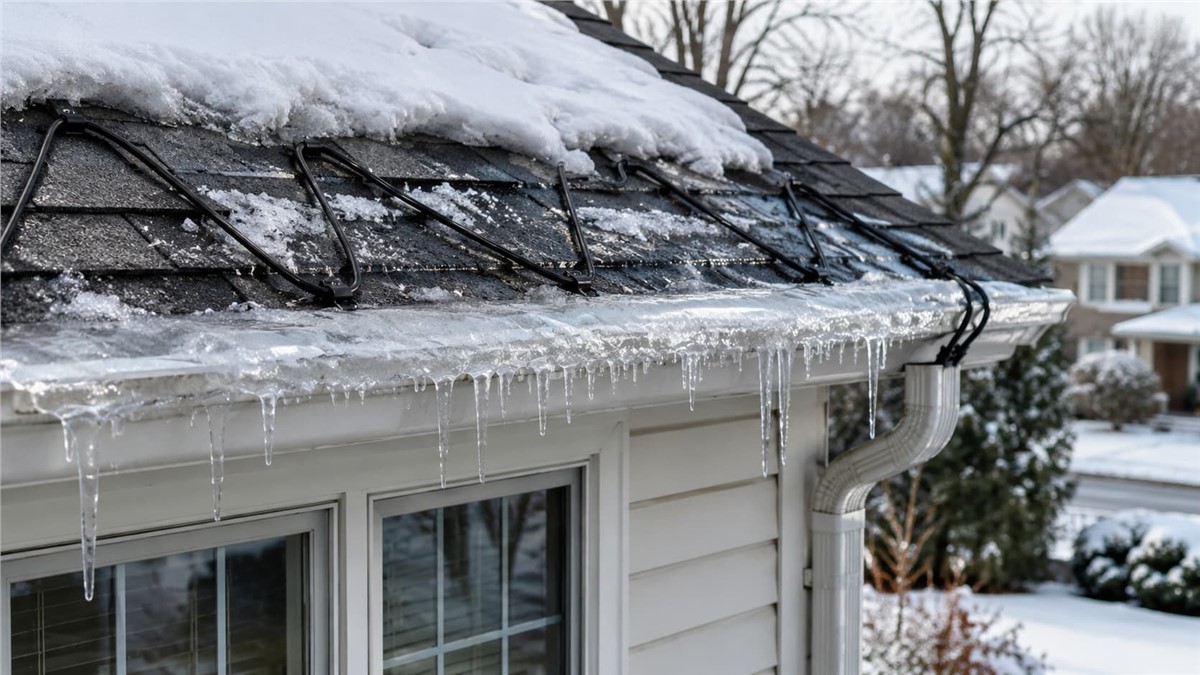
The attic deserves a look too. When heat escapes through thin insulation or poor ventilation, it warms the roof deck and melts snow from below. That water runs down to the cold eaves, refreezes, and builds ice dams that push water back under the shingles. Better insulation and airflow keep the roof deck cold and the snow where it belongs until it melts on its own schedule.
When to Call a Professional Roofer
Raking a single-story roof is a manageable job for many homeowners. Once you add a second story, a flat roof, or heavy ice, the risks climb quickly. The comparison below shows where DIY makes sense and where a professional crew is the safer call:
DIY Roof Raking vs. Hiring a Pro
Factor | DIY Roof Raking | Professional Roofer |
|---|---|---|
Best for | Single-story pitched roofs with light, fresh snow | Two-story homes, flat roofs, sleet, and ice dams |
Safety risk | Falls, falling slabs, and power line contact | Handled with harnesses and trained crews |
Roof damage risk | Scraped shingles and punctured membranes | Lower, plus inspection for hidden damage |
If you notice sagging, new ceiling cracks, or doors that suddenly stick, get everyone out of that part of the house and call for help before you touch the roof.
The job isn’t finished when the snow melts. Heavy loads and ice dams often leave damage you can’t see from the driveway, which is why a post-storm inspection pays off. Our team checks Northern Virginia roofs for lifted shingles, membrane punctures, flashing failures, and the slow leaks ice dams leave behind, then repairs them before the next storm can make things worse. If your roof took a beating this winter or you want it checked ahead of the next one, contact us.
Know Your Number Before the Next Storm
So how much snow can a roof hold? Counting inches won’t tell you. What counts is the total weight of all the layers piled up there, how that weight stacks up against the design load your area requires, and how much strength is left in your framing after years of leaks, critters, and renovations. A foot of fluffy powder usually won’t hurt anything. A sheet of sleet that’s been soaked by rain can overload an older or low-slope roof well before the snow looks deep.
Get ready while the weather is quiet. Call your county permit office and ask which snow load was in effect when your house (or any addition) was built, and track down whatever permit records you can. After that, pick up a roof rake, clear out your gutters and drains, and schedule an inspection if your home is on the older side or has had work done. Once you know those answers, the next storm forecast comes with a plan you can actually follow, and a lot less worry.
FAQs
How much snow can a roof hold before it becomes dangerous?
Most DMV roofs are designed for 25 to 35 psf, which works out to roughly two feet of light powder but only a few inches of ice or rain-soaked sleet. Older roofs or roofs with past damage may reach their limit sooner, so the type of snow matters more than the depth.
How can I find out the design snow load for my house?
Contact your local permitting office and ask which snow load requirement applied in the year your home or addition was permitted. A licensed structural engineer can then confirm what your specific roof framing can safely support.
Is sleet heavier than snow on a roof?
Yes, sleet is much denser than fresh snow, so a thin layer can weigh as much as several inches of packed snow. When rain soaks into that sleet, the load grows even heavier without adding any visible height.
How much snow can a roof hold if it is flat or low-slope?
A flat roof may be built to the same code minimum as a pitched roof, but it often carries more in practice because snow doesn’t slide off and drifts pile up near walls and parapets. Clogged drains that cause ponding can push localized loads well beyond what the rest of the roof is carrying.
When should I remove snow from my roof?
Plan to clear snow after heavy storms, especially when sleet or rain follows, or if you notice sagging ceilings, sticking doors, or creaking sounds. Use a roof rake from the ground for single-story pitched roofs, and hire a professional for two-story homes, flat roofs, or icy conditions.
Subscribe to NV Roofing's Blog