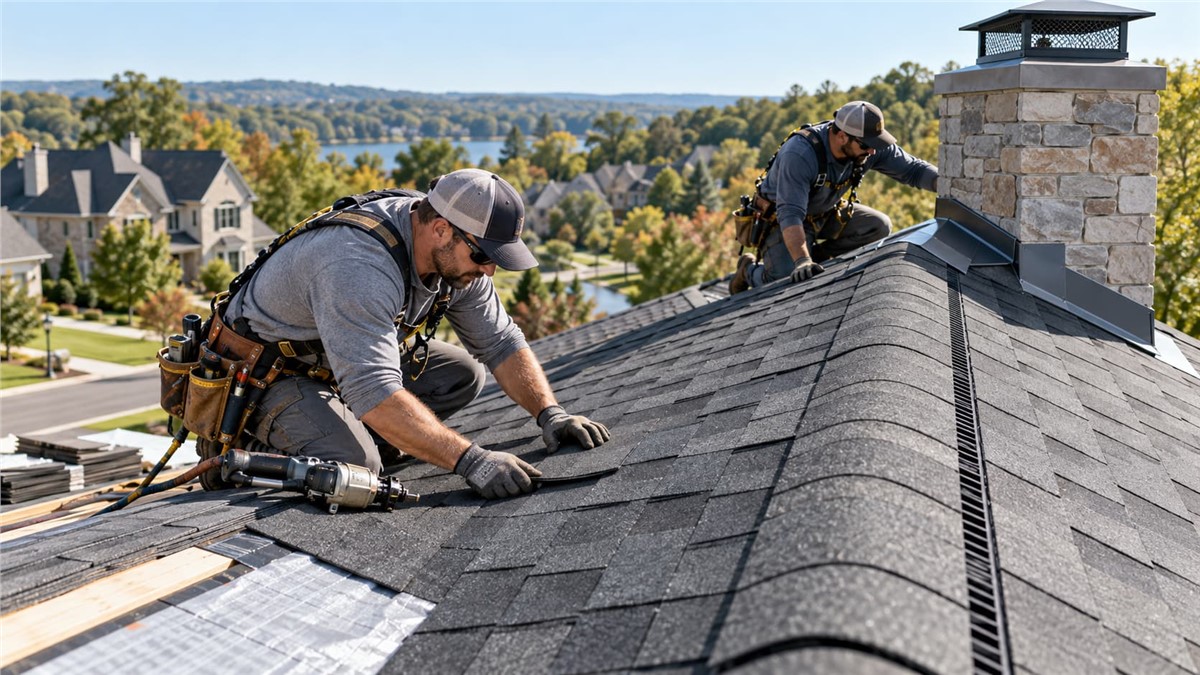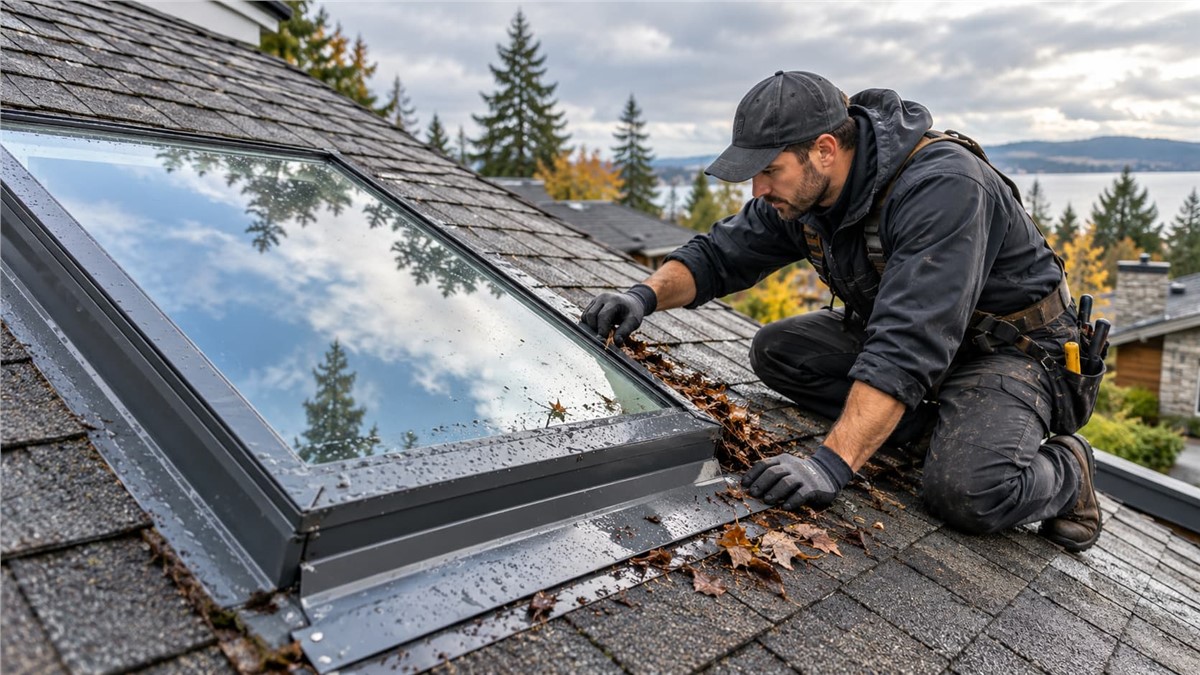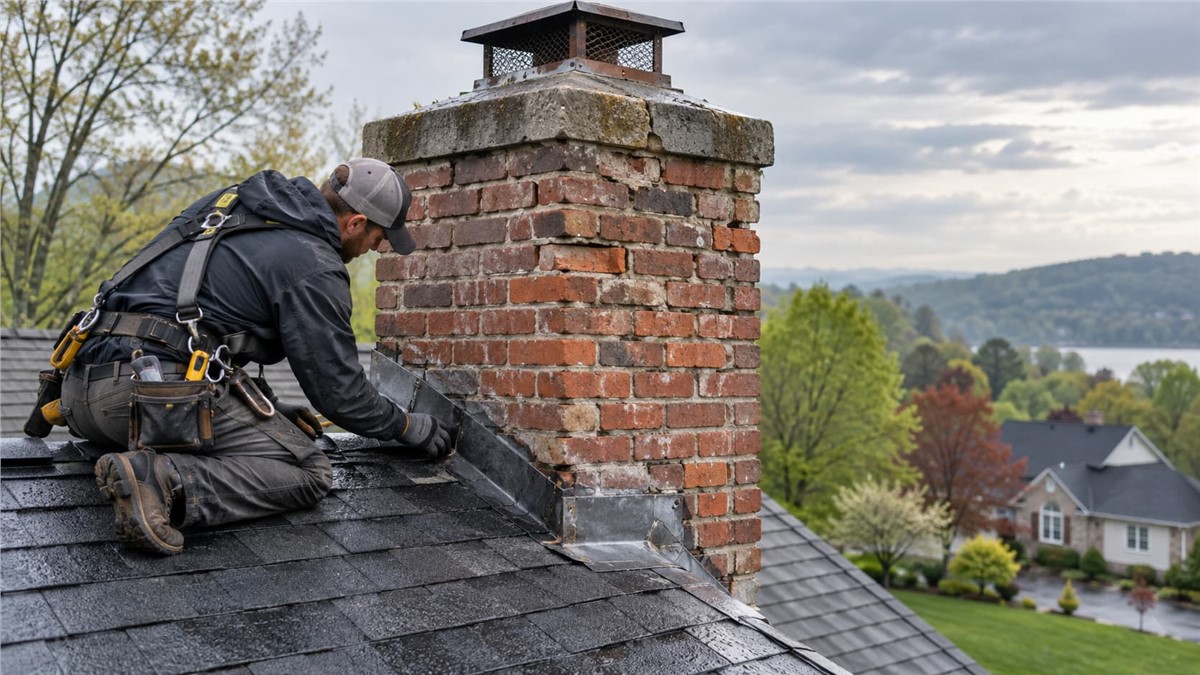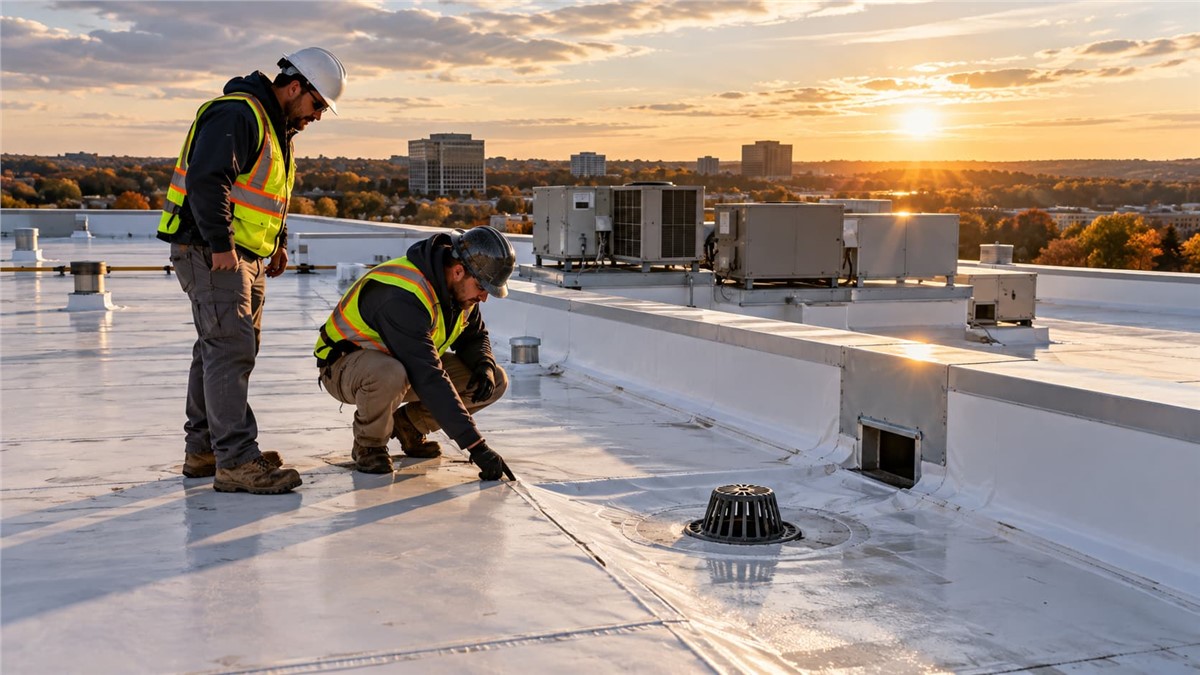
A commercial roof maintenance checklist should include monthly drain clearing and ground-level checks, quarterly rooftop walkthroughs, spring and fall inspections of flashing and sealants, an annual professional inspection with a moisture survey, and a damage assessment within 24 to 48 hours of major storms. Tailoring tasks to your roof type (TPO, EPDM, modified bitumen, or metal) and DMV weather, keeping dated records, and leaving membrane repairs to licensed roofers protects warranties, supports insurance claims, and extends roof life. |
Commercial roof failures usually start small. A clogged drain. A split seam. A flashing detail nobody has checked in two years. When a tenant finally reports a stained ceiling tile, water may have been soaking the insulation for months. For property managers and building owners, catching problems early is often what separates a quick repair from a budget-busting replacement.
A clear commercial roof maintenance checklist closes that gap. This guide gives you a schedule of what to inspect monthly, quarterly, seasonally, annually, and after major storms. You'll also see how to adjust tasks for TPO, EPDM, modified bitumen, and metal roofs, which DMV weather patterns need extra attention, and where your facilities team's job ends and a professional's begins. Use it as a working plan your team can pick up and start using this week.
Why Regular Maintenance Pays Off for Commercial Roofs
Your roof is one of the most expensive assets on the property, and it's usually the one nobody looks at until something goes wrong. Routine maintenance turns that asset into a predictable line item, so you can plan budgets around it instead of scrambling when water shows up on a ceiling tile. A solid commercial roof maintenance checklist gives your team a repeatable way to catch problems while they're still cheap to fix.
The Real Cost of Deferred Roof Maintenance
Skipping maintenance doesn't save money. It delays the bill and makes it bigger. A small puncture lets water reach the insulation, and wet insulation loses R-value, so your HVAC system has to work harder to hold temperature. Saturated boards also add weight to the structure, rust steel decks, rot wood decking, and hold moisture that feeds mold growth. When the leak finally appears indoors, the damage has usually spread far enough that you're paying for tear-out instead of a simple patch.
Some of the biggest costs never appear on a roofing invoice. Here are the indirect expenses that tend to follow a neglected roof:
- Tenant inventory: Water damage to stock, equipment, or records can lead to claims against the property.
- Closed suites: Leaks can force you to shut down space, which interrupts rent and operations.
- Emergency rates: After-hours and weekend calls cost far more than scheduled service.
- Lease relationships: Repeated disruptions strain goodwill and can affect renewals.
Deferred maintenance behaves like a high-interest loan. The payment you skip today comes back larger, usually at the worst possible moment. |
How Maintenance Protects Warranties and Insurance Claims
Most manufacturer warranties on commercial membranes require the owner to maintain the roof. If you file a claim without inspection reports, repair invoices, or proof that approved contractors did the work, the manufacturer has grounds to deny it. Unauthorized rooftop work is one of the most common triggers. An HVAC technician cutting the membrane to run a new line, for example, can put your coverage at risk if the penetration isn't sealed by a qualified roofer.
Insurance follows similar logic. Policies typically cover sudden damage from events like windstorms or hail, but they exclude wear and neglect. Dated photos and inspection logs from before a storm help adjusters separate new damage from existing problems, which can make the difference between an approved claim and an out-of-pocket repair. Keeping those records as part of your commercial roof maintenance checklist means the documentation is ready when you need it.
Reactive vs. Preventive Maintenance: A Side-by-Side Look
The table below compares reactive and preventive approaches across the factors property managers care about most:
Reactive vs. Preventive Roof Maintenance
Factor | Reactive | Preventive |
|---|---|---|
Budgeting | Unplanned, often at emergency rates | Scheduled and forecastable |
Repair scope | Larger, with hidden interior damage | Small fixes caught early |
Tenant impact | Leaks, disruption, complaints | Minimal, work timed around operations |
Warranty status | At risk without records | Supported by documentation |
Roof lifespan | Shortened by compounding damage | Extended toward full service life |
Preventive work carries a cost every year. Reactive work costs more, and you rarely get to choose when you'll pay it. A planned inspection schedule puts that timing back in your hands.
The Commercial Roof Maintenance Checklist by Frequency
Roof problems don't all develop at the same speed, so your inspections shouldn't either. A blocked drain can cause damage during one heavy storm, while moisture trapped in insulation can spread unnoticed for years. The schedule below places each task at the interval where it's most likely to catch a problem while the fix is still small and affordable.
Monthly Tasks: Ground-Level Checks and Drain Clearing
Most monthly checks happen from the ground or the top floor, so your facilities team can handle them without full rooftop access. Walk the building perimeter and look up. Are downspouts flowing freely, or is water spilling over the gutter edges? Watch for streaks or staining on exterior walls below scuppers, loose edge metal, and gutters that have started to sag.
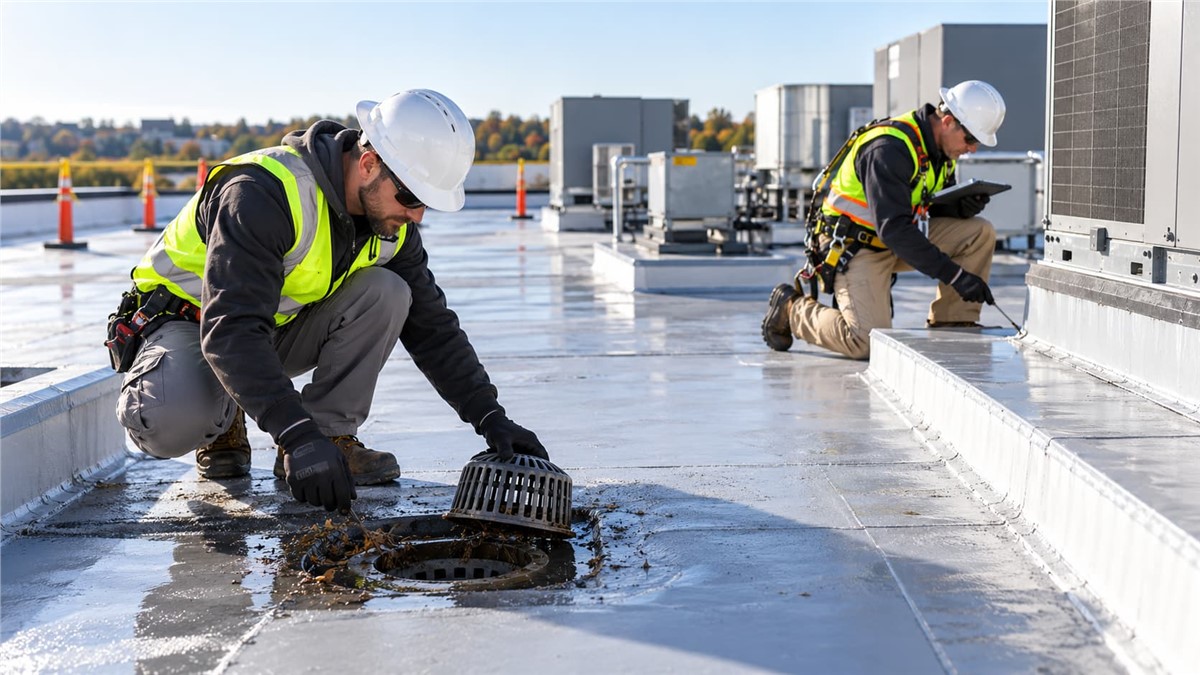
Inside, check top-floor ceilings for new stains, bubbling paint, or musty smells, and ask tenants to report anything that seems off. If you have safe roof access, pull leaves and trash off drain strainers and scuppers. One clogged drain on a flat roof can hold back thousands of gallons of water, and that weight puts real stress on the deck.
Quarterly Tasks: Rooftop Walkthroughs and Debris Removal
Every three months, someone should walk the roof itself while following your building's fall protection plan. Clear away branches, packaging, and loose fasteners left behind by HVAC or telecom crews. Debris causes physical damage, too: a single dropped screw can puncture a single-ply membrane once someone steps on it.
Look for ponding water, blisters, open seams, and worn or shifted walkway pads. Confirm that equipment curbs and pipe boots are intact. When something looks questionable, photograph it from the same spot each quarter so you can track whether it's getting worse.
Ponding water is water that remains on a low-slope roof 48 hours after rainfall ends. It points to a drainage or structural problem and speeds up membrane breakdown wherever it collects.
Semi-Annual Tasks: Spring and Fall Inspections
Spring and fall inspections bookend the two toughest seasons for your roof. In spring, you're looking at what winter left behind: freeze-thaw cracking, ice damage along the edges, and seams loosened by expansion and contraction. In fall, you're getting the roof ready for snow loads and heading off leaks that become much harder to repair in January.
These inspections go further than the quarterly walkthrough. Probe flashing terminations at parapet walls and around penetrations, inspect counterflashing and sealant joints, and check coping caps for gaps. Sealants usually fail well before the membrane does, so give them a close look. Clean gutters thoroughly before the leaves drop, then again once they're down.
Annual Tasks: Professional Inspections and Moisture Surveys
Once a year, have a qualified commercial roofer complete a documented inspection. A trained professional picks up on issues an untrained eye tends to miss, such as fastener back-out, membrane shrinkage pulling away from walls, or deck deflection. The written report also becomes part of your warranty and maintenance records, which matters if you ever need to file a claim.
It's worth pairing that inspection with a nondestructive moisture survey. Infrared thermography (often done with cameras from brands like Teledyne FLIR) finds wet insulation by its heat signature after sunset. Capacitance and nuclear moisture meters provide grid-based readings, and core cuts confirm what the scans show. Once you've mapped the wet areas, you can decide whether targeted repairs or a full recover is the better investment.
After-Storm Tasks: A Damage Assessment Protocol
High winds, hail, and heavy downpours call for an inspection within 24 to 48 hours, as soon as conditions are safe. Start with triage. There are: true emergencies that need immediate action, urgent issues that can wait a short time, and regular maintenance items, which makes it easier to decide who to call and how quickly.
Use these steps after every significant storm:
- Check the interior first for active leaks, and protect tenants, equipment, and electrical systems before anyone goes up.
- Go onto the roof only after wind and lightning have passed, and never walk on a surface with standing ice or visible deck sagging.
- Clear drains and scuppers so trapped water can drain before the next rainfall.
- Record damage with date-stamped photos and video, including displaced flashing, punctures, torn membrane, and dented metal.
- Look for hail bruising on modified bitumen and for fractured granules or cracked seams on other systems, since this damage often stays hidden until leaks show up weeks later.
- Make temporary repairs only when it's safe to do so, then schedule a professional assessment and notify your insurance carrier right away.
Add every storm report to your commercial roof maintenance checklist records. That documentation supports insurance claims and gives you a clear picture of how your roof is aging between scheduled inspections.
Tailoring Maintenance to Your Roof System and Climate
A generic checklist gives you a baseline, but every membrane breaks down in its own way, and DMV weather adds its own stress on top of that. Once you know your roof type and the local conditions it faces, you can put your inspection time where leaks are most likely to start.
What to Watch For on TPO, EPDM, Modified Bitumen, and Metal Roofs
TPO seams are heat-welded, so check the welds first. Run a probe along the lap edges to find voids, and look over older sheets for surface crazing or cracking. Those marks tell you UV exposure has worn through the protective top ply.
EPDM relies on adhesives and seam tape instead of welds, and those bonds weaken with age until seams start to peel. EPDM also shrinks over time. As it pulls tight against walls and curbs, the membrane can “bridge” across inside corners and eventually tear at the flashing.
Modified bitumen shows its age through granule loss, blistering, and alligatoring (a cracked pattern that looks like reptile skin). Once the asphalt is exposed, sunlight breaks it down faster, and lap seams tend to open as the sheet hardens.
Metal roofs usually leak at the details. Look for rust at cut edges and fasteners, cracked rubber washers on exposed screws, and failing sealant at panel laps and ridge caps. All three problems get worse as panels expand and contract through daily temperature swings.
Most commercial roof leaks start at transitions such as seams, edges, curbs, and penetrations, while the open field stays relatively trouble-free. Spend the bulk of every inspection on those details. |
Seasonal Challenges For Commercial Properties in the DMV
Northern Virginia, Maryland, and D.C. get some of the toughest conditions from both northern and southern climates. Summers are hot and humid, with intense UV and afternoon thunderstorms that can dump heavy rain in minutes. Winters often bounce above and below freezing, so meltwater seeps into small gaps and expands when it refreezes, widening them a little more each cycle.
Late summer and early fall can bring heavy rain from the remnants of tropical storms. Then the region's mature tree canopy starts dropping leaves that clog drains right as fall rains pick up. If your building sits near tall oaks or maples, schedule extra drain checks from October through December.
How to Customize a Commercial Roof Maintenance Checklist For Your Building
Follow these steps to turn a general schedule into a commercial roof maintenance checklist that fits your property:
- Gather your roof records: Pull the installation date, membrane type, manufacturer (such as Carlisle, GAF, or Firestone), and the maintenance requirements spelled out in your warranty.
- Map the roof: Sketch a plan that marks every drain, scupper, penetration, HVAC unit, and walkway so inspectors cover the same ground every visit.
- Flag risk factors: Note overhanging trees, heavy contractor traffic, past ponding areas, and restaurant exhaust vents, since grease breaks down single-ply membranes.
- Adjust frequency for high-risk zones: Inspect those areas more often. For example, check drains under tree cover weekly during leaf season.
- Assign owners and standardize records: Give each task a responsible person and document findings with a photo app like CompanyCam, so every issue is dated, located, and easy to share.
- Review the plan annually: Walk through it each year with your roofing contractor and update it as the roof ages or rooftop equipment changes.
A tailored commercial roof maintenance checklist points your team's limited time at the spots most likely to fail. Over the life of the roof, that focus can add years of dependable service and help you avoid costly emergency repairs.
When to Bring in a Professional Roofing Partner
A well-trained facilities team can spot a lot of trouble early. Some rooftop work, though, carries safety, warranty, or liability risks that belong with a licensed commercial roofer. Knowing exactly where that line falls protects your staff, keeps your manufacturer warranty valid, and keeps small issues from becoming expensive claims.
Tasks Your Facilities Team Can Handle vs. Jobs That Need a Pro
Here's a simple rule for any commercial roof maintenance checklist: your team observes, documents, and keeps water moving, and a professional handles anything that opens, alters, or diagnoses the roof system. The table below shows how common rooftop tasks usually divide between in-house staff and a roofing contractor.
Facilities Team vs. Professional Roofer Responsibilities
Task | Facilities Team | Professional Roofer |
|---|---|---|
Drain and gutter clearing | Yes, with safe access | When drains are damaged or repeatedly backing up |
Visual checks and photo logs | Yes | Reviews findings during annual inspection |
Membrane, seam, and flashing repairs | No, may void the warranty | Yes, using manufacturer-approved materials |
Moisture surveys and core cuts | No | Yes |
Coatings and restoration | No | Yes, after substrate evaluation |
Storm damage assessment | Initial interior check and photos | Full evaluation and insurance documentation |
Don't wait for the annual inspection if you notice leaks returning to the same spot, soft areas underfoot, or ponding that grows after each storm. These signs usually point to wet insulation or deck damage below the surface, and the repair bill tends to climb the longer they sit.
How NV Roofing's Commercial Services Support Property Managers
Managing a portfolio means balancing tenants, budgets, and vendor schedules all at once. NV Roofing's Commercial Division works as an extension of your team, turning a commercial roof maintenance checklist into a dependable routine across office buildings, apartment complexes, retail centers, and industrial facilities.
Here's what that partnership includes:
- NV Priority Plus maintenance programs: Scheduled inspections, repairs, and priority service bundled together, so your roof lasts longer and long-term costs stay predictable.
- Roofing and maintenance work: Repair, restoration, coatings, and installation planned around building operations to keep tenant disruption low.
- Heavy-duty gutter and drainage systems: Built for commercial structures to stop water intrusion before it reaches interiors.
- Rapid-response storm crews: Fast restoration of damaged properties, so businesses avoid extended downtime.
- Siding and window upgrades: One accountable contractor for the full building envelope.
The right roofing partner gives you fewer surprises, cleaner records, and a roof that ages on your schedule instead of the weather's. |
Family-owned and serving the DMV since 1963, NV Roofing brings more than 60 years of experience with the region's buildings and weather. If you'd like help building a maintenance plan around your property's roof systems, contact us.
Conclusion: Turning Your Checklist Into a Long-Term Asset Plan
A commercial roof maintenance checklist does its job once it leaves the binder and lands on your calendar. The frequency schedule sets a steady rhythm for your team, and the system-specific details tell them exactly where to look. Drawing a firm line between in-house checks and professional work protects your staff and keeps your warranties valid. When all of that works together, your roof turns into a predictable expense you can plan capital budgets around, and those surprise repair bills become far less common.
You can get started this week with a few simple steps. Dig out your warranty terms, sketch a rough map of the roof, and book your first quarterly walkthrough before leaf season starts clogging the drains again. Keep dated photos and inspection reports for a year, and you'll have a clear picture of how your roof is aging. That record also gives you solid ground for deciding when to repair, restore, or replace.
FAQs
What should a commercial roof maintenance checklist include?
It should cover drain and gutter clearing, debris removal, inspections of seams, flashing, penetrations, and sealants, plus post-storm damage checks and a written log of every finding. Adding a roof map and your warranty's maintenance requirements keeps each inspection consistent from one visit to the next.
How often should a commercial roof be inspected by a professional?
Most commercial roofs need a professional inspection at least once a year, ideally in spring or fall, plus an extra assessment after major wind, hail, or heavy rain events. Older roofs or buildings with frequent rooftop equipment traffic often benefit from twice-yearly professional visits.
Is a TPO or EPDM roof easier to maintain on a commercial building?
TPO's heat-welded seams generally resist separation well, while EPDM's adhesive seams and tendency to shrink with age usually require closer monitoring over time. Both systems perform reliably in the DMV with regular care, so the better fit often depends on your budget, roof layout, and energy efficiency goals.
Why do flat commercial roofs leak even when the membrane looks fine?
Leaks on low-slope roofs typically start at flashing, seams, drains, and equipment penetrations, and water can travel through the insulation before appearing indoors far from the actual entry point. Clogged drains and ponding water add stress that gradually opens small gaps you can't see from the surface.
Can following a commercial roof maintenance checklist extend the life of a roof?
Yes, catching small issues like open seams or failing sealant early prevents wet insulation and deck damage, helping a roof reach or even exceed its expected service life. Consistent inspection records also support warranty claims and make it easier to plan future repair or replacement budgets.
Subscribe to NV Roofing's Blog