Ice and water shield requirements vary across the DMV because each jurisdiction sets its own ice barrier rule in Table R301.2: Prince William and Montgomery counties require it along the eaves, Alexandria does not, and Loudoun and Prince George’s homeowners should confirm with their building departments. Even where code doesn’t mandate it, the membrane is worth installing in valleys, around penetrations, and on low-slope sections, especially when manufacturer warranty terms call for it or a metal roof needs a high-temperature product. |
Two houses 20 minutes apart in the DMV can get the same snow and the same freeze-thaw cycles, yet follow different rules for what goes under the shingles. Each jurisdiction decides on its own whether ice and water shield is mandatory along the eaves. Some require it. Some don’t. If you’re replacing a roof, that single code line changes your materials list, your quote, and whether the job passes inspection.
This guide covers what building codes mean by an “ice barrier,” how to check your county’s rule in a few minutes, and where each DMV local government stands. You’ll also see where ice and water shield for roofing pays off even when code doesn’t call for it: valleys, skylights, and low-slope sections. Then you’ll know exactly what to ask your contractor and which line items to check on your estimate.
What Ice and Water Shield Is and How Codes Decide Where It Goes
Before you look up your county’s rule, it helps to know what an inspector checks on the roof. The code language is brief, and almost every word in it shapes what gets installed at your eaves.
What Building Codes Mean by “Ice Barrier”
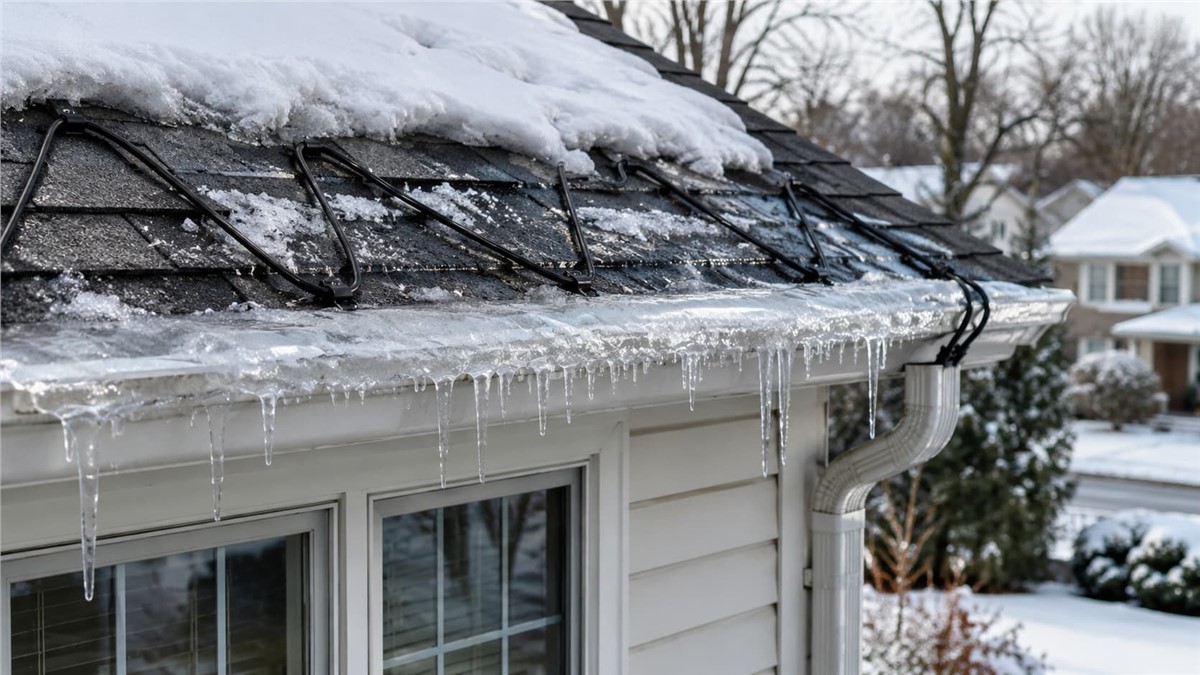
“Ice & Water Shield” began as a Grace brand name, and roofers now use it the way people use “Kleenex” for any tissue. When contractors talk about ice and water shield for roofing, they mean a self-adhered, polymer-modified bitumen membrane. It bonds straight to the roof deck and seals tightly around every nail that passes through it. When an ice dam forces meltwater back up under the shingles, the membrane leaves that water no route into the decking.
The International Residential Code (IRC) calls this layer an ice barrier. Section R905.1.2 requires one in areas with a history of ice forming along the eaves and causing water to back up. You can meet the requirement in two ways: two layers of standard underlayment cemented together, or a self-adhering polymer-modified bitumen sheet. Most crews install the sheet because it goes down faster and seals better around fasteners.
Code minimum: the ice barrier runs from the lowest roof edge to at least 24 inches inside the exterior wall line. Detached accessory structures with no conditioned floor area, such as most sheds, are exempt. |
How to Read Table R301.2 for Your Jurisdiction
The IRC leaves the “history of ice” question to local officials. Each jurisdiction records its answer in Table R301.2, Climatic and Geographic Design Criteria. These steps will help you find out whether ice and water shield is required at your address:
- Go to your county or city building department website and look for adopted codes, local amendments, or design criteria.
- Find the climatic and geographic design criteria table, which is often posted as its own PDF.
- Locate the column labeled “Ice barrier underlayment required.”
- Read the entry for your area, where “Yes” means the eave membrane is mandatory and “No” means it’s optional.
- Check the date on the document, since jurisdictions update these tables when they adopt a new code edition.
Why Neighboring Jurisdictions Reach Different Answers
Virginia localities enforce the Uniform Statewide Building Code, which is based on the IRC, and each locality fills in its own climatic criteria. Maryland counties adopt the IRC with their own local amendments. Washington, D.C. follows its own Construction Codes. That adds up to three separate code systems within a single metro area.
“History of ice” also leaves room for interpretation. Two building officials can look at similar weather records and come to opposite conclusions. One may give heavy weight to past ice dam complaints, while another decides that short cold snaps don’t justify a mandate. Different code adoption schedules add even more variation, so the only dependable answer for your home comes from your own jurisdiction’s table.
County-by-County Ice Barrier Requirements Across the DMV
Below is where each local government stands, based on its published climatic and geographic design criteria. Jurisdictions update these tables whenever they adopt a new code edition, so use this as a starting point and check the current version with your building department before you sign a contract. Where we couldn’t verify a published answer, we say so instead of guessing.
Prince William County
Prince William County marks ice barrier underlayment as “Yes” in its design criteria. Any shingle reroof or new build that needs a permit must include an ice barrier along the eaves. Like every Virginia locality, the county enforces the statewide Uniform Statewide Building Code (USBC) and supplies its own climatic values.
Plan reviewers and inspectors in the Department of Development Services expect to see the membrane on the eaves. If a contractor leaves out the ice and water shield to lower the price, the job can fail inspection. Neighborhoods out toward Haymarket and Gainesville often get harder freezes than areas closer to the Potomac, which helps explain why the county requires it.
Montgomery County
Montgomery County, Maryland, also requires an ice barrier. Maryland counties adopt the IRC with their own amendments, and Montgomery’s Department of Permitting Services (DPS) publishes design criteria that list ice barrier underlayment as required.
For homeowners, this means any permitted shingle roof replacement should include ice and water shield on the eaves. The northern parts of the county, such as Damascus and Poolesville, see colder overnight lows and snow that sticks around longer than in Silver Spring or Takoma Park. The same countywide rule applies to all of them. If your estimate doesn’t list an ice barrier, ask your contractor about it before you sign.
City of Alexandria
Alexandria’s 2022 design criteria answer “No.” The city doesn’t require an ice barrier under the code. That catches many homeowners off guard, since Alexandria gets the same nor’easters and ice storms as the surrounding counties.
A “No” in the code table sets the legal minimum. Your house can still get ice dams, and the only change is that the city won’t fail your inspection if the membrane is missing. |
Many Alexandria homes are older, with shallow eave overhangs, thin attic insulation, and complicated rooflines. Ice dams tend to form under exactly those conditions. Treat the city’s exemption as a decision point: talk through ice and water shield for roofing with your contractor and choose based on your home’s age, insulation, and roof shape rather than skipping it by default.
Loudoun County
We couldn’t confirm Loudoun County’s current ice barrier designation from a published source, so we won’t state one here. Loudoun spans a wide climate range, from the Route 28 corridor to the higher ground around Round Hill and Bluemont, where snow and ice linger noticeably longer.
For a definite answer, call or email Loudoun’s Department of Building and Development. Ask for the climatic and geographic design criteria under the current USBC edition, then find the ice barrier line. Homeowners in western Loudoun should seriously consider eave protection regardless of what the table says.
Prince George’s County
Prince George’s County’s status also needs direct confirmation. Permits and inspections there run through the Department of Permitting, Inspections and Enforcement (DPIE), which administers the county’s adopted IRC and its local amendments.
Before your project begins, ask DPIE or your contractor to show you the ice barrier entry in the county’s current design criteria. These three questions will get you a clear answer:
- Code requirement: Does the county’s adopted Table R301.2 mark ice barrier underlayment as required, and which code edition is that answer based on?
- Inspection scope: Do reroofing permits get the same eave inspection as new construction, since enforcement can differ between the two?
- Estimate details: Does your contractor’s estimate list the ice and water shield as a separate line item, so you can see exactly what you’re paying for?
A reputable contractor working in Prince George’s County should already know the answer. A vague response tells you something about how closely they read the code.
Beyond Code Minimums: Where the Membrane Still Pays Off
Building codes focus on the eaves, but water doesn’t read code tables. It pools where two roof planes meet, works its way around anything that cuts through the deck, and lingers wherever the pitch flattens out. These are the spots where a leak usually starts, so they deserve protection whatever your local code requires.
Ice and Water Shield for Roofing Valleys, Penetrations, and Low-Slope Sections
A valley works like a gutter built into your roof. It collects runoff from two slopes at once, so it handles more water than any other part of the roof. Installing ice and water shield for roofing valleys gives that heavy-traffic channel a sealed base layer that keeps water out of the deck even if the shingles above it shift or wear.
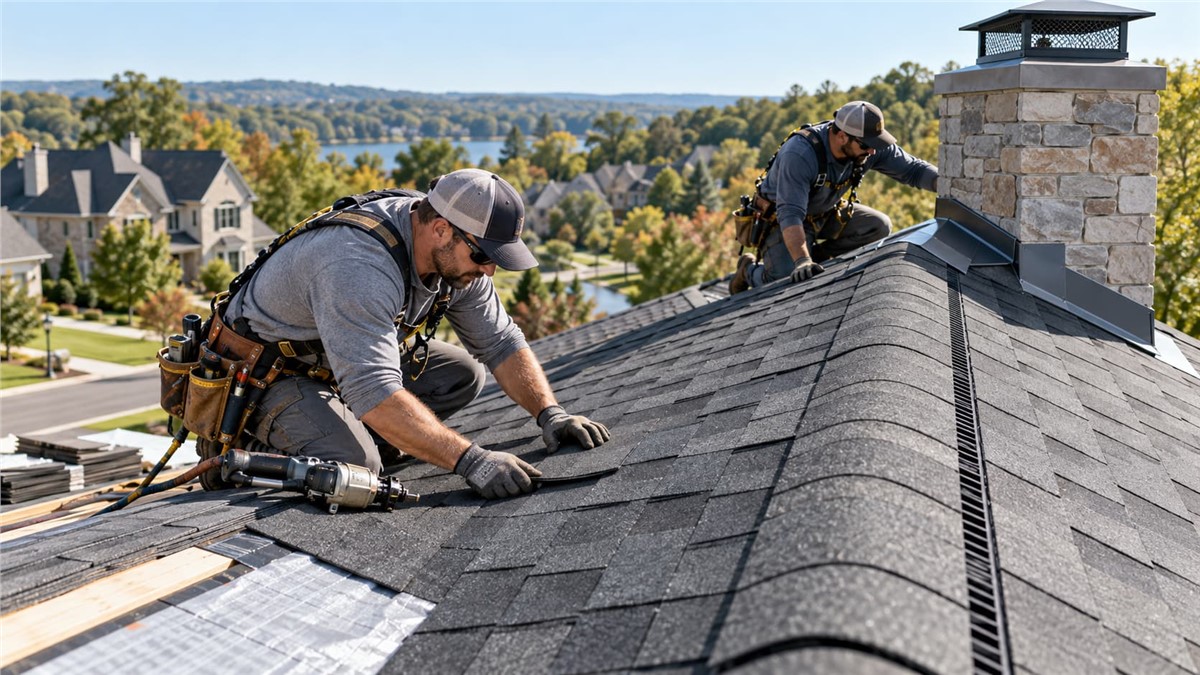
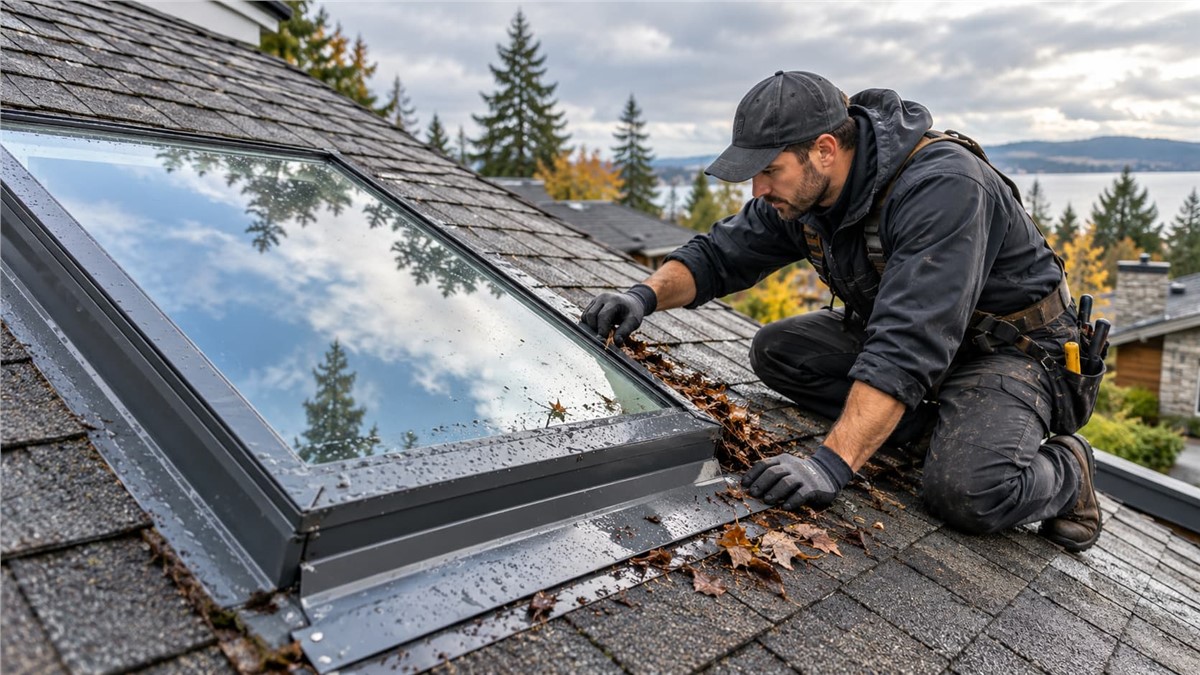
Penetrations are the next weak points. Chimneys, skylights, plumbing vents, and sidewalls where a roof meets a second-story wall all rely on flashing to shed water. Flashing does most of the work, but metal can lift, sealant can crack, and nails can back out over time. A membrane underneath catches whatever gets past the flashing before it reaches the sheathing.
Low-slope sections, such as porch roofs and shallow additions, drain slowly, so water sits on them longer. The IRC already requires doubled underlayment on shingle roofs between 2:12 and 4:12 pitch. A self-adhered membrane goes a step further by creating one continuous sealed layer, which leaves no seams between overlapping sheets for wind-driven rain to push through.
If you’re reviewing a roofing proposal, use these steps to confirm where the membrane should go beyond the eaves:
- Walk around the house and note every valley, chimney, skylight, and roof-to-wall joint.
- Look for low-slope sections, especially over porches, sunrooms, and dormers.
- Check the attic for water stains near those spots, since old leaks show you exactly where water already wants to go.
- Compare your notes against the estimate and confirm each area lists ice and water shield or an equivalent membrane.
- Ask the contractor which product they plan to use, such as Grace Ice & Water Shield, GAF StormGuard, or Owens Corning WeatherLock.
Ten minutes with this checklist can spare you the surprise of finding a gap after the first heavy storm.
Manufacturer Warranty Requirements vs. Code Requirements
Code sets the legal minimum. Shingle manufacturers set their own rules, and those rules decide whether your warranty holds up when you need it. Major brands like GAF, Owens Corning, and CertainTeed publish installation instructions that often call for a leak barrier in valleys and along eaves where ice dams can form. Their enhanced system warranties may also require you to use the brand’s own underlayment and accessories.
A roof can pass inspection and still fall short of the manufacturer’s requirements. If a leak shows up years later, the warranty terms matter more than the permit sign-off. |
Ask your contractor to name the specific warranty tier in writing, then read the installation requirements that come with it. In a “No” jurisdiction like Alexandria, those requirements are often what tips the decision toward installing ice and water shield anyway.
High-Temperature Membranes Under Metal Roofs
Metal panels get hot in a DMV summer, and that heat transfers directly into whatever sits beneath them. Standard self-adhered membranes can soften, bleed asphalt, or bond to the underside of the panels when temperatures climb. The result can be staining and a much messier job if the roof ever needs repairs.
For metal roofs, crews should install a high-temperature rated membrane, such as Grace Ice & Water Shield HT or a comparable product from the panel manufacturer’s approved list. If you’re switching from shingles to standing seam, confirm that the underlayment spec changes too. A product that performed well under asphalt shingles may not hold up under steel.
Getting Underlayment Right on Your Next Roof Project
Knowing your county’s rule gets you halfway there. The rest comes down to making sure the ice and water shield is installed correctly, documented while it’s still visible, and signed off by the right people.
How Ice Barriers Factor Into Permits and Inspections
Most DMV jurisdictions require a permit for a full roof replacement, and that permit ties your project to the locally adopted building code. If your jurisdiction’s table says “Yes,” ice and water shield for roofing along the eaves is a legal requirement. It’s part of the baseline installation your contractor must deliver, and it should never show up on your estimate as an optional add-on.
The tricky part is that the membrane disappears the moment shingles go on top of it. Some inspectors check the eaves before shingles are installed. Others ask for photos. Others focus mainly on the finished roof. Practices differ from one jurisdiction to the next, so ask your contractor how your local inspector handles it before work begins.
Ask for dated photos of the ice barrier before the shingles cover it. Those photos are your only proof of what’s under the roof if a leak, an insurance claim, or a home sale ever raises the question. |
The table below shows where the ice barrier typically comes up at each stage of a permitted reroof, along with what you should look for at every step:
Where the Ice Barrier Shows Up in a Reroof Permit
Project Stage | What Happens | What to Check |
Estimate | Contractor defines the underlayment scope. | Ice barrier listed by location (eaves, valleys, penetrations). |
Permit application | Project is filed under the current local code. | Permit is pulled by the contractor, not left to you. |
Installation | Membrane goes down before shingles. | Photos showing coverage at least 24 inches inside the wall line. |
Final inspection | Inspector approves the finished roof. | A copy of the signed-off permit for your records. |
How NV Roofing Handles Underlayment on Residential Projects
NV Roofing has been roofing homes across Northern Virginia, Maryland, and D.C. since 1963. In that time, we’ve seen code editions change and neighboring jurisdictions adopt different rules. That’s why every replacement starts with us confirming the current requirement for your specific address, rather than assuming the rule from the last job one county over still applies.
From there, we treat the code as the minimum. In a “Yes” jurisdiction, eave protection with ice and water shield is standard on every job. In a “No” jurisdiction like Alexandria, we walk you through your roof’s actual risk points (low-slope sections, valleys, and areas prone to ice dams) so you can make an informed decision. Your estimate lists the underlayment scope line by line, so you know exactly what you’re paying for and why it’s there.
Our factory-certified crews install the full system: membrane, synthetic underlayment, flashing, and shingles or metal. Keeping the entire installation in one set of hands protects your manufacturer warranty. We also look at the parts of your home that contribute to ice dams, such as seamless gutters that need to drain freely. If you want a roof built to your local code and to the real conditions your home faces, Contact us.
Conclusion
Across the DMV, there’s no single rule for ice barriers. Every building department makes its own call, so the requirement can flip from “Yes” to “No” once you cross a county line. The design criteria in your jurisdiction set the legal minimum. How far past that minimum you go depends on your roof itself (the valleys, skylights, and low-slope porch sections) and on what your shingle warranty requires. Homeowners who look at both sides of this tend to avoid failed inspections and arguments over warranty claims.
Before you start comparing quotes, look up your jurisdiction’s current design criteria and see what the ice barrier entry says. After that, hold every estimate up against three questions. Where will the ice and water shield be installed? What product is being used? Will the contractor give you dated photos of the ice and water shield for roofing before shingles go over it? Go with the contractor who answers all three plainly and puts those answers in writing.
FAQs
Does an ice barrier actually stop ice dams from forming on my roof?
No, it only keeps meltwater from leaking into the deck once a dam has formed. Preventing the dams themselves depends on attic insulation, air sealing, and ventilation that keep the roof deck cold.
Should ice and water shield cover my entire roof instead of just the eaves and valleys?
Full coverage is rarely needed on a standard-pitch shingle roof and can trap moisture in the deck if the attic is poorly ventilated. Most homes get better value from targeted protection at the eaves, valleys, penetrations, and low-slope sections.
Can a self-adhered membrane be installed during a DMV winter?
It can, but most manufacturers call for application at roughly 40°F and rising, because the adhesive struggles to bond in colder conditions. On a winter reroof, crews may need to schedule work for the warmer part of the day or use a cold-weather rated product.
Can ice and water shield go over existing shingles during a layover reroof?
No, the membrane must bond directly to a clean, dry roof deck to seal around nails and block water. That means a full tear-off is needed wherever the ice barrier is installed.
Can old ice and water shield be reused when the roof is replaced?
Generally not, since the adhesive bonds so firmly to the sheathing that the membrane tears or pulls up wood fibers when shingles come off. Contractors usually install new membrane over it or replace the affected decking, which should be reflected in your estimate.
Subscribe to NV Roofing's Blog