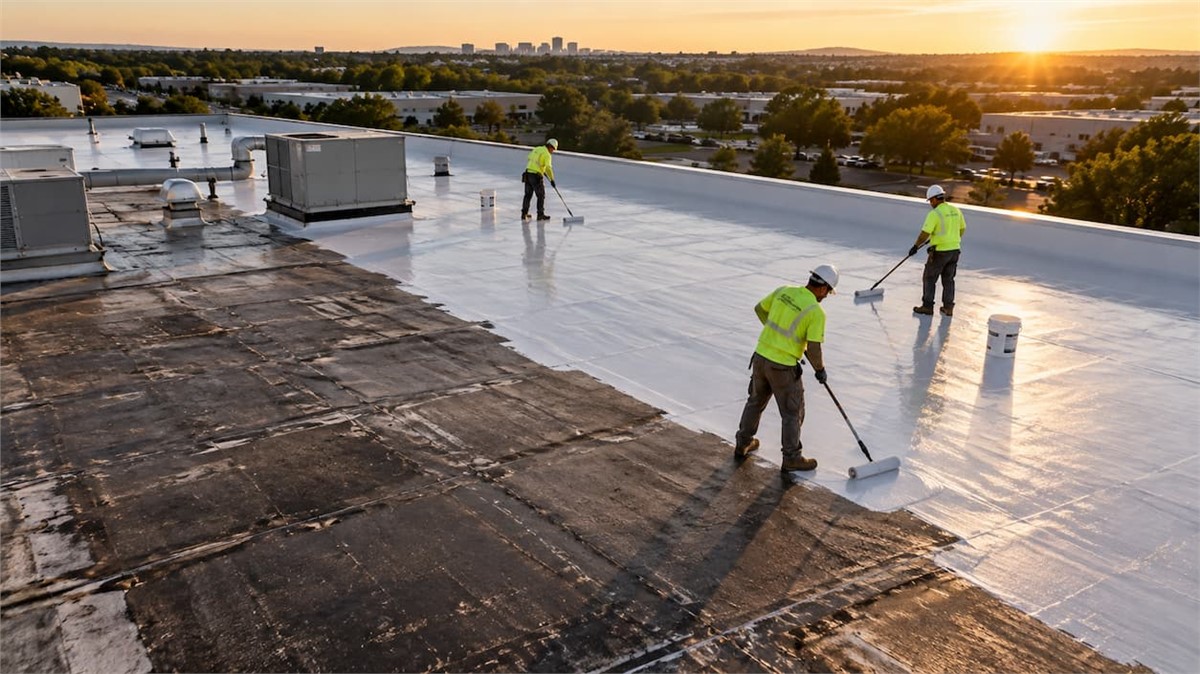
| Commercial roof restoration includes cleaning, repairing, and recoating an existing low-slope roof (TPO, PVC, EPDM, built-up, modified bitumen, or metal) with silicone, acrylic, polyurethane, or asphalt-based coatings, adding 10 to 20 years of service life at roughly 30 to 50 percent of replacement cost. It only works when the assembly is dry and structurally sound, so an infrared moisture survey and core samples come first, and widespread wet insulation, deck damage, too many existing layers, or persistent ponding point toward full replacement instead. |
Three active leaks, a fully occupied building, and a tear-off quote that just wrecked your capital budget. Sound familiar? Here's what most property managers miss: replacement isn't your only option. Commercial roof restoration (cleaning, repairing, and coating the roof system you already have) can add 10 to 20 years of service life for a fraction of replacement cost. No dumpster in the parking lot. No six weeks of tenant complaints about noise.
Restoration has limits, though. It performs well on certain roof systems and fails expensively on others, usually because someone skipped the moisture survey. This guide covers how the process actually works, which roof types qualify, what happens from the first infrared scan to the final coat, and the specific conditions that should push you toward full replacement instead. You'll get the numbers, the decision criteria, and the red flags. No sales pitch, just what you need to defend the call you make.
What Commercial Roof Restoration Actually Is
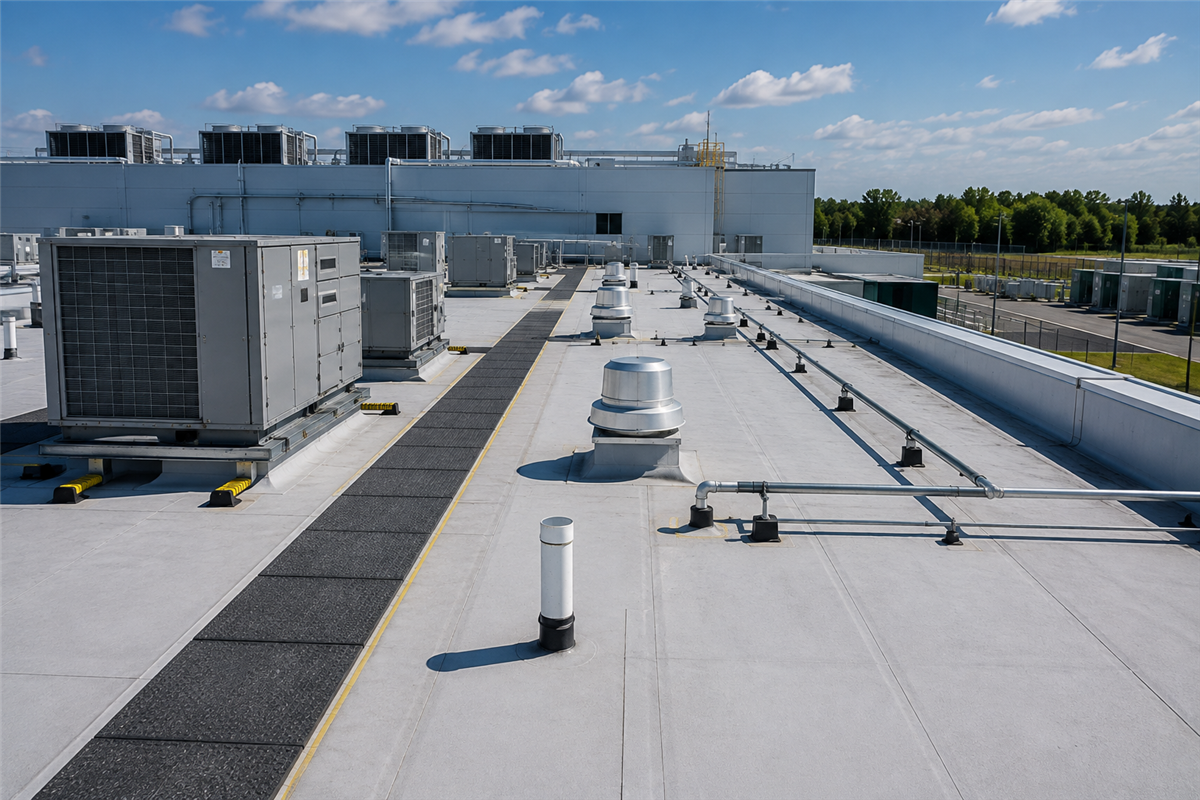
Restoration renews what's already sitting on your building. A crew cleans the membrane, repairs the failing details, removes any wet insulation, reinforces seams and penetrations, then applies a fluid-applied coating system across the entire surface. What you end up with is a fresh, seamless waterproof layer bonded to a roof that's still structurally sound underneath.
Commercial roof restoration is the process of repairing and re-waterproofing an existing low-slope roof, then sealing it under a coating system, so the assembly keeps performing without a tear-off.
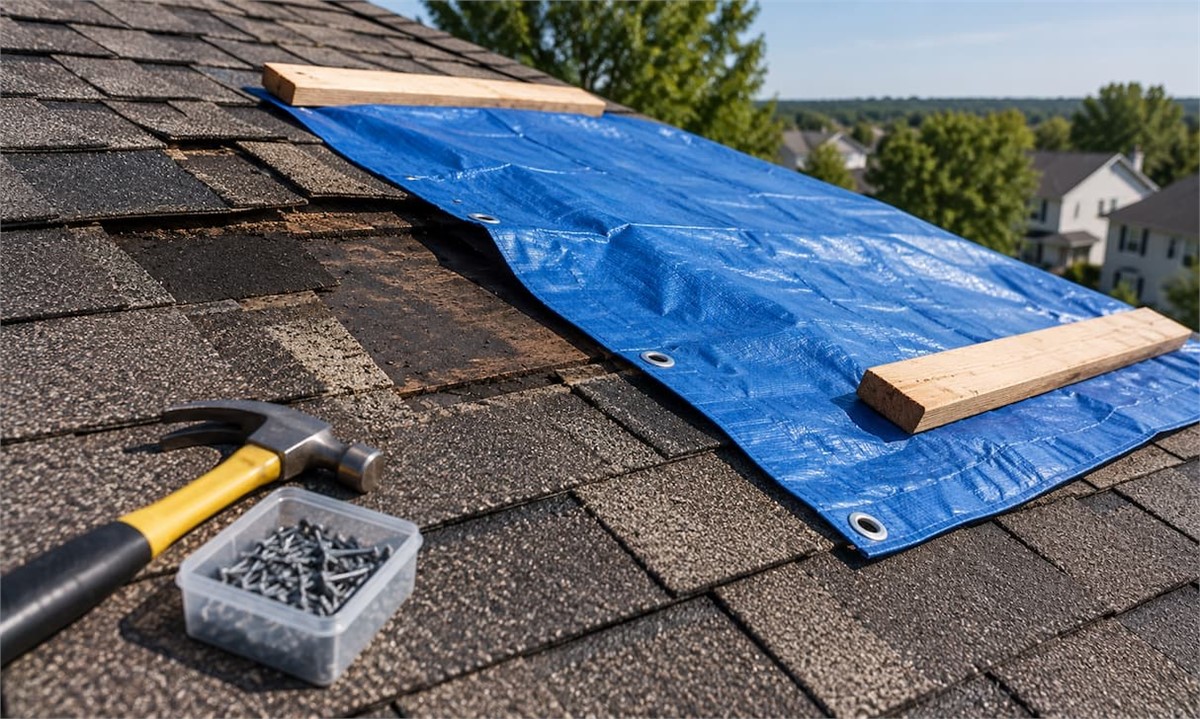
A repair is spot treatment. Something leaks, you patch it, you move on. Repairs solve today's problem and do nothing for the aging membrane twenty feet away, which is why buildings that live on repairs tend to see the same crew back every few months.
Replacement is the opposite extreme: strip everything down to the deck, haul it away, and rebuild the insulation and membrane from scratch. It resets the clock completely, and the price tag reflects that, along with the disruption to whatever operates below the roofline.
Restoration sits between them. You keep the deck and insulation (assuming both are dry and sound), correct every deficiency across the whole roof, and add a new waterproofing layer on top. According to Mountain Valley Roofing's restoration guide, the point is restoring waterproofing performance and lowering long-term ownership costs, not hiding damage under a fresh surface. That distinction matters more than most owners realize, because a coating applied over saturated insulation traps the moisture and speeds up deck corrosion. Any honest inspection starts with core cuts or an infrared scan to find out what's actually wet before a single gallon gets ordered.
Commercial Roof Coating Types and Where They Work Best
Four chemistries dominate commercial work, and each behaves differently under mid-Atlantic freeze-thaw cycles and summer humidity. Here's how they compare and where each one earns its keep:
- Silicone handles ponding water better than anything else on the market, which makes it the usual pick for roofs with slow drainage or minor low spots that never fully dry out.
- Acrylic costs less and reflects heat well, but it needs genuine slope and a solid stretch of dry weather to cure properly, so scheduling matters.
- Polyurethane stands up to foot traffic and hail impact, earning its place on roofs with heavy rooftop equipment that gets serviced regularly.
- Asphalt-based and SEBS coatings stay compatible with aging built-up and modified bitumen surfaces where other chemistries simply won't bond.
Most systems go down at 20 to 30 mils dry film thickness, often with polyester fabric embedded at seams and flashings for added reinforcement. Thickness drives warranty length, so a thin single coat and a properly specified two-coat system are entirely different products, even when the bucket labels match. When you're comparing bids for commercial roof restoration, ask for the mil thickness and the manufacturer's warranty terms in writing. That one question separates a serious proposal from a cheap one.
Which Commercial Roof Systems Can Be Restored?
TPO and PVC
Not every low-slope roof is a restoration candidate, and the deciding factor almost always comes down to what's under your feet. A 14-year-old TPO roof and a 14-year-old gravel-surfaced built-up roof age in completely different ways, and a coating chemistry that bonds beautifully to one can peel off the other in sheets. Here's how the major commercial systems across the DMV region respond to restoration.
Single-ply thermoplastics are the most common low-slope systems on newer office buildings and retail centers around Northern Virginia, and they restore well when the membrane is still weldable and the seams are sound. The usual failure pattern is UV degradation at the surface, where the top layer chalks and thins while the reinforcing scrim underneath stays intact. That's a coatable roof.
The catch is adhesion. TPO in particular resists coatings unless the surface is properly cleaned and, in many cases, primed. Skipping the primer on a weathered thermoplastic roof is one of the most common reasons a restoration fails early. Silicone and acrylic systems both work here, but the manufacturer's written specification for that specific membrane carries more weight than any general rule of thumb.
EPDM
Black EPDM has been on commercial buildings for decades, and it's a strong restoration candidate because the rubber itself often stays flexible long after the seams and flashings give up. Restoration on EPDM typically means stripping in the seams with reinforcing fabric, detailing every penetration, and then coating the field.
There's a bonus with rubber: you're taking a black roof that soaks up heat all summer and turning it white. According to the US EPA, reflective roofing can cut peak cooling demand in air-conditioned buildings by 11 to 27 percent. On a fully leased building where tenants pay utilities, that's a number worth putting straight into your capital request.
| The roof membrane determines the coating. Anyone who quotes you a coating before identifying the substrate is guessing with your budget. |
Built-Up Roofing and Modified Bitumen
Asphalt-based systems, whether that's a traditional built-up roof or a modified bitumen cap sheet, are workhorses for restoration as long as the felts are dry. Blisters, alligatoring, and granule loss are surface conditions. Saturated insulation is not.
Two wrinkles show up on these roofs. Gravel-surfaced built-up systems need the aggregate removed or embedded before anything gets applied, which adds real cost to the project. And asphalt bleed-through can stain a white coating within months unless a bleed-blocking primer goes down first. Neither issue is a dealbreaker, but both belong in the written scope of work before you sign anything.
Metal Roofs
Metal may be the best restoration candidate of the group, especially on the warehouse and industrial properties scattered across Maryland and the surrounding corridors. Panels rarely fail in the field. They fail at the fasteners, the laps, and the rusted edges, and every one of those can be treated directly.
A proper metal restoration includes rust treatment, fastener replacement or gasket upgrades, and seam reinforcement before any coating goes on. Done right, it converts thousands of individual leak points into one continuous, monolithic surface. Done cheaply, meaning coated over active corrosion, it hides the rust for about two seasons and then blisters.
When Commercial Roof Restoration Is the Wrong Choice
We'd rather tell you no than sell you a coating that buys 18 months. These are the conditions that consistently rule out commercial roof restoration on a building:
- Wet insulation across roughly 20 to 25 percent of the roof area: sealing moisture under a coating traps it, and trapped water keeps degrading the deck while you sleep.
- Structural deck problems: soft spots, deflection, or corroded metal decking are engineering issues, and no coating adds load capacity.
- Multiple existing roof layers: most jurisdictions cap you at two, and a roof already at the limit with widespread failure usually needs a tear-off.
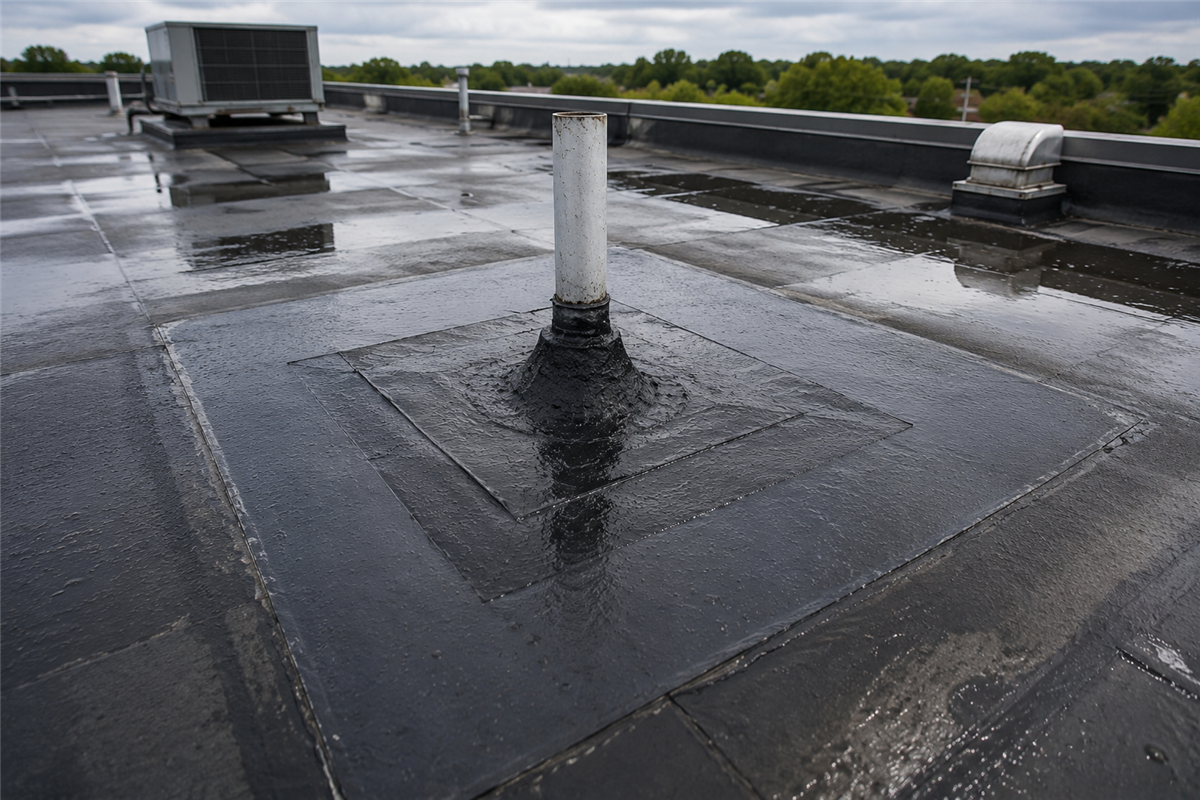
- Ponding water that never clears: standing water past 48 hours shortens the life of most coating systems, so drainage has to be corrected first.
Can you coat a roof that already has a coating on it? Often yes, provided you know what's up there and it's still adhering. Silicone over silicone works with the right surface prep. Acrylic over failed silicone does not. If the previous coating is delaminating, it comes off before anything new goes down.
The Commercial Roof Restoration Process
Start With a Moisture Survey
A restoration succeeds or fails in the first week, long before anyone opens a bucket of coating. What follows is the sequence a qualified commercial contractor should walk you through, along with the paperwork you should have in hand at every stage.
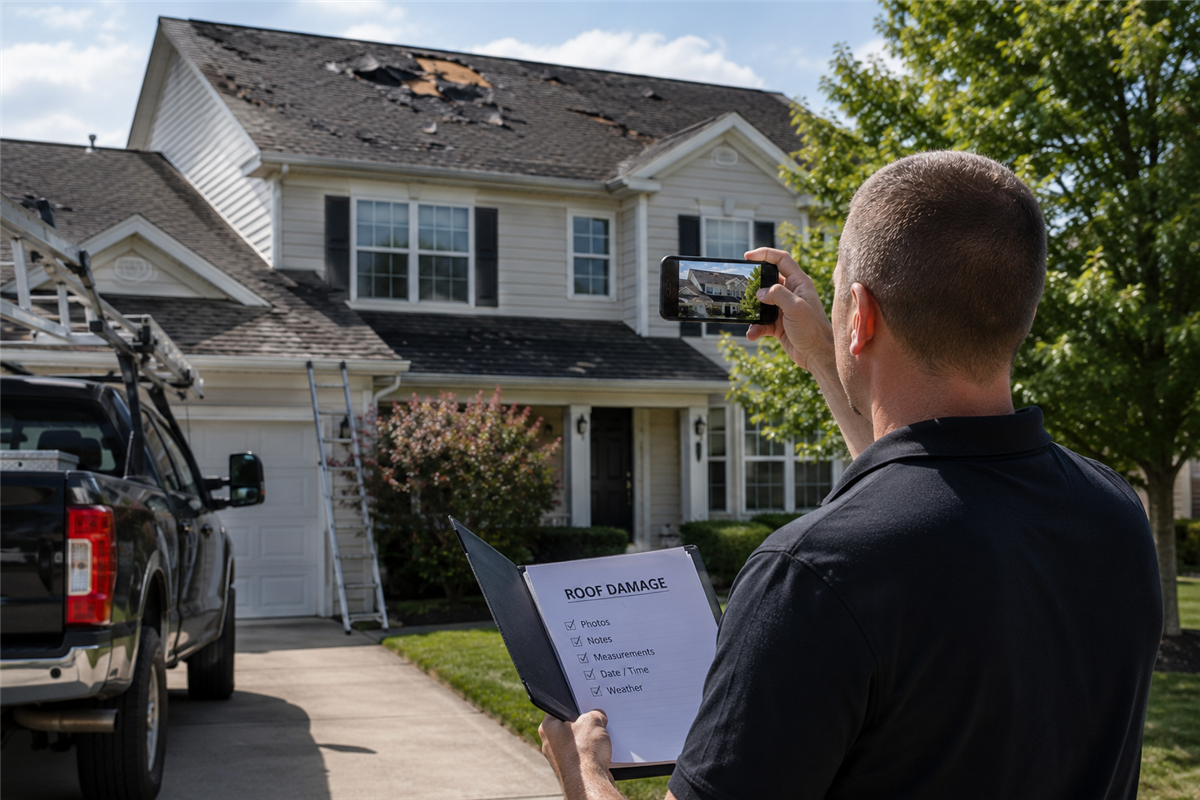
A visual walk gets you maybe 60 percent of the picture. Ponding patterns, seam condition, flashing separation, mechanical curb details, drain condition, all of that shows up to the naked eye. Wet insulation does not.
That's why moisture detection comes before any proposal on a commercial roof restoration. Infrared thermography, run at dusk when the roof releases stored heat, shows saturated areas as bright anomalies. Capacitance meters from manufacturers like Tramex confirm those readings on the spot. Then you cut cores, usually one per suspected wet zone plus a couple in dry-looking areas as a control, and physically inspect the insulation, the number of existing layers, and the deck condition underneath.
| If a restoration bid arrives without a moisture survey attached, it isn't a bid. It's a guess with a price on it. |
Repair, Prep, and Apply the Coating
Once the roof qualifies, the work follows a fixed order, and jumping ahead is how warranties get voided. Here is the sequence our crews follow on a typical occupied commercial building:
- Remove and replace wet insulation. Saturated sections come out down to the deck and get rebuilt with matching-thickness board, tied back into the existing assembly.
- Power wash the field. Most systems require cleaning at 2,000 to 3,000 psi, sometimes with a detergent, to strip chalk, dirt, and biological growth that would block adhesion.
- Run an adhesion test. Small test patches of the specified coating go down in a few areas and get pull-tested after cure. That result tells you whether primer is needed.
- Detail the weak points. Seams, penetrations, curbs, drains, and edge metal get stripped in with reinforcing fabric and mastic before any field coating goes down.
- Apply the base coat. Sprayed or rolled to the specified wet mil thickness, with wet film gauges checked continuously across the roof.
- Apply the top coat. Usually in the opposite direction, once the base has cured inside the manufacturer's temperature and humidity window.
Follow that order and the coating behaves like a second membrane. Worth clarifying the difference between the two: a membrane is a manufactured sheet mechanically fastened or adhered to the roof, while a coating is a liquid applied on site that cures into a seamless film. The coating depends entirely on the substrate beneath it, which is why prep carries so much weight in the final result.
Manufacturer warranties on coating systems typically run 10, 15, or 20 years, tied directly to mil thickness and installer certification. Ask for the warranty draft before work starts, not after the last coat cures. You should also receive daily mil-thickness logs, photo documentation of every detail, and the core sample report for your building file.
For your tenants, the practical wins are real. No tear-off means no debris, no crane, and no open deck sitting exposed to weather overnight. Odor is the main complaint we hear, so solvent-based products near fresh air intakes need scheduling around occupancy, and most crews stage the roof in sections to keep parking and entrances clear throughout the job.
Is Your Commercial Roof a Managed Asset or a Future Emergency?
NV Roofing's complimentary inspection gives you a full condition report, capital risk assessment, and remaining service life estimate. A $2,400 value at no cost.
Claim My Free Inspection →
How NV Roofing Handles Commercial Roof Restoration
Understanding the technical side of restoration is one thing. Finding a contractor willing to tell you when your roof doesn't qualify is another. NV Roofing has worked on DMV-area commercial properties since 1963, and that history shapes how we handle every project: assess honestly, scope the job completely, and keep your tenants out of it as much as humanly possible.
Our commercial team works with property managers, building owners, and asset management firms across office buildings, apartment complexes, retail centers, industrial facilities, and government properties. Roofing sits at the center of that work (installation, repair, restoration, and coating systems), but roofs rarely fail on their own. Undersized gutters and poor drainage on a commercial structure will undo a flawless coating job in two seasons, which is why heavy-duty gutter systems belong in the same conversation. Siding and window upgrades, storm damage response, and emergency callouts round out the scope.
That breadth matters on a commercial roof restoration specifically. When a moisture survey turns up saturated insulation near a parapet, we can trace it back to failing coping or a clogged scupper and correct the cause, rather than coating over the symptom and booking a return visit next spring.
| A restoration only pays off if someone is watching the roof afterward. Coatings age, flashings move, and rooftop contractors puncture things. |
NV Priority Plus is our maintenance program for commercial clients, built around scheduled inspections, documented repairs, and priority scheduling when something goes wrong. The goal is straightforward: catch small failures while they're still small, and keep warranty documentation clean for the full term of the coating system.
The difference between the two approaches shows up clearly once you compare them side by side across the factors that actually hit your budget and your warranty.
If you're weighing a commercial roof restoration against replacement and want a straight answer on which one your building actually needs, contact us for an assessment.
Conclusion
Choosing between a coating system and a full tear-off comes down to evidence rather than budget. Once you know how much of the assembly holds moisture, how many layers sit above the deck, and whether water actually drains after a storm, the answer usually presents itself. Chemistry, mil thickness, and warranty term all follow from those three findings. Whichever direction you go, keep the core report and the infrared imagery in your building file; five years from now, whoever inherits the property will be glad the paper trail exists.
Start with what you already have. Pull the roof's age, the repair history, and any warranty paperwork still on file, then schedule a moisture survey with a contractor who runs one before quoting a price. Any reputable commercial roof restoration crew will want that data as badly as you do. Walk the roof with them if your schedule allows. Ten minutes of shared observation at a parapet edge tells you more than an hour spent reading a proposal you have no way to verify.
FAQs
How much does commercial roof restoration cost?
It depends on the chemistry, the number of coats, and how much repair work the roof needs first. That typically lands at 30 to 50 percent of what a full tear-off and replacement would cost on the same building.
Can a roof coating stop active leaks?
A coating seals the surface, but it cannot fix a leak caused by saturated insulation, a failing deck, or a blocked drain, so those problems must be corrected during the repair phase. Coating over an active leak without addressing the source simply traps the water and accelerates deterioration underneath.
How long does a restored commercial roof last?
A properly specified system generally delivers 10 to 20 years of added service life, with warranty terms tied to the dry mil thickness applied and the installer's certification level. Recoating at the end of that term is usually possible, which is why commercial roof restoration is often described as a renewable cycle rather than a one time fix.
Are there tax incentives or rebates for roof restoration?
Reflective coatings frequently qualify for local utility cool roof rebates, and restoration work is often treated as a maintenance expense rather than a capital improvement, which can change how it is deducted. Confirm both with your tax advisor and your utility provider before finalizing the scope, since program rules vary by jurisdiction.
How long does a commercial roof restoration project take?
Most projects run one to three weeks depending on square footage, repair volume, and weather windows for curing. Because there is no tear-off, tenants generally keep normal operations running, with scheduling adjustments only around solvent odors near air intakes.
Subscribe to NV Roofing's Blog