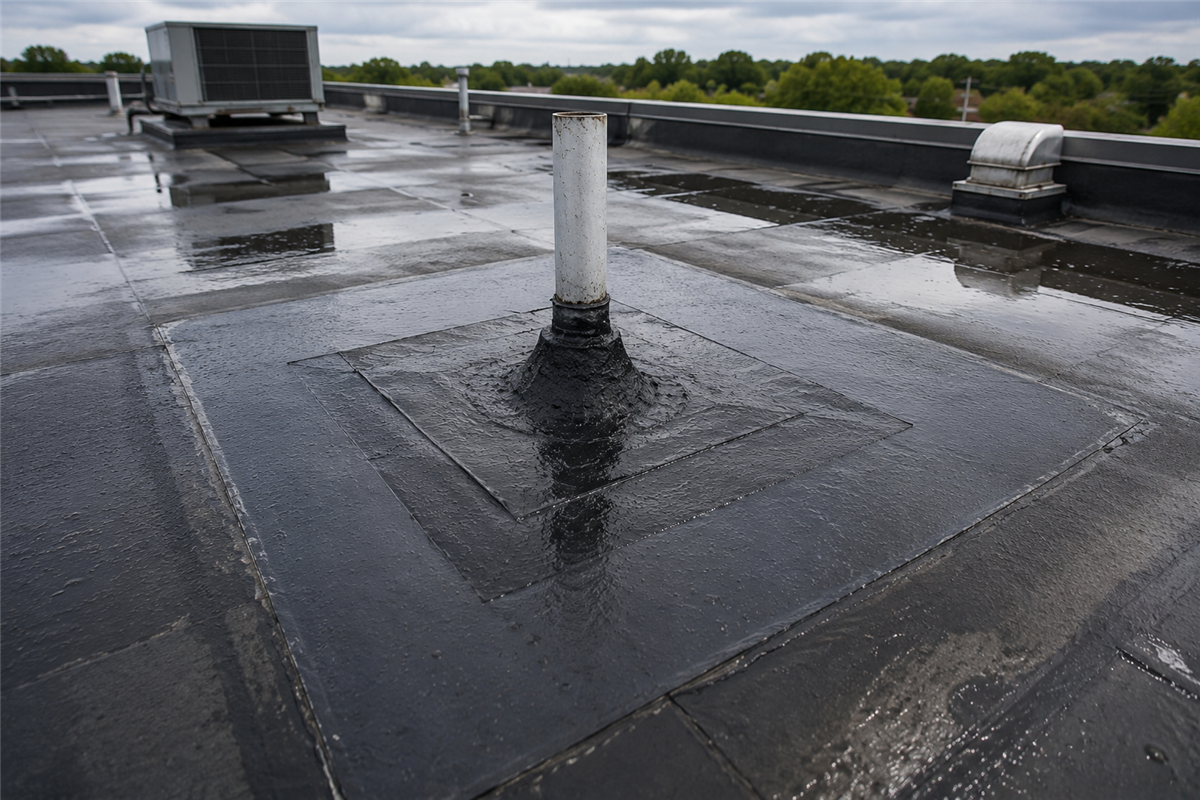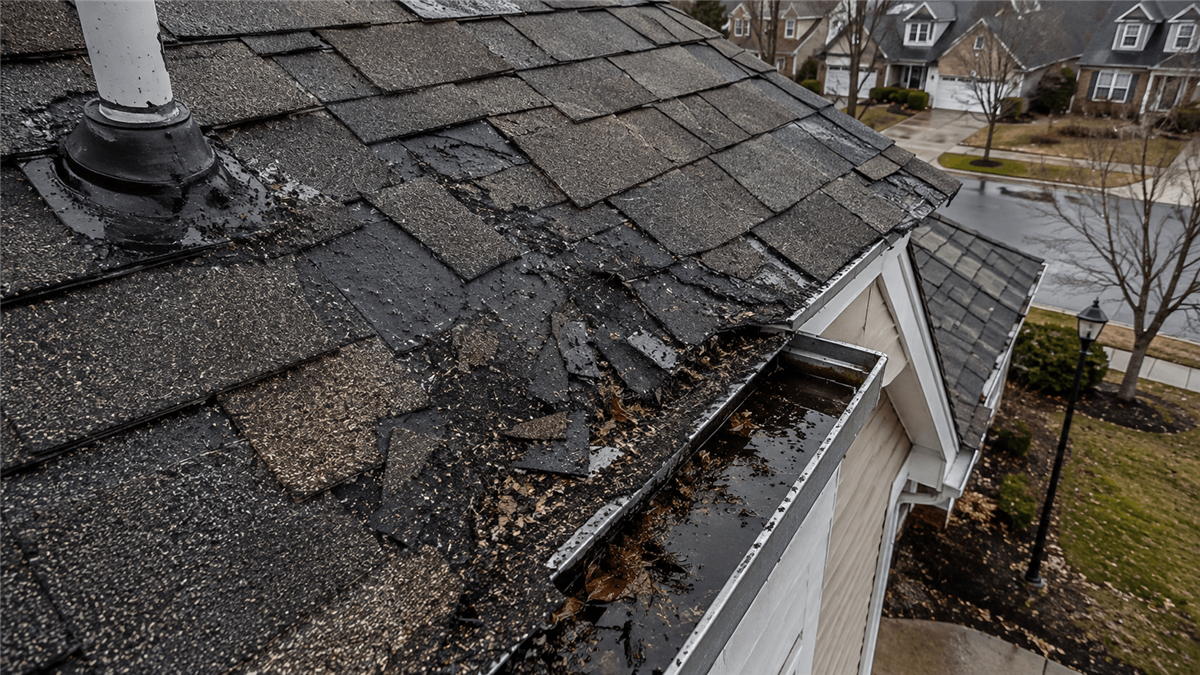
| Most Loudoun County roof repair calls trace back to a handful of predictable failures: cracked rubber pipe boots on homes built in the late 1990s and 2000s, step flashing that was caulked instead of woven into the shingle courses, nail pops from decking movement, worn valleys, and gutters that overflow into fascia and foundations. Whether you repair or replace comes down to damage spread, decking condition, and shingle availability rather than age alone, and the homeowners who avoid overpaying insist on dated photos, an attic inspection, line-item pricing with per-sheet deck costs, DPOR license verification, and HOA approval documented before any work starts. |
Ceiling stains never appear at a convenient time. It's usually after a summer thunderstorm rolls through Ashburn, or a January freeze-thaw cycle lifts a shingle in Leesburg. Then comes the real question: is this a $600 patch or a $20,000 replacement? That gap is where homeowners get taken advantage of, especially when a storm-chasing crew shows up at the door with a clipboard and an urgent story.
Here's what actually fails on roofs here, why local housing stock breaks down in predictable patterns, and how to spot a legitimate fix versus an unnecessary tear-off. You'll get a repair-versus-replace framework, the factors that genuinely move Loudoun County roof repair pricing, what your HOA and the county permit office require before work starts, and a contractor vetting checklist that weeds out fly-by-night operators. No scare tactics, just the details worth knowing before you sign anything.
What Makes Roofs in Loudoun County Different
Roofs don't all fail the same way. A rowhouse in Alexandria ages nothing like a colonial sitting on two acres outside Purcellville. Loudoun County has its own mix of housing stock, exposure, and neighborhood rules, and all three change what a repair actually involves once someone is up on the deck with a pry bar.
Newer Subdivisions, Bigger and Steeper Roof Planes
Much of the county's residential inventory went up between the late 1990s and the 2010s, which means an enormous number of homes are still carrying their original builder-grade shingles. Those roofs are all hitting the back half of their service life at roughly the same time, which is why so many neighbors compare notes on the same problem in the same season.
These homes also tend to be complicated. Multiple gables, dormers, bump-outs, and 8/12 or steeper pitches are the norm rather than the exception. More planes means more valleys, more flashing joints, and more penetrations, and every one of those transitions is a place water can find a way in. Steep pitch adds another wrinkle: it requires roof jacks, harnesses, and slower work, so labor on a straightforward repair costs more here than it would on a low-slope ranch.
Roof complexity, not roof size, drives most leak risk. A 2,800 square foot roof with twelve planes has far more failure points than a simple 3,500 square foot gable.
When you're comparing quotes for a Loudoun county roof repair, ask how many flashing details and valley terminations the crew plans to open up. That number tells you more about the real scope than square footage ever will.
Wind, Hail, and Freeze-Thaw Cycles Along the Route 7 and 50 Corridors
Open ground changes everything. Homes near the Route 7 and Route 50 corridors, and out toward the county's western farmland, catch straight-line winds with almost no tree buffer to slow them down. Summer brings pop-up thunderstorms with downbursts and the occasional hail core, and hail damage often looks like nothing at all from the driveway while the mat under the granules is already bruised.
Winter is the tougher season. Repeated freeze-thaw swings let water work into seams, expand, and pry materials apart a fraction of an inch at a time, cycle after cycle. Sealant that looked fine in October separates by February. Asphalt shingles also lose flexibility as they age, so the same gust a five-year-old roof shrugs off can crease a fifteen-year-old one along the entire course.
Here's the practical takeaway: after any storm with gusts over 50 mph, walk your yard and look for granule piles at downspout outlets and shingle fragments in the mulch beds. Those are the earliest signals, and catching them means a targeted repair instead of interior drywall work later.
HOA Density and Architectural Approval Rules
Ashburn Village, Brambleton, Broadlands, South Riding, and dozens of other communities run architectural review committees. Many require written approval before any color or material change, and some name approved shingle lines outright. Repairs that match the existing roof usually move forward without friction, but a color swap can stall your project for weeks if the paperwork isn't filed first.
Two steps save real time. Pull your community's design guidelines before you sign anything, and have your contractor document the existing shingle brand, line, and color so the match is provable. If your roof is old enough that the original product is discontinued, that documentation becomes the basis for requesting the closest approved substitute, and committees respond much faster to a request that already answers their questions.
Common Roof Problems We Find in Ashburn, Leesburg, and South Riding
After six decades of climbing ladders across this county, patterns emerge. The same eight or nine failures account for the overwhelming majority of leak calls that reach us, and most of them are repairable without touching the rest of the roof. Knowing what each one looks like helps you ask sharper questions when someone hands you an estimate.
Wind-Lifted and Missing Shingles
Three-tab and architectural shingles seal to each other with a thermal adhesive strip that softens in summer heat and bonds. When a gust gets under a course before that strip re-seals (common on north-facing planes that stay cool, or on roofs installed late in the season), the shingle flaps. Repeated flexing breaks the seal permanently, and the next 45 mph front peels it back. You often lose the shingle above the leak point rather than the one sitting over the wet drywall.
From the driveway, you can catch a surprising amount without risking a fall. Here is what to scan for after any storm that knocked branches down:
- Dark patches or off-color rectangles: these usually mean the shingle above has slid or blown off and you are looking at exposed underlayment.
- Raised or shadowed tabs: shingles that sit slightly higher than the courses around them are telling you the seal strip has released.
- Loose fragments on the ground: pieces in flower beds, on the deck, or wedged behind the gutter point you toward the section that needs a closer look.
- Crooked or missing ridge cap: the peak takes the worst of the wind on those tall Ashburn colonials, so caps go first.
Nail Pops and Fastener Backout
Plywood and OSB decking expand and contract with humidity swings, and over 15 to 20 years that movement walks nails back out of the sheathing. The nail head lifts the shingle above it, creating a small tent, then eventually punches through. On a sunny day you can spot them from the ground on a low-slope plane, tiny bumps in an otherwise flat field of shingles.
A proper repair means pulling the shingle, removing or driving the fastener, sealing the hole in the deck, and re-nailing in a fresh location. A dab of caulk over the bump is a delay, not a repair. We find a lot of caulk on roofs where someone else got there first.
Failed Pipe Boots and Cracked Rubber Collars
This is the single most common leak source we find in Loudoun County, and it is almost comically predictable. The plumbing vents poking through your roof are sealed with a metal flange and a rubber collar. That rubber gets roughly 10 to 15 years of UV exposure before it splits, which means homes built during the county's late-1990s and 2000s boom are all hitting that window at once.
A pipe boot leak rarely shows up directly below the pipe. Water runs down the vent stack or along the rafter and stains the ceiling six to ten feet away, which is why homeowners often misdiagnose it as a wall or window problem.
The fix is straightforward and cheap relative to the damage it prevents. We prefer replacing failed collars with lead flashing or a two-piece system like Perma-Boot, which slips over the existing flange and does not rely on rubber sitting under direct sun. If a contractor quotes a full replacement for a single split boot, get a second opinion.
Step Flashing, Chimney, and Sidewall Leaks
Wherever a roof plane meets a vertical wall (dormer cheeks, bump-out garages, the sides of a chimney) individual L-shaped pieces of metal called step flashing weave in with each shingle course. When installers skip steps and substitute a continuous strip of aluminum with caulk, it holds for about five years, then the caulk shrinks and water tracks behind the siding.
Chimneys add their own complications: the mortar crown cracks, counterflashing pulls out of the brick joint, and the cricket (the small diverting ridge behind a wide chimney) either was never built or was built too shallow. These leaks stain the ceiling next to the fireplace and rot framing quietly for years. Repair usually involves cutting fresh reglets into the mortar and setting new counterflashing, not smearing sealant over the old one.
Valley Wear and Granule Loss
Valleys carry concentrated runoff, and on the steep multi-plane rooflines common in South Riding and Brambleton, one valley can drain half the roof. All that water and ice scours granules off the shingle surface, exposing the asphalt mat to UV. Once the mat is bare, it dries out, cracks, and lets water through into the valley metal or underlayment below.
Closed-cut valleys (where shingles overlap across the center) wear faster than open metal valleys. If granules are piling up in the gutter below one specific valley, that is your early warning. Rebuilding a valley with new ice-and-water membrane and W-style metal stays a contained repair when it is caught in time.
Skylight and Solar Penetration Leaks
Skylights installed before roughly 2005 typically used site-built flashing and butyl tape that dries out. Newer curb-mounted units from VELUX or Fakro ship with engineered flashing kits, and they hold up well, though the glazing seal and the head flashing still deserve a look every few years.
Solar arrays are the newer wrinkle. Rack mounts penetrate the deck dozens of times, and the quality of flashing at each lag bolt varies wildly between installers. We regularly find leaks at mounting feet on panels installed by crews who never touched the roof again. If solar is in your plans, sort out roof condition first, because removing and reinstalling an array to fix shingles underneath costs real money.
Attic Ventilation Problems and Ice Damming
Balanced ventilation means intake at the soffit and exhaust at the ridge, roughly equal in net free area. Two things break it here: insulation stuffed over the soffit vents during an energy upgrade, and bathroom fans dumping humid air into the attic instead of through the roof. Both trap heat and moisture, which cooks shingles from below and shortens their service life.
In winter, that warm attic melts snow on the upper roof. The water refreezes at the cold eave, builds a dam, and backs up under the shingles. Loudoun sits right in the zone where we see several of these cycles per season. You can check your own history against the storm records for the county in NOAA's Storm Events Database. Fixing the ventilation matters more than adding heat cable.
Gutter Overflow, Fascia Rot, and Foundation Damage
Gutters aren't roofing, but they're where a lot of Loudoun County roof repair calls actually originate. Clogged or undersized gutters back water up under the first shingle course, saturate the fascia board, and rot the drip edge and sheathing edge. By the time you notice peeling paint on the fascia, the wood behind it is often soft.
Overflow lands next to the foundation, and in this region's clay soil that means hydrostatic pressure against basement walls. Homeowners chase a wet basement with interior waterproofing when the actual cause is 30 feet up. Check that downspouts extend well away from the house, and that oversized 6-inch K-style gutters are handling those large roof planes we mentioned earlier. When the pattern is unclear, NV Roofing traces the water back to its start rather than treating the stain.
How to Plan a Loudoun County Roof Repair the Right Way
Once you know what's failing, the next two decisions are money and process. Repair or replace? What should the number actually look like? Who is legally allowed to do the work, and what does the county expect to see on paper? Here's the same walkthrough we give homeowners at the kitchen table.
Repair or Replace? A Decision Framework
Age matters, but condition matters more. A 14-year-old roof with one split pipe boot is a repair, full stop. A 22-year-old roof with curling tabs across three planes and granules filling every gutter is throwing good money after bad, and every patch you buy on that roof is money you won't get back at replacement time.
The table below lays out the four signals we weigh on site, and which direction each one usually pushes the decision.
Repair vs. Replace at a Glance
Signal Lean Repair Lean Replace | ||
Roof age | Under 15 years | 18+ years on builder-grade shingles |
Damage spread | One plane or one penetration | Multiple slopes, both wind sides |
Decking | Firm underfoot, no soft spots | Spongy areas, delaminated OSB |
Shingle match | Line still produced or attic stock on hand | Discontinued color, obvious patch visible from street |
Loudoun County Roof Repair Costs and What Drives Them
Nobody can price a roof honestly over the phone. A Loudoun County roof repair moves on access (a 12/12 pitch above a walkout basement needs staging and fall protection before anyone touches a shingle), the number of squares affected, whether decking has to come off, and what materials are actually sitting in the supply yard that week. Steep, cut-up rooflines with valleys, dormers, and multiple penetrations cost more per square foot than a simple gable, every single time.
Ask each bidder to break the estimate into line items rather than one lump figure. The line that separates a fair price from a painful one is almost always the unhandled unknown under the shingles.
| Any estimate that doesn't specify unit pricing for hidden deck replacement is an estimate you'll be renegotiating from a ladder. |
Permits, Building Codes, and Insurance Claims
Virginia enforces a statewide building code, so the technical requirements in Loudoun County are identical to those in Fairfax County. What changes is administration: separate permit offices, separate inspection scheduling, and different turnaround times depending on the season. Small repairs typically don't require a permit. Full replacements and structural deck work generally do, and your contractor should be the one pulling it, never you.
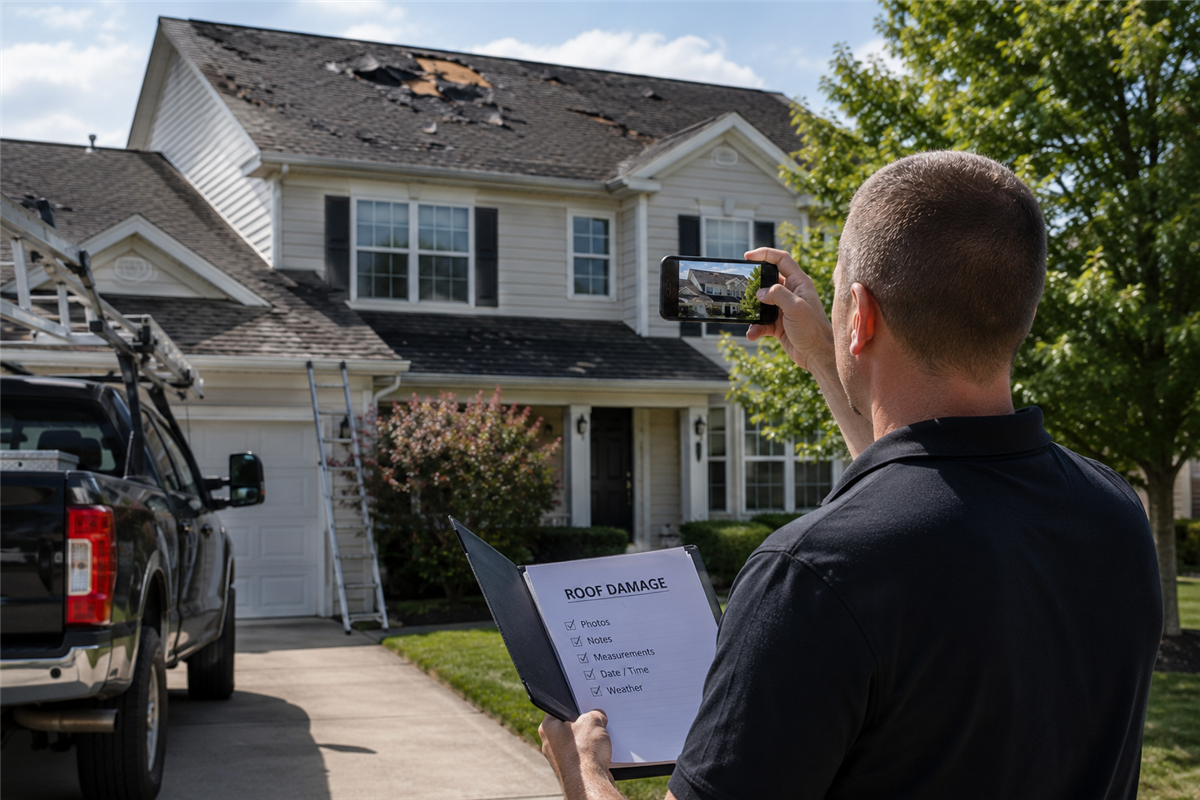
On the insurance side, storm damage claims live or die on documentation. Photograph everything before anyone sets foot on the roof, write down the date of loss while it's fresh, and have your contractor meet the adjuster on site so both parties are looking at the same damage. Wear-and-tear failures like split boots, nail pops, and aged sealant are maintenance items, and filing them as claims usually costs you the deductible and the goodwill.
Your Contractor Vetting Checklist
Run every bidder through the same six steps before you sign anything, and do them in this order:
- Check the license: verify the class and status through the Virginia DPOR license lookup, using the exact business name printed on the proposal.
- Confirm the coverage: request a certificate of insurance for general liability and workers' compensation sent directly from the insurer, not a PDF forwarded by the salesperson.
- Ask about manufacturer certification: GAF and Owens Corning enhanced warranties only apply when a credentialed contractor installs the system.
- Demand same-day photos: images of your roof, taken that day, with the failure circled and explained in plain language.
- Read the scope line by line: materials, underlayment type, flashing replacement, per-sheet deck pricing, cleanup, and warranty terms all in writing.
- Ask who is actually on your roof: confirm whether the crew is employed or long-term subcontracted, and find out who supervises the job daily.
Six steps, roughly an hour of your time, and it filters out nearly every contractor who plans to be unreachable two years from now when a seam opens up.
Residential Services from NV Roofing: 60+ Years in the DMV
Everything above covers what fails and why. This part covers how we handle it. NV Roofing has been a family-owned operation in the DMV since 1963, long enough to watch Loudoun County shift from dairy farms to data centers, and we've been repairing roofs through every phase of that change. That history matters when you're diagnosing a problem, because a 1978 colonial in Leesburg and a 2019 build in Ashburn fail in completely different ways.
Roof Repairs, Replacements, and Storm Damage Restoration
Most calls start with a ceiling stain or a pile of shingles in the yard. We inspect three things: the roof surface, the attic side of the deck, and the drainage path that carries water away from the house. Then we tell you plainly whether a targeted repair will hold or whether the system has reached the end of its service life. Skipping the attic inspection is how contractors miss the real source of a leak, and it's why the same spot gets “fixed” twice.
When a repair is the right call, we do the repair: pipe boot replacements, valley rebuilds, step flashing corrections, re-nailing loose fields, and deck patching where sheathing has gone soft. When replacement genuinely makes more sense, our factory-certified crews install shingle, metal, and specialty systems backed by manufacturer warranties that only certified installers are allowed to offer. Most Loudoun County roof repair jobs land in the first category, and we'd rather tell you that than sell you a roof you don't need yet.
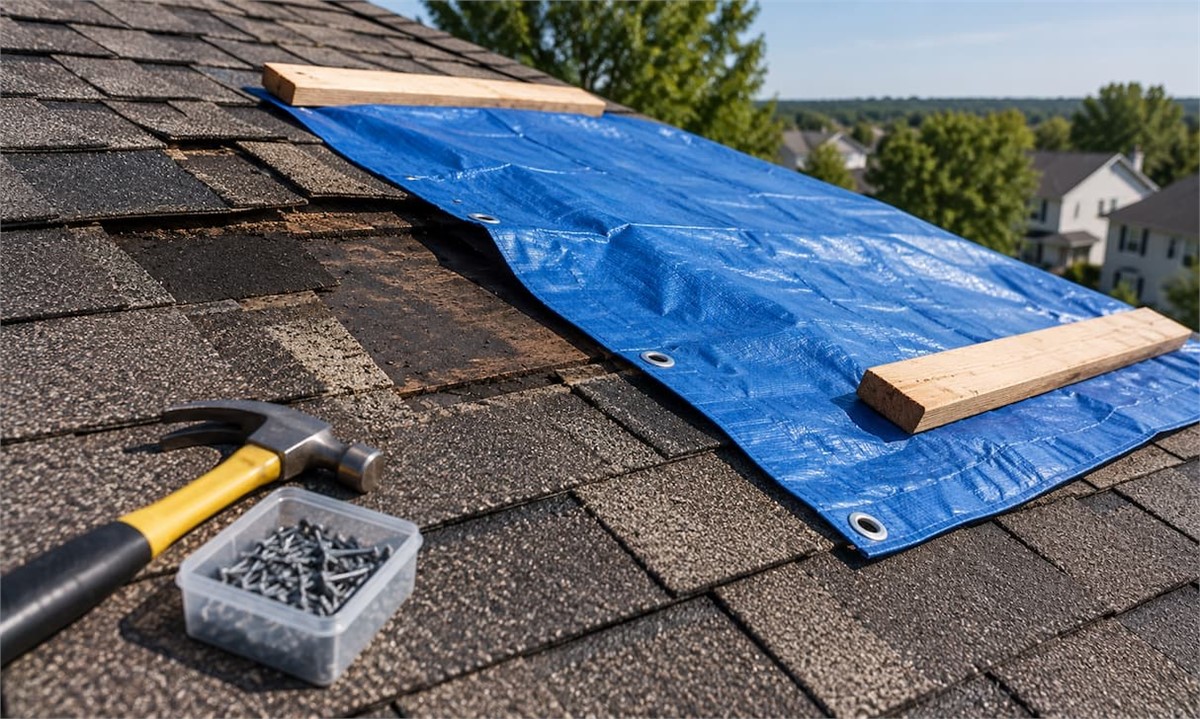
After a storm, timing drives everything. We handle emergency tarping to stop active water intrusion the same day where we can, document damage with dated photos and measurements, and work alongside your adjuster so the claim reflects what's actually on your roof instead of a desktop estimate written from satellite imagery.
| A good contractor should be able to explain why a repair will hold, not just tell you it will. |
Gutters, Siding, and Windows That Work with Your Roof
Water doesn't respect trade boundaries. A roof can be flawless while undersized gutters dump runoff against the foundation, or while a failed siding penetration lets wind-driven rain into the wall cavity two feet below the drip edge. That's why we handle the full exterior envelope instead of sending you to three companies with three schedules, three invoices, and three warranties that each blame the other two.
Residential Service Lines at a Glance
Here's a quick reference showing each service we offer, the problem it actually solves, and the symptom that usually prompts homeowners to call:
Service What It Solves Common Trigger | ||
Roofing | Leaks, wind damage, aged shingle systems | Ceiling stains, missing tabs, roof past year 18 |
Seamless Gutters & Guards | Fascia rot, overflow, water at the foundation | Sheeting over the edge during rain, wet basement |
Siding | Wall moisture, warping, dated curb appeal | Buckled panels, soft trim, hail strikes |
Replacement Windows | Drafts, condensation, high energy bills | Fogged glass, cold rooms, road noise |
Storm Restoration | Active leaks and insurance documentation | Hail, downbursts, fallen limbs |
For siding, we install James Hardie fiber cement, vinyl, and wood alternatives specified to handle what this climate throws at a wall: humid summers, freeze-thaw cycles, and the occasional hailstorm that arrives with no warning.
What Working with Us Looks Like, Step by Step
No surprises is the goal, so here's the full sequence from your first phone call to the final walkthrough:
- Inspection and documentation: We schedule a visit and record conditions on the roof and in the attic with photos you keep, whether you hire us or not.
- Written scope: You receive materials named by brand and product line, options priced separately, and our repair-versus-replace reasoning spelled out in plain language.
- Permits and approvals: We handle permitting and HOA submittals where they apply, so paperwork doesn't stall your start date.
- Installation day: Our crew installs on the agreed date, protects landscaping and AC units, and magnet-sweeps the property for nails before packing up.
- Walkthrough and warranty: We review the finished work with you on site and register your manufacturer warranty so coverage is active from day one.
Ready for a straight answer about your roof? Contact us.
Protect the Roof Over Your Family's Head
Most leaks around here aren't mysteries. Usually it's rubber boots that dried out and cracked, flashing that was never woven into the shingles the right way, or gutters and valleys that stopped moving water as fast as the roof sends it down. Once the failure has a name, the money question gets a lot simpler, and whatever pressure a salesperson is applying tends to lose its grip. Age by itself settles nothing. What matters is how far the damage spread, what shape the decking is in, and whether your shingle is still made.
Start where the evidence is. Walk the perimeter, look in the gutters, then get someone into the attic with a flashlight before you agree to any number. Ask for dated photos, line-item pricing, and a written explanation of why the recommended fix will hold through the next stretch of freeze and thaw. Homeowners who insist on that paperwork before signing off on a Loudoun county roof repair almost never overpay, and they rarely end up patching the same spot twice.
FAQs
How quickly should I address a small roof leak?
Call within days, not months, because a slow drip soaks insulation and framing long before it shows on your ceiling. A split boot caught early is a same-visit fix, while the same leak ignored for a season often adds drywall, insulation, and sheathing to the bill.
Do I need a permit for a roof replacement in Loudoun County?
Full tear-off replacements and any structural decking work generally require a permit from Loudoun County, while minor patches usually do not. A licensed contractor should pull that permit under their own license, and a bidder who asks you to pull it yourself is a red flag.
Are there special considerations for roofing historic homes in Leesburg?
Properties inside Leesburg's historic district face additional design review beyond standard county requirements, and material or color changes typically need approval before work begins. Older framing, plank decking, and original slate or metal details also change the scope, so a loudoun county roof repair on a historic home takes more planning than one in a newer subdivision.
What HOA rules affect roofing in Ashburn and South Riding?
Most communities in these areas require architectural committee approval for any change in shingle color, profile, or material, and some publish a short list of pre-approved products. Straight repairs that match your existing roof usually proceed without review, but submitting documentation of the current brand and color first prevents delays.
How does roofing in Loudoun County differ from Fairfax County?
The building code is identical statewide, so the technical standards are the same, but permit offices, inspection scheduling, and HOA density differ between the two. Loudoun's newer, steeper, more open-exposure housing stock also means wind and flashing failures show up more often than the older-roof issues common closer to the Beltway.
Does NV Roofing serve all of Loudoun County?
Yes, we handle roof repair, replacement, and storm restoration across the county, from Ashburn, Brambleton, and South Riding to Leesburg, Purcellville, and the western farmland. Every Loudoun county roof repair starts with a documented inspection of both the roof surface and the attic side of the deck.
Subscribe to NV Roofing's Blog