Hiring the right asphalt shingle roofing contractors matters as much as choosing the shingle, so DMV homeowners should verify state licensing (DPOR in Virginia, MHIC in Maryland, DLCP in D.C.), confirm insurance directly with the carrier, and look for manufacturer certifications that unlock enhanced warranties covering both materials and workmanship. A quality installation includes a full tear-off, deck inspection, ice and water barrier, balanced attic ventilation, and new flashing, and comparing itemized written estimates while avoiding red flags like storm chasers, large deposits, and same-day pressure helps your roof last for decades. |
Your roof is only as good as the crew that installs it. Put the same shingle on two homes, and one roof can last decades while the other leaks after a few rough winters. The gap usually comes from details you can't see from the driveway: nail placement, flashing, underlayment, and attic ventilation. That's why choosing between asphalt shingle roofing contractors matters as much as choosing the shingle.
In Northern Virginia, Maryland, or D.C., your roof takes a beating from humid summers, freeze-thaw cycles, and sudden storms. This guide shows you what asphalt shingles can realistically deliver, how to check licensing and warranties, what to ask before you sign, and how to read an estimate line by line. You'll know what a quality job looks like and how to spot a contractor who can deliver one.
What Asphalt Shingles Offer Homes in the DMV
Drive through Fairfax, Bethesda, or Capitol Hill and you'll see asphalt shingles on most rooftops. They offer a solid mix of price, curb appeal, and everyday performance, but they do have limits. Understanding those limits before you meet with asphalt shingle roofing contractors gives you a clear way to judge whether their recommendations actually suit your home, your budget, and how long you plan to stay.
Key Advantages and Limitations to Consider
Here's how asphalt shingles stack up for a typical DMV home, including the trade-offs worth weighing:
- Upfront cost: Installation runs lower than metal, slate, or tile, so a full replacement is easier to fit into a household budget without delaying other projects.
- Easy repairs: A crew can swap out individual damaged shingles, which means a bad storm doesn't automatically put you in the market for a whole new roof.
- Style range: Dozens of colors and profiles make it simple to match a colonial in Arlington, a rambler in Silver Spring, or a rowhouse in the District without waiting on special-order materials.
- Trade-offs: They have a shorter service life than metal or slate, they shed granules as they age, and they can pick up dark algae streaks in shaded, humid yards unless you choose algae-resistant products.
3-Tab vs. Architectural vs. Designer Shingles
The biggest difference between these three comes down to how they're built. A 3-tab shingle is one flat layer. Architectural (laminated) shingles bond two layers together, which makes them thicker and creates shadow lines that give the roof depth. Designer shingles add even more weight and are shaped to resemble slate or cedar shake. The table below lays out how each type compares:
Comparing Asphalt Shingle Types
Type | Construction | Appearance | Best Fit |
3-Tab | Single layer, lightweight | Flat and uniform | Tight budgets, outbuildings |
Architectural | Two laminated layers | Dimensional, textured | Most single-family homes |
Designer | Multiple heavy layers | Mimics slate or shake | Historic or high-end homes |
Wind ratings differ from one product line to the next, even within the same category. Ask any contractor you're considering for the manufacturer's spec sheet on the exact shingle they're quoting, and compare those ratings side by side instead of assuming all architectural shingles perform the same.
How Long Asphalt Shingles Last in the Mid-Atlantic Climate
The shingle itself is only part of the lifespan equation. Our region puts roofs under stress from every direction. In July, the sun bakes shingles from above while a hot attic cooks them from below. In winter, freeze-thaw cycles and ice dams push water under shingle edges, and nor'easters tug at any seal that's already weakened.
Be careful with warranty language, too. A “lifetime” label describes the terms of coverage, such as what's included and for how long. It says nothing about how many years your roof will actually hold up on your house.
In DMV conditions, the attic under your roof often determines how long the shingles above it survive. Poor ventilation can wear out a roof faster than any storm. |
How to Vet Asphalt Shingle Roofing Contractors
Most roofing problems begin before anyone climbs a ladder, at the moment a homeowner signs with the wrong company. Vetting asphalt shingle roofing contractors takes an afternoon of phone calls and license lookups, and that afternoon can spare you a five-figure redo. Here's how to tell qualified crews apart from everyone else.
Licensing, Insurance, and Manufacturer Certifications
Every DMV jurisdiction sets its own licensing rules, so start by confirming the contractor is legal where you live. Virginia contractors need a license from the Department of Professional and Occupational Regulation, which you can check through the DPOR License Lookup. In Maryland, residential roofers must hold a Maryland Home Improvement Commission (MHIC) license. D.C. requires a Basic Business License with a home improvement endorsement, issued through the Department of Licensing and Consumer Protection.
Insurance deserves the same scrutiny. Ask for certificates of general liability and workers' compensation, and have the insurer send them to you directly instead of accepting a copy from the contractor. If an uninsured worker gets hurt on your roof, the claim could end up on your homeowner's policy.
Manufacturer certifications give you one more layer of proof. Credentials like GAF Master Elite, CertainTeed SELECT ShingleMaster, and Owens Corning Platinum Preferred require training, proper licensing, and an established track record. They also give homeowners access to stronger warranties that uncertified installers simply can't register.
Manufacturer Warranties vs. Workmanship Guarantees
Homeowners mix these two up all the time, and the difference matters. A manufacturer warranty covers defects in the shingles themselves. A workmanship guarantee covers installation errors, such as poor flashing or improper nailing, and those errors cause most roof failures.
Standard shingle warranties rarely cover installation mistakes. Enhanced system warranties, such as GAF's Golden Pledge or Owens Corning's Platinum Protection, can include manufacturer-backed workmanship coverage, but only certified contractors can register them. Ask who stands behind the labor, for how many years, and get the answer in writing.
A 50-year shingle warranty means very little if the company that installed it won't answer the phone in year three. |
Questions to Ask Before Signing a Contract
A reputable contractor will answer the following questions without hesitation, so use them to judge transparency as much as technical skill:
- Tear-off and decking: Will you strip the existing roof down to the deck, and how do you price replacement of rotted decking?
- System components: Which underlayment, ice and water barrier, and ventilation products are included, and do they come from the same manufacturer as the shingles?
- Impact resistance: Do you offer Class 4 impact-resistant shingles, and could they lower my homeowners' insurance premium?
- Crew oversight: Who supervises the crew on site each day, and are the installers employees or subcontractors?
- Permits and property protection: Will you pull the permit, and how do you protect plants, gutters, and siding during the job?
On impact-resistant shingles, the payoff depends entirely on your insurer. Some carriers discount premiums for Class 4 products and others don't, so call your agent before paying extra for them.
Red Flags That Signal a Bad Fit
Storm chasers pour into the DMV after major hail and wind events. Be wary of anyone knocking on doors right after a storm, especially crews with out-of-state plates and no local address.
Large upfront deposits are another warning sign. Maryland law caps home improvement deposits at one-third of the contract price, and that's a sensible benchmark no matter where you live. Other red flags include pressure to sign the same day, verbal-only estimates, offers to “cover your deductible” (which counts as insurance fraud in many states), and fuzzy answers about permits. If a contractor dodges simple questions now, expect the same behavior once your roof is open to the weather.
What a Quality Shingle Installation Looks Like
You won't be on the roof while the crew works, but it helps to know what's happening up there. A clean installation follows a predictable sequence, and every stage leaves behind evidence you can ask about afterward. Here's what good work from asphalt shingle roofing contractors actually involves.
The Installation Process Step by Step
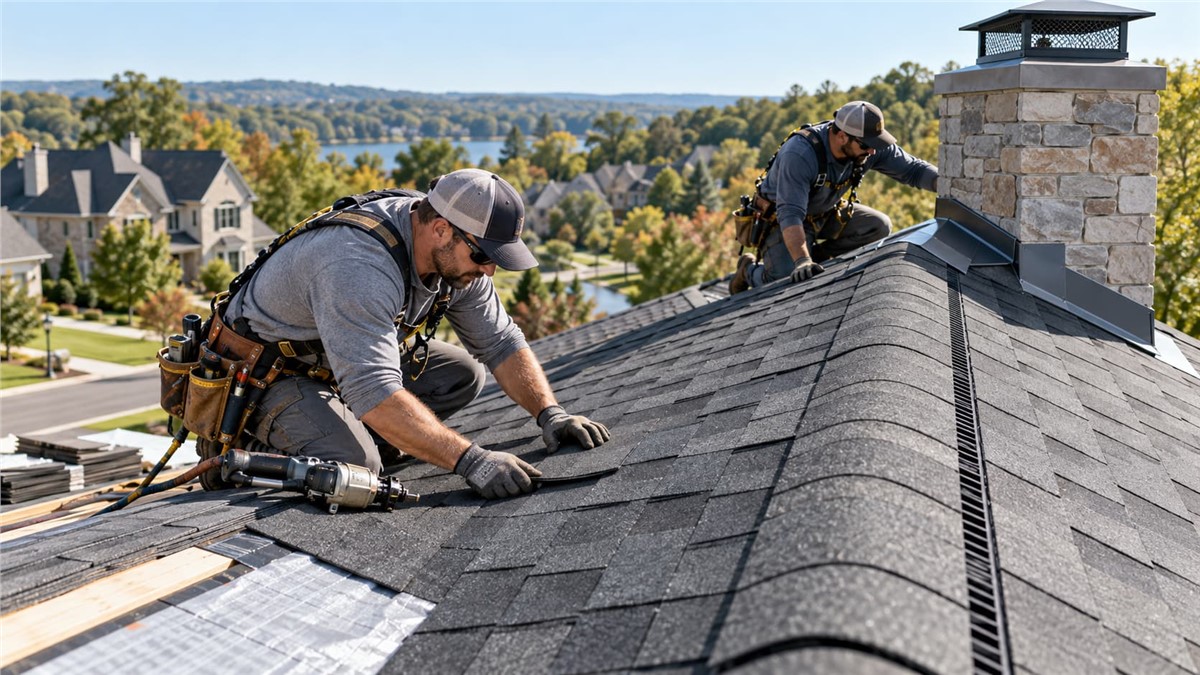
Most replacements on a typical DMV home take one to three days. The order of operations matters because each layer protects the one beneath it. Here's the sequence a well-run crew follows from start to finish:
- Property protection: Tarps go over garden beds and shrubs, plywood leans against siding, and the dumpster lands somewhere it won't crack your driveway.
- Tear-off: Old shingles and underlayment come off down to the bare deck, and the crew sweeps for loose nails as they go.
- Deck inspection: The foreman checks the plywood or plank decking, marks soft or rotted sections, and shows you the damage before anything gets replaced.
- Edge and underlayment: Installers fasten drip edge at the eaves, lay ice and water barrier in the vulnerable zones, then cover the rest of the deck with synthetic underlayment.
- Shingles: Starter strips go down first, followed by shingles nailed in the manufacturer's specified nailing zone (four nails per shingle minimum, six in high-wind applications).
- Finishing details: New flashing, ridge vents, and ridge cap shingles complete the system.
- Cleanup and final check: Magnetic sweepers run across the yard and driveway, and the foreman walks the roof one last time.
When a contractor sticks to this sequence, you end up with a roof that qualifies for full warranty coverage and has no hidden weak spots for water to find.
So what about laying new shingles right over the old ones? Building codes generally allow two layers, and an overlay does cut labor costs. The trade-off is real, though. Nobody sees the deck, so any rot stays buried, and the added weight and trapped heat can shorten the life of your new shingles. Many enhanced manufacturer warranties also require a full tear-off, so an overlay can cost you coverage you'd otherwise get.
Underlayment, Ventilation, and Flashing Details That Matter
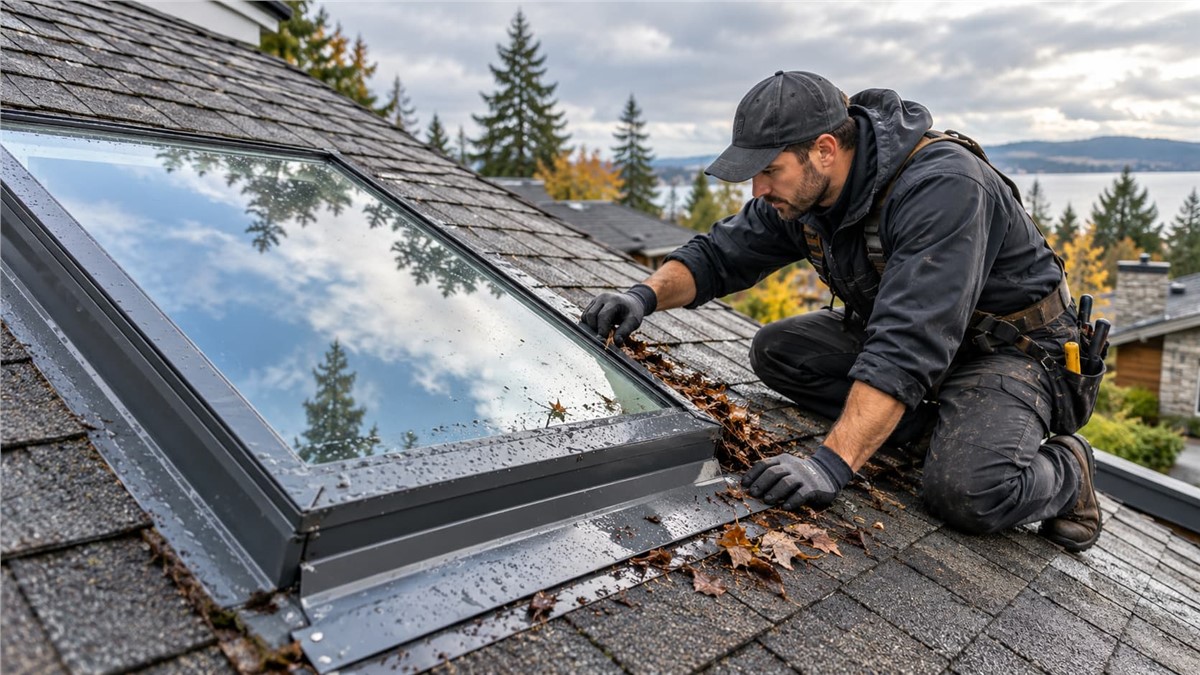
These three components cause more leaks than the shingles themselves. In our area, the International Residential Code requires an ice barrier at the eaves that extends at least 24 inches inside the exterior wall line. Good crews go further and run it through valleys and around chimneys and skylights, where water tends to collect and back up.
Ventilation is all about balance. Intake vents at the soffits draw cooler air in, and ridge vents let hot, moist air escape at the top. Mixing exhaust types, such as a ridge vent paired with gable fans, can short-circuit that airflow and leave your attic hotter than it was before the new roof went on.
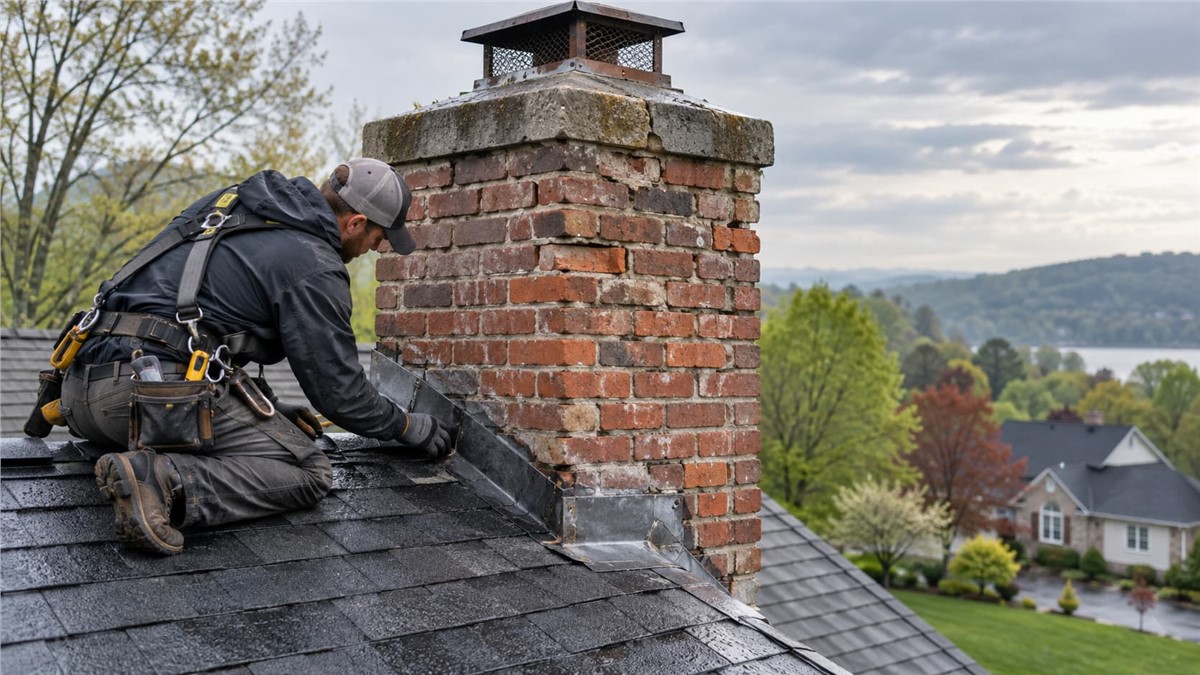
Flashing is the metal that seals every joint where your roof meets a wall, chimney, or vent. Step flashing should be replaced with new metal on a reroof, never reused from the old one. |
It's also worth asking about kickout flashing wherever a roof edge meets a sidewall. Without it, runoff gets directed straight into your siding and sheathing, and the damage often goes unnoticed for years.
How to Read and Compare Roofing Estimates
One of the first questions homeowners ask is what an asphalt shingle roof costs. The honest answer depends on roof size, pitch, how many layers need removing, deck condition, and which shingle line you choose, so treat any online average as a rough starting point. What you can control is making sure you compare bids on equal terms.
Line up each estimate side by side and check that it spells out the following items:
- Products: Specific shingle brands and product names, not just “architectural shingles.”
- Decking: A per-sheet price for any replacement plywood.
- Underlayment: The type being installed, synthetic or felt.
- Ice barrier: How much is included and where it goes.
- Flashing: Whether it's new metal or reused.
- Ventilation: Any changes to intake or exhaust vents.
- Permits and disposal: Whether permit fees and debris removal are in the price.
A bid that comes in noticeably lower usually leaves one of these out. You'll end up paying for it later, either as a change order halfway through the job or as a callback after the first heavy storm.
Working with NV Roofing on Your Residential Project
The earlier sections gave you a checklist for judging any roofer. Here's how we stack up against it, plus how our other exterior services fit in if your project ends up reaching past the shingles.
Why Homeowners Choose Our Asphalt Shingle Roofing Contractors
NV Roofing is a family-owned company that has been working on DMV homes since 1963. Six decades in one region teaches you exactly what humid summers, ice dams, and nor'easters do to a roof, whether it sits on an Arlington colonial, a Montgomery County rambler, or a D.C. rowhouse. Our asphalt shingle roofing contractors install every system with those local conditions in mind.
Here's what that experience means for you once the work begins:
- Factory-certified installation: Certified crews put on your shingles, underlayment, and ventilation exactly the way the manufacturer specifies, which keeps your warranty valid.
- Warranties explained up front: Before you sign anything, we walk you through what the material coverage includes and what the workmanship coverage includes, in plain language.
- One team from start to finish: The same company handles your inspection, estimate, and installation, so you always know who to call with a question.
- Detailed written estimates: We go over every line with you, including how we price and handle damaged decking if we find it after tear-off, so there are no surprises mid-project.
The best time to address gutters, siding, or windows is during a roof replacement, while the flashing and trim are already exposed. |
Residential Services Beyond the Roof
Your roof is one part of a connected system. Gutters carry its runoff, siding meets it at every sidewall, and windows sit right below its eaves. When a single company coordinates all of those pieces, you avoid two separate crews cutting into each other's flashing or blaming each other when a leak shows up.
The table below shows how each of our residential services ties back to a roofing project and the specific problems it solves:
How Our Residential Services Work Together
Service | What We Provide | Problem It Solves |
Roofing | Repairs, replacements, and new installs in shingle, metal, and specialty systems | Leaks, aging shingles, storm wear |
Gutters | Seamless gutters and gutter guards | Overflow, fascia rot, foundation water damage |
Siding | James Hardie fiber cement, vinyl, and wood alternatives | Weathered walls, moisture intrusion, dated curb appeal |
Windows | Energy-efficient replacement windows | Drafts, outside noise, high energy bills |
Storm Damage Restoration | Fast inspections, emergency tarping, insurance claim support | Sudden exposure after wind, hail, or falling limbs |
Storm restoration deserves a closer look for DMV homeowners. After a severe storm, we can tarp an exposed roof quickly to stop further water damage, document everything we find for your adjuster, and guide you through the insurance claim with a local team you've already vetted. That's a far safer bet than signing with whoever knocks on your door first.
Whether you need a single repair or a full exterior refresh, our approach stays the same: clear answers, careful work, and a home that stays protected for years to come. When you're ready for an honest assessment and a detailed written estimate, contact us.
Making a Confident Roofing Decision
Choosing the right roofer comes down to what a company can prove. The shingle you choose decides how well your roof could perform, and the crew decides whether it ever gets there. When you compare asphalt shingle roofing contractors, use the same checklist for each one: a license you've looked up yourself, insurance certificates sent to you directly from the carrier, a clear explanation of what the manufacturer warranty covers versus the workmanship warranty, and a bid that lists every cost line by line.
You can get started this week. Pull together your home's age, any old repair records, and whatever insurance paperwork you have, then ask for at least three written estimates. Set them next to each other, circle anything that looks vague, and ask each company to explain those items before you sign. Notice how they handle your questions. The roofer who takes the time to answer and puts everything in writing is usually the one you can trust with your home for decades.
FAQs
What is the difference between 3-tab and architectural shingles?
Architectural shingles are thicker and heavier, so they usually handle wind better and have a longer expected life than 3-tab shingles. Most homeowners find the modest price increase worthwhile for a full home replacement.
How long do asphalt shingles last on a home in Virginia or Maryland?
Architectural shingles commonly last 20 to 30 years in the Mid-Atlantic, while 3-tab products often need replacing after 15 to 20 years. Attic ventilation, tree shade, and installation quality can push those numbers up or down.
Are impact-resistant asphalt shingles worth the extra cost?
They make the most sense if your insurer offers a premium discount or your area sees frequent hail, since the savings and reduced storm damage can offset the higher price. Ask asphalt shingle roofing contractors to quote Class 4 and standard options so you can compare the real difference.
What are the best asphalt shingle brands in 2026?
GAF, Owens Corning, and CertainTeed remain the leading choices thanks to strong product lines and enhanced warranty programs. The brand matters less than hiring asphalt shingle roofing contractors certified to install that specific manufacturer's system.
What color asphalt shingles should I choose for my house?
Pick a shade that complements your siding, brick, and trim, and consider lighter tones if you want to reduce attic heat during DMV summers. Many asphalt shingle roofing contractors can show you sample boards or photos of local homes so you can see colors in natural light before deciding.
Subscribe to NV Roofing's Blog