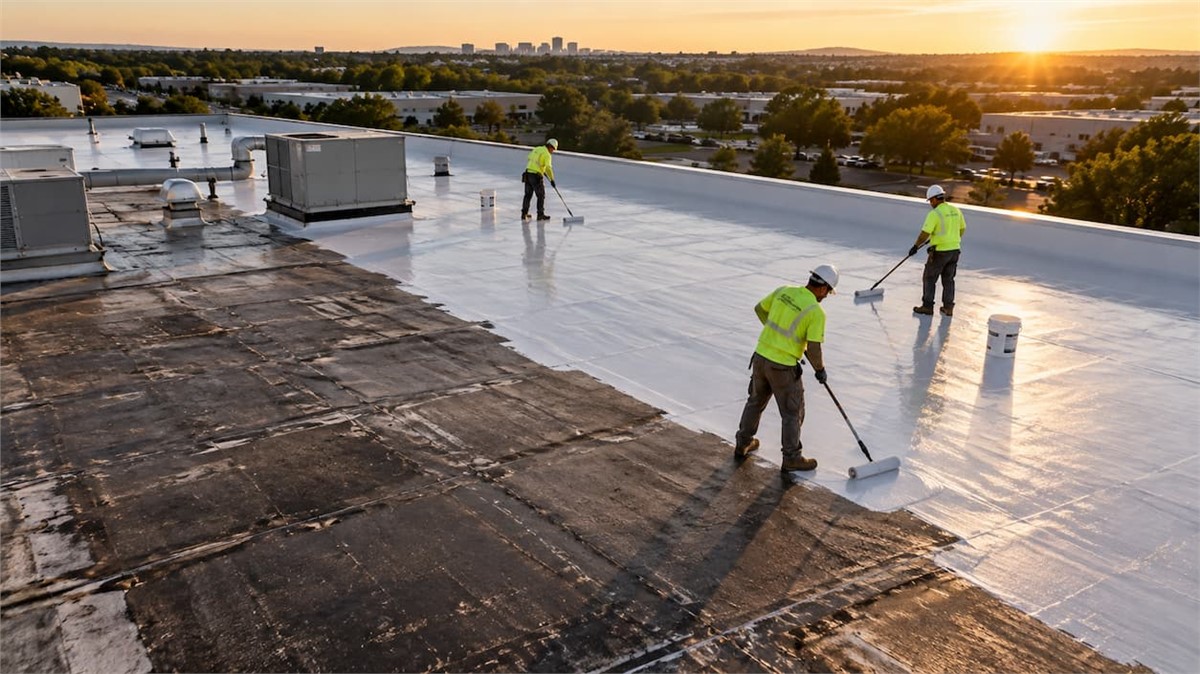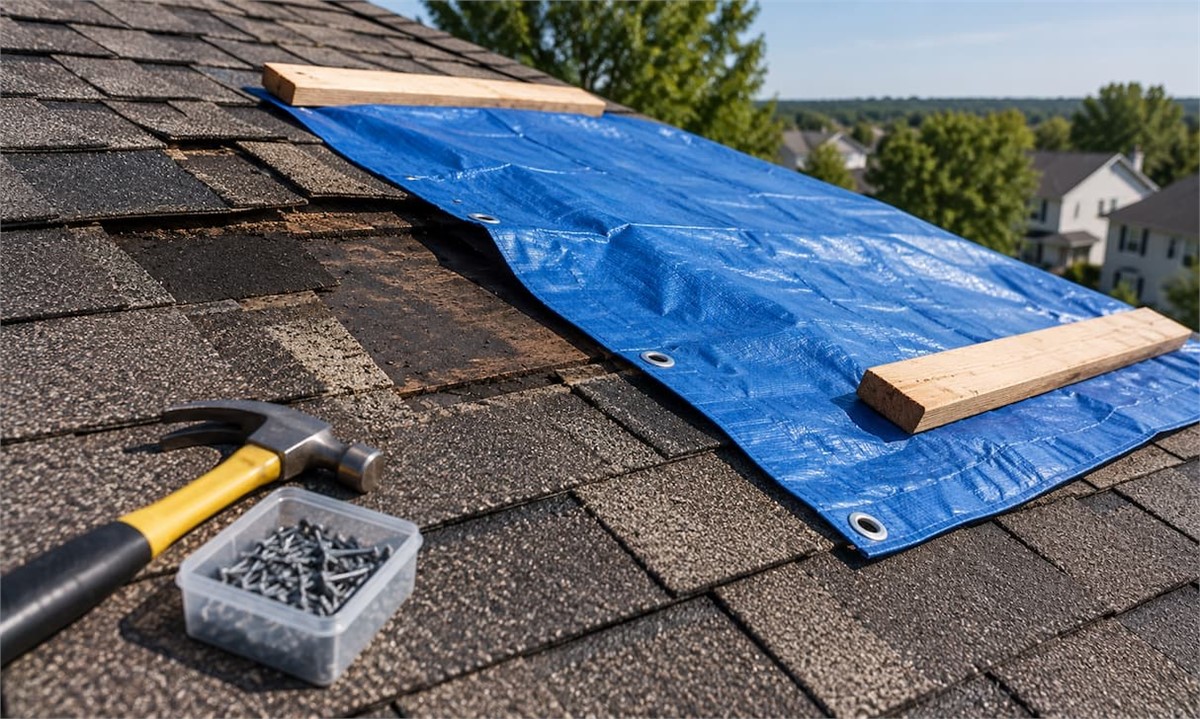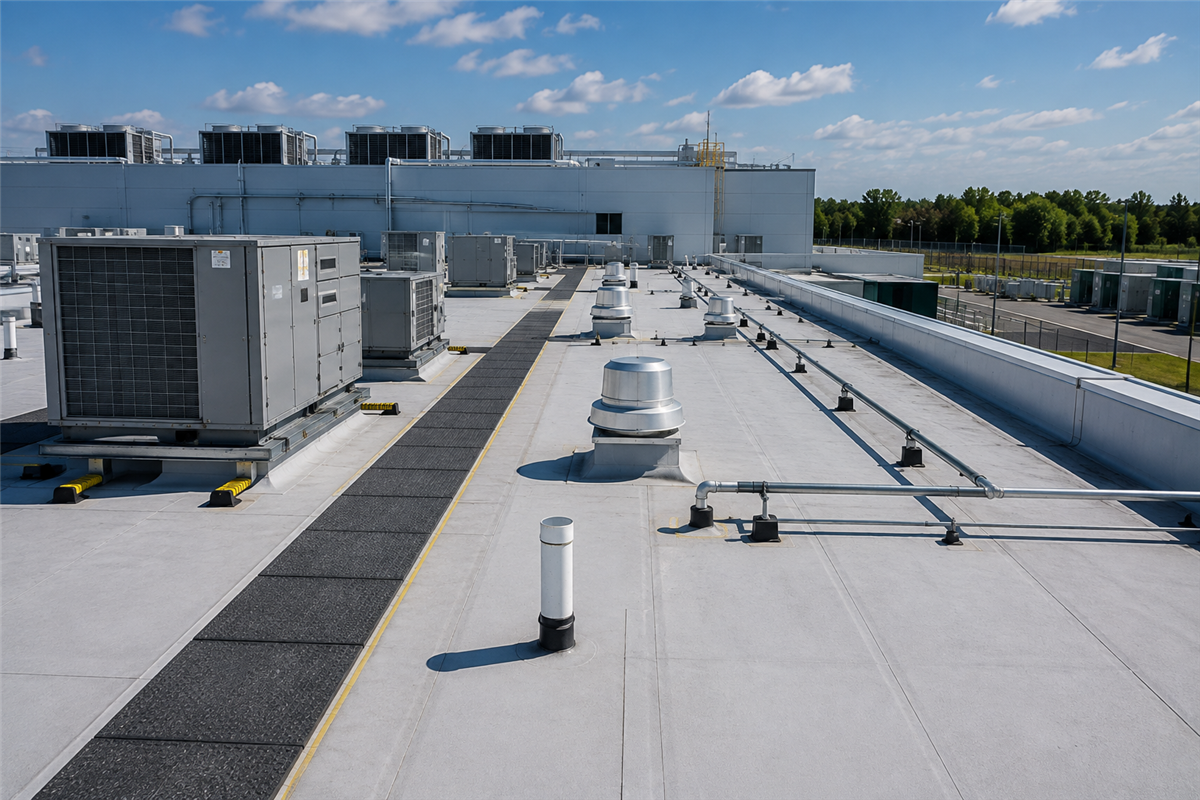
| Roof asset management replaces reactive, emergency-driven roofing decisions with structured inspections, condition scoring, and data-backed capital planning, cutting lifecycle costs by 40-50% and extending roof life from 20 years to 40+. Documented maintenance histories also improve insurance positioning, strengthen claims readiness, and give property managers portfolio-wide visibility into repair backlogs and capital expenditure forecasts. |
A commercial roof typically accounts for 8 to 15% of a building's total value. It's also one of the most expensive components to replace. Yet most property managers only think about it when something leaks or fails.
That gap between cost and attention is where roof asset management comes in. A structured program can stretch a roof's useful life from 20 years to 40+, turning unpredictable capital expenses into planned, budgetable line items.
This guide covers what a roof asset management program actually looks like in practice, how it affects long-term costs, and what steps you can take today to get ahead of expensive surprises. Whether you're responsible for one building or a portfolio of fifty, you'll walk away with specific frameworks for extending roof life, reducing spend, and improving your position with insurers.
What Is Roof Asset Management and Why Does It Matter
Most property managers have a maintenance plan for HVAC systems, elevators, and parking structures. Roofs? They tend to get attention only after water is dripping onto a tenant's desk. Roof asset management is the discipline of treating your roofing system the same way you'd treat any other high-value building component: with scheduled inspections, condition tracking, and capital planning tied to real data instead of guesswork.
How a Roof Fits Into Your Overall Building Value
A commercial roof typically represents 8 to 15% of a building's total value. For a $10 million property, that puts somewhere between $800,000 and $1.5 million on top of your building, exposed to UV radiation, freeze-thaw cycles, wind, and hail year after year. Unlike interior finishes that tenants notice every day, roof deterioration stays hidden until it causes interior damage. And at that point, you're dealing with far more than just a roofing bill.
Roof condition also directly affects property valuation during sales, refinancing, and insurance renewals. A roof backed by five years of documented condition data and a clear remaining service life estimate is a fundamentally different asset than one with no maintenance records. Buyers, lenders, and underwriters all treat them differently, and that difference shows up in the numbers.
| A roof without documented maintenance history is a liability on your balance sheet, not an asset. |
The Real Cost of Reactive Roofing Decisions
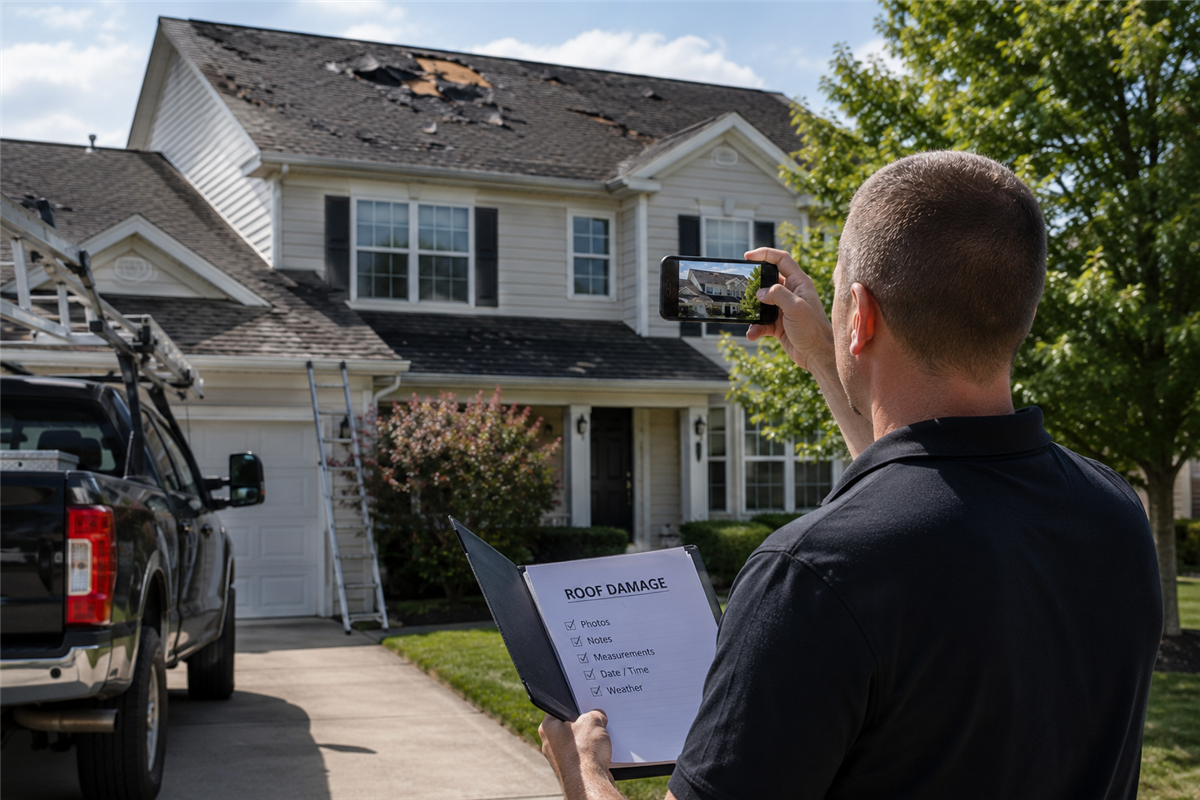
Here's what actually happens without a roof asset management strategy: a small seam separation goes unnoticed for eight months. Moisture works its way into the insulation layer. When a leak finally shows up inside the building, you're no longer fixing a seam. You're replacing insulation, decking, and possibly dealing with mold remediation. What could have been a $400 repair turns into a $15,000 emergency.
Reactive repairs can cost significantly more per square foot compared to preventive maintenance. That cost multiplier compounds quickly across a portfolio. If you manage ten buildings and each one has two or three deferred issues quietly getting worse, you're sitting on a backlog that could blow past your annual capital budget in a single quarter. The math is straightforward: pay a little now on a schedule, or pay a lot later on someone else's timeline.
Key Components of an Effective Roof Asset Management Program
Understanding that reactive decisions cost more isn't enough on its own. You need a system that catches problems early, scores them objectively, and feeds that information directly into your budgeting process. Here's what separates a real roof asset management program from a folder of old inspection photos sitting in someone's email.
Certified Inspections and Condition Scoring
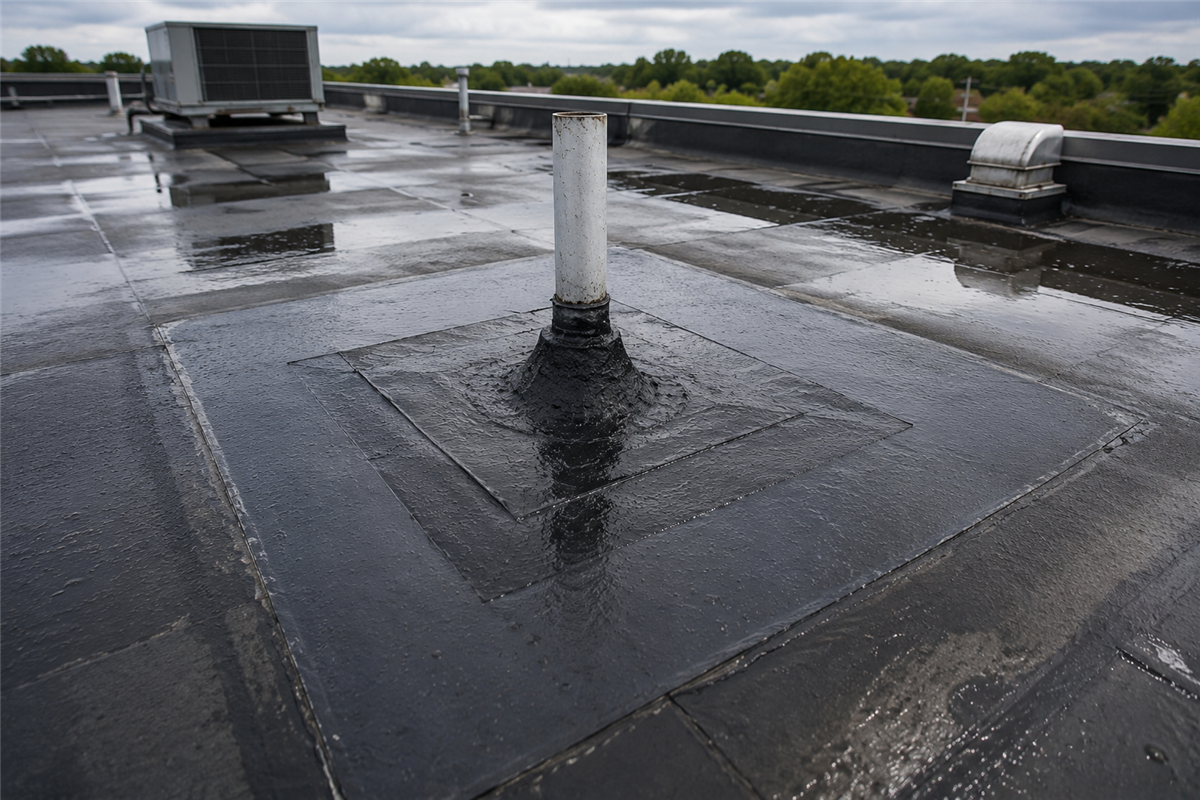
Twice-a-year inspections are the backbone of any serious roof asset management effort. But "inspections" alone don't cut it. What matters is who's doing them and how the findings get recorded. A certified roofing inspector evaluates every critical component of a low-slope system: membrane wear patterns, flashing and penetration integrity, drainage performance, moisture saturation indicators, sheet metal condition, and sealant systems. Any one of those items can quietly deteriorate for months before causing visible damage inside the building.
The real differentiator is condition scoring. A numeric index, often called a Roof Condition Index (RCI), assigns each roof an objective health rating based on what the inspector actually finds in the field. This eliminates the "it looks fine to me" problem and replaces gut feelings with trackable numbers. When a roof drops from an 82 to a 67 over eighteen months, you don't need anyone to convince you it needs attention. The data speaks for itself.
| An inspection without a standardized scoring system is just an opinion. Condition indexing turns that opinion into a decision-making tool. |
Data-Driven Capital Planning and Budgeting
Once you have condition scores and documented deficiencies with actual repair costs attached, budgeting stops being a guessing game. You can forecast annual capital expenditures based on field data, estimate remaining service life for each roof, and calculate your total repair backlog with real dollar figures. That's exactly the kind of information boards, investors, and ownership groups need to approve spending without pushback.
A preventive roof maintenance plan is one of the most effective strategies building owners can use to avoid unplanned capital events and extend the useful life of their roofing systems.
Here's how reactive and data-driven budgeting approaches compare across the factors that matter most:
| Factor | Reactive Budgeting | Data-Driven Budgeting |
| Cost Predictability | Unpredictable; driven by emergencies | Forecasted annually with documented costs |
| Board/Investor Confidence | Low; surprises erode trust | High; decisions backed by field data |
| Repair Prioritization | Whoever calls loudest gets fixed first | Ranked by condition score and risk level |
| Remaining Life Estimates | Based on age assumptions | Based on actual physical condition |
Portfolio-Level Visibility Across Multiple Buildings
If you manage more than one property, individual building reports aren't enough. You need a centralized view that ranks every roof in your portfolio by condition, flags the ones approaching end-of-life, and rolls up total backlog costs into a single dashboard. Without that portfolio-level perspective, you end up making isolated decisions that don't account for competing priorities across your properties.
A centralized database lets you answer questions like: "Which three roofs in my portfolio carry the highest risk right now?" and "What's my total CapEx exposure over the next five years?" Those answers change how you allocate capital, sequence replacements, and negotiate with contractors. They also make it far easier to present a coherent maintenance strategy to stakeholders who want to see the full picture, not building-by-building anecdotes.
Reactive vs. Proactive Roof Asset Management: What the Numbers Show
We've covered what a structured program looks like in practice. Now let's put the two approaches next to each other and look at what the financial gap actually amounts to over the full life of a roof.
Lifecycle Costs and Roof Longevity Compared
Under a reactive model, most commercial flat roofs last around 20 years before they need full replacement. That's the default timeline when your maintenance strategy boils down to "fix it when it leaks." A structured roof asset management program that includes biannual inspections, condition scoring, and targeted repairs can push that same roof to 40 years or longer. You're essentially doubling the useful life of an asset that costs hundreds of thousands of dollars to replace.
The cost savings stack up quickly from there. Reactive repairs typically run 3 to 5 times more per square foot than preventive work, because the damage has usually spread well past the original failure point before anyone catches it. Insulation gets saturated. Decking corrodes. Interior finishes need to be torn out and replaced. A structured program catches those failures at the seam-separation stage, not the ceiling-collapse stage.
Over a full lifecycle, property owners enrolled in a preventive program can expect total roofing costs to drop by 40 to 50%, along with roughly 60% fewer unplanned capital events. Those aren't small numbers. For a portfolio of ten buildings, that difference can free up six or seven figures in capital that would otherwise go toward emergency replacements.
| Doubling a roof's service life doesn't require doubling the investment. It requires catching small problems before they become expensive ones. |
Insurance Positioning and Claims Readiness
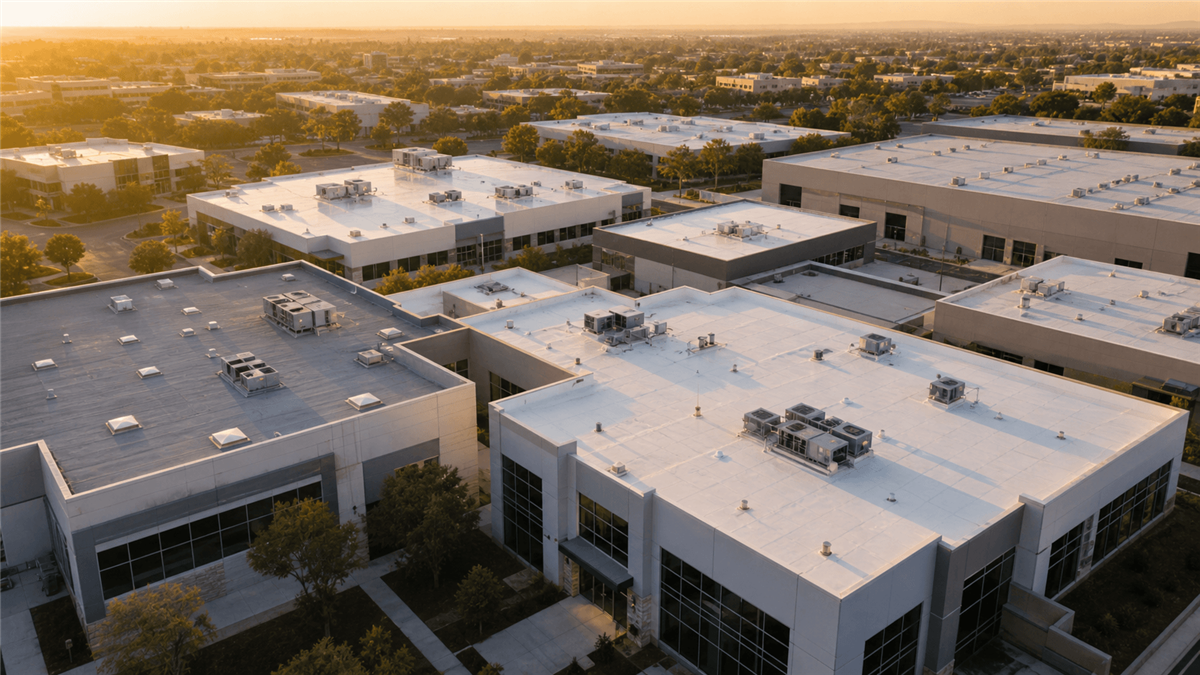
Here's something many property managers overlook: insurance underwriters are getting much better at evaluating roof condition before they set premiums. Aerial imagery, including AI-powered analysis, is increasingly used to assess risk on commercial properties. A roof with no documented maintenance history looks like a liability to an underwriter, and that perception shows up directly in your premium.
Documented roof asset management records flip that equation. When you can show years of inspection reports, condition scores, and completed repairs, you're presenting evidence that the roof is being managed as a depreciating asset with a clear maintenance trajectory. That positions you better at renewal and gives you stronger footing if you ever need to file a storm damage claim. As the National Roofing Contractors Association (NRCA) outlines, routine maintenance and documentation are foundational to protecting both warranty compliance and insurance interests.
Here's a step-by-step process for building a claims-ready documentation trail that strengthens your insurance position:
- Establish a baseline: Have a certified inspector evaluate every roof in your portfolio and assign an initial condition score with photographs and written findings.
- Schedule biannual inspections: Conduct assessments in spring (after freeze-thaw season) and fall (before winter) to create a continuous record of condition changes.
- Document every repair: Log completed work with before-and-after photos, scope descriptions, and dates so there's no ambiguity about what was addressed and when.
- Inspect after major weather events: A post-storm inspection within days of significant wind, hail, or heavy rain creates timestamped evidence of new damage versus pre-existing wear.
- Store everything in a centralized system: Keep inspection reports, RCI scores, repair records, and photos in one accessible location so you can pull the full history within minutes when filing a claim or negotiating a renewal.
Following these steps creates an unbroken chain of evidence that separates storm damage from deferred maintenance in the eyes of an adjuster. That distinction is exactly what determines whether a claim gets paid in full or denied.
Is Your Commercial Roof a Managed Asset or a Future Emergency?
NV Roofing's complimentary inspection gives you a full condition report, capital risk assessment, and remaining service life estimate. A $2,400 value at no cost.
Claim My Free Inspection →
How NV Roofing's VAMP Program Puts This Into Practice
Everything we've covered so far, from inspections and condition scoring to capital planning and portfolio visibility, describes what a roof asset management program should do. NV Roofing's VAMP (Value Asset Management Program) is how it actually gets done for commercial properties across Northern Virginia, Maryland, and Washington, D.C.
The Three Phases of VAMP
VAMP follows a three-phase structure that converts raw inspection findings into capital planning intelligence you can actually use.
Phase 1 is a certified inspection that covers every critical component of a low-slope roofing system: membrane condition, flashing integrity, drainage performance, moisture saturation indicators, sheet metal, and sealant systems. These inspections happen at minimum twice per year (spring and fall), with additional assessments after any significant storm event.
Phase 2 assigns each roof a numeric Roof Condition Index score based on what the inspector actually found, not how old the roof happens to be. Deficiencies get documented with specific repair costs tied to real field data, so nothing is left to guesswork.
Phase 3 feeds all of that into a centralized portfolio database, producing RCI rankings by building, annual CapEx forecasts, repair backlog estimates, remaining service life projections, and historical condition trends.
That third phase is where the program earns its keep during board meetings and budget conversations. Instead of defending a roofing expense with "trust me, it needs it," you're presenting objective condition data that stakeholders can verify independently.
Who VAMP Is Built For
VAMP was designed for the people who carry the financial and operational weight of keeping commercial buildings functional: property managers, facility directors, building engineers, asset managers, and ownership groups overseeing office buildings, retail centers, warehouses, multi-family complexes, hospitals, and mixed-use properties. NV Roofing has served the DMV region since 1963, holds a 4.7-star Google rating across 200+ verified reviews, and has earned 60+ national awards for workmanship and service. Their inspectors are certified across all major low-slope systems including TPO, EPDM, modified bitumen, built-up roofing, and coatings.
The table below shows how VAMP outcomes stack up against a reactive management approach across the metrics that matter most to property and facility teams:
| Metric | Reactive Approach | VAMP Program |
| Average Roof Lifespan | ~20 years | 40+ years |
| Total Lifecycle Cost Reduction | Baseline | 40–50% lower |
| Unplanned Capital Events | Frequent and budget-disrupting | 60% fewer |
| Insurance Claims Readiness | No pre-existing documentation | Full condition history on file |
| Portfolio Visibility | Building-by-building guesswork | Centralized RCI rankings and CapEx forecasts |
| A roof is not a maintenance expense. It's a capital asset. VAMP treats it that way from day one. |
NV Roofing is currently offering a complimentary commercial roof inspection (valued at $2,400) for qualifying properties up to 100,000 square feet in the DC Metro area. The assessment includes a full written condition report with a capital risk evaluation and remaining service life estimate, with no obligation attached. If you manage a commercial property and want to see where your roof actually stands, contact us to schedule your free inspection.
Getting Started With a Roof Asset Management Strategy
The difference between a roof that lasts 20 years and one that lasts 40 comes down to a single decision: whether you manage it by calendar or by condition. Every concept in this guide, certified inspections, condition indexing, centralized portfolio data, capital forecasting, exists to replace expensive surprises with planned, defensible spending. That shift doesn't require a massive upfront investment. It requires a baseline assessment, a consistent inspection schedule, and a system that turns field findings into numbers your stakeholders can act on.
If you're still operating without documented condition data on your commercial roofs, the most practical first step is straightforward: get an honest assessment of where things stand right now. One inspection won't fix years of deferred maintenance, but it will tell you exactly what you're working with, and that's where every sound roof asset management strategy begins.
FAQs
How often should commercial roofs be professionally inspected?
Commercial roofs should be inspected at least twice per year, typically in spring and fall, along with additional assessments after significant weather events like hailstorms or high winds.
What is a Roof Condition Index and how is it used in roof asset management?
A Roof Condition Index is a numeric score assigned during a professional inspection that objectively rates a roof's health based on physical findings. It allows property managers to track deterioration over time and prioritize repairs based on data rather than assumptions.
Can a preventive maintenance program really double the lifespan of a commercial roof?
Yes, a structured roof asset management program that includes regular inspections and timely targeted repairs can extend a commercial roof's service life from roughly 20 years to 40 or more by addressing small deficiencies before they escalate into system-wide failures.
How does roof maintenance history affect commercial property insurance premiums?
Insurers increasingly use roof condition data when setting premiums, and properties with documented inspection and repair histories are viewed as lower risk. Maintaining thorough records also strengthens your position when filing weather-related claims by clearly distinguishing new damage from pre-existing wear.
What should property managers look for when choosing a commercial roofing inspection provider?
Look for inspectors who hold certifications across the specific low-slope systems on your buildings, use standardized condition scoring rather than subjective assessments, and deliver reports with itemized repair costs tied to actual field observations.
Subscribe to NV Roofing's Blog