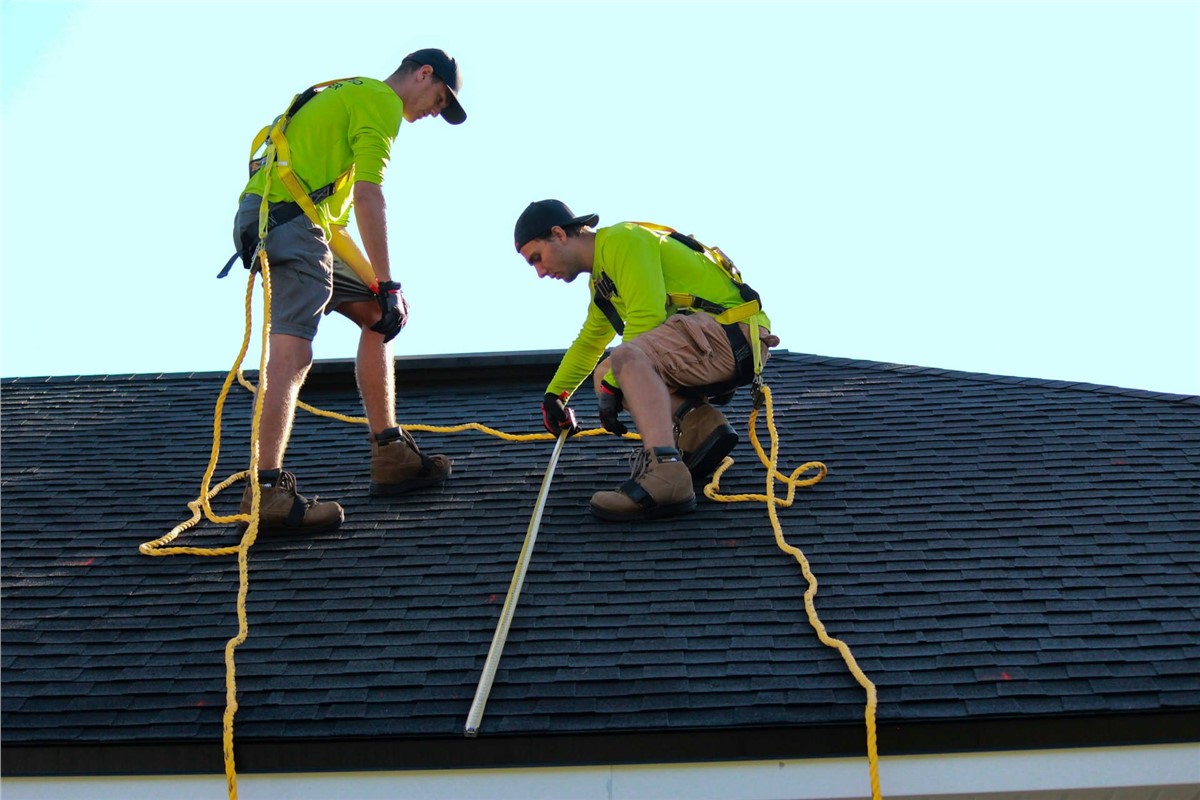
| TL;DR: Choosing a roofing style comes down to five key factors: your local climate, your home's architectural style, total budget including long-term maintenance, HOA and building code restrictions, and which materials are compatible with your preferred roof shape. Understanding how to choose a roofing style that balances these considerations will help you land on a roof that looks right, performs well in your region's weather, and holds its value for decades. |
Your roof does more than block rain. It defines your home's curb appeal, affects energy costs, and plays a real role in resale value. Most homeowners spend weeks debating paint swatches and about five minutes thinking about roof shape. That's a mistake.
Learning how to choose a roofing style is one of the highest-impact decisions in any roofing project - yet it's often rushed or ignored entirely.
You don't need an architecture degree to get this right. Whether you're building from scratch, replacing a worn-out roof, or dealing with storm damage in the DMV area, this guide covers what actually moves the needle: climate fit, material compatibility, budget trade-offs, and local code requirements. No fluff, just the specifics you need to pick a roofing style that works for your home, your neighborhood, and your wallet long-term.
Why Your Roof Style Matters More Than You Think
Most homeowners treat roof shape as an afterthought - something the builder decides or whatever the previous roof happened to look like. But the style of your roof quietly affects everything from your monthly energy bills to what a buyer feels when they first pull into the driveway.
Curb Appeal, Resale Value, and First Impressions
Here's something worth sitting with: your roof makes up roughly 40% of your home's visible exterior. That's a huge portion of what people notice first. A mismatched or outdated roof style can drag down the appearance of an otherwise well-kept property - and potential buyers pick up on it immediately. Real estate agents across Northern Virginia and the D.C. metro area consistently say that homes with a cohesive exterior design, roof included, attract stronger interest and faster offers.
And it goes beyond looks. The right roof shape reinforces your home's architectural character. A steep gable feels natural on a Colonial. A hip roof pairs well with a ranch-style layout. When the roofline clashes with the overall design, the whole property feels "off," even if nobody can quite explain why. That gut reaction carries real weight when it's time to sell.
| Your roof is roughly 40% of your home's visible exterior - choosing the wrong style can undermine every other improvement you've made. |
How Roof Shape Affects Ventilation and Energy Efficiency
Roof geometry plays a direct role in how air circulates through your attic and how much solar energy your home absorbs. Steeper pitches create more attic volume, which allows for better natural airflow and less trapped heat during summer months. Flatter or low-slope designs, on the other hand, can concentrate heat quickly if ventilation isn't carefully planned.
According to the U.S. Department of Energy, conventional roofs can hit temperatures of 150°F or higher on a sunny afternoon, while a reflective roof could stay more than 50°F cooler under the same conditions. Your roof's shape determines which materials and reflective coatings actually work well on it, so how to choose a roofing style isn't just a visual question - it's an energy question, too.
For homeowners in the DMV region, where summers run hot and humid and winters bring real cold, selecting a roof shape that supports the right balance of ventilation and insulation can lower heating and cooling costs year after year. That's real money back in your pocket, month after month.
Popular Roofing Styles Compared
Before you can figure out how to choose a roofing style, you need to know what's actually available. Every roof shape comes with its own set of trade-offs - cost, durability, curb appeal, and how well it stands up to weather. Here's a no-nonsense breakdown of the most common options you'll find on homes across the DMV region and beyond.
Gable Roofs
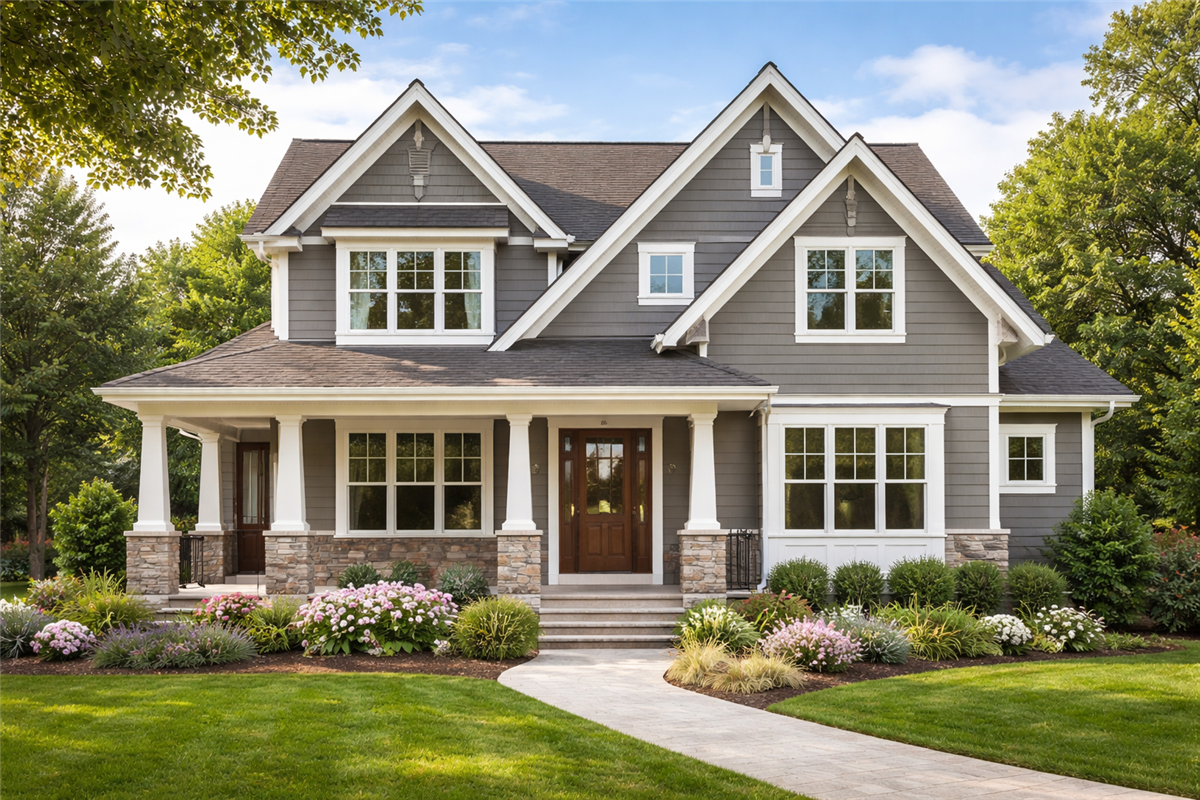
The gable roof is what most people picture when they think of a house. Two sloping sides meet at a central ridge, creating that familiar triangular shape on each end. It's the most popular residential roof design in North America, and that popularity is well-earned: gable roofs are straightforward to build, budget-friendly, and do a great job shedding rain and snow. Standard gable roofs typically run between $6-$12 per square foot installed and can last anywhere from 20 to 50+ years depending on the materials.
You'll also run into several variations worth understanding. A cross gable uses two or more gable sections that intersect at right angles - a common choice for L-shaped or T-shaped floor plans. A Dutch gable sits a small gable section on top of a hip roof base, pulling the best qualities from both designs. Front gables face the street and create a strong sense of entry, while side gables run parallel to the front of the home for a more understated, traditional appearance. The one thing to watch out for? Gable roofs can struggle in high-wind areas if the framing isn't properly braced.
Hip Roofs
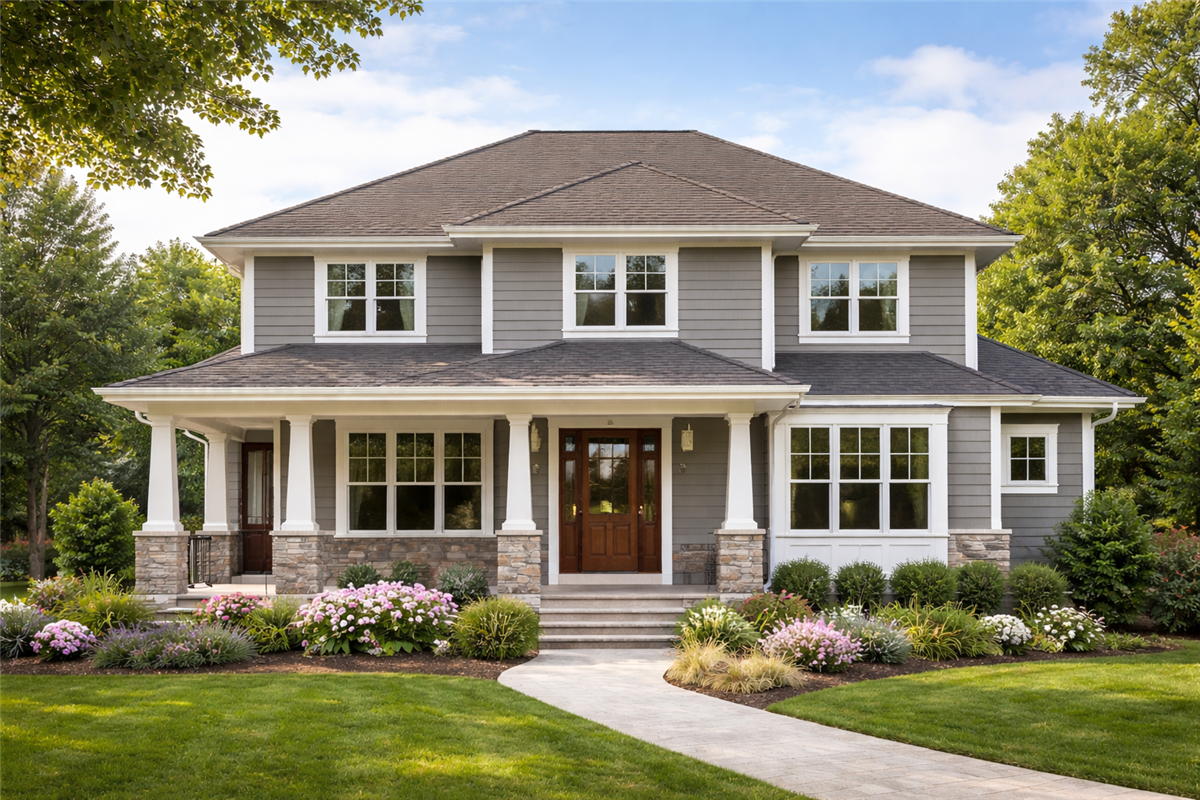
A hip roof slopes on all four sides, with each plane meeting at the top along a ridge. Because there are no flat, vertical gable ends catching the wind, hip roofs hold up much better during storms than gable designs. That makes them a strong choice for areas prone to heavy winds or hurricanes. They also tend to look well-proportioned on ranch-style and single-story homes.
The trade-off comes down to cost and complexity. Hip roofs need more framing material and more labor to construct, which drives the price higher compared to a standard gable. They also create less attic space, which can limit storage or make ventilation trickier without some extra planning up front.
Mansard and Gambrel Roofs
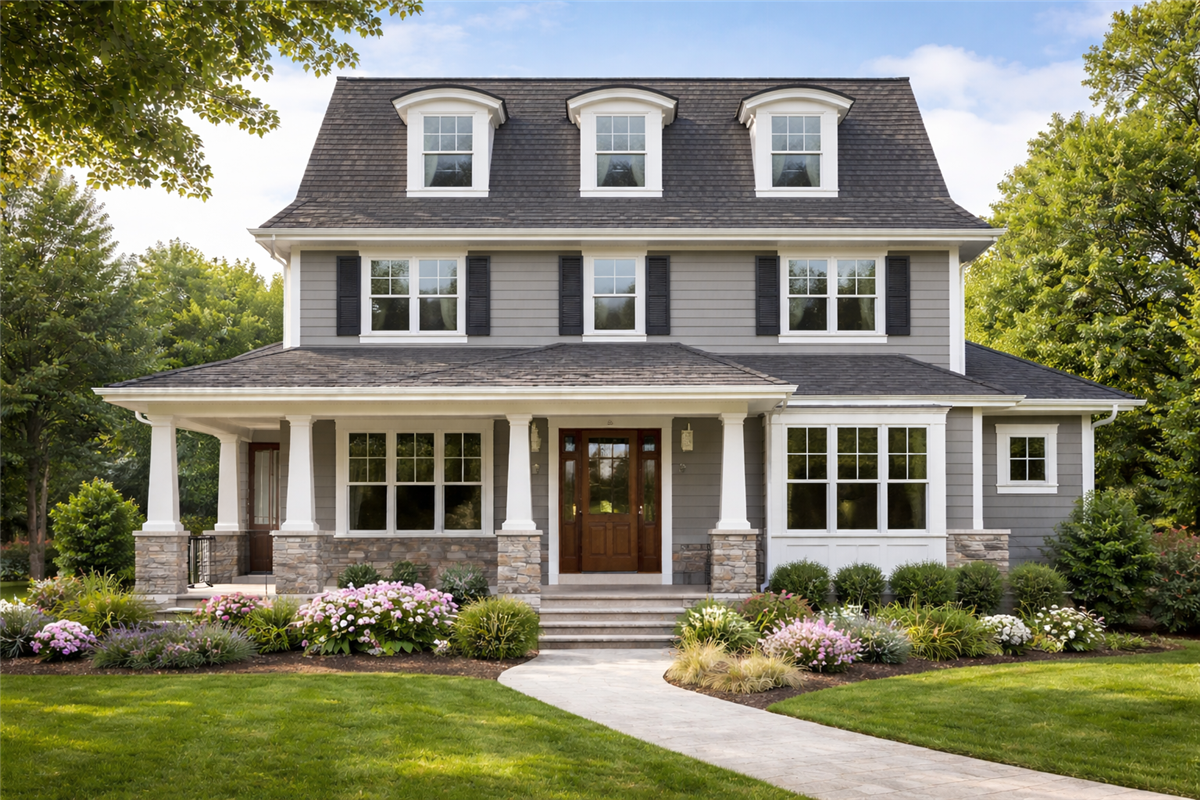
These two styles get lumped together a lot because they both rely on a dual-slope design to squeeze the most usable space under the roofline. A mansard roof has four sides, each featuring a steep lower slope paired with a flatter upper section - picture classic French architecture or historic townhomes. A gambrel roof uses the same concept but only on two sides, giving you that iconic barn silhouette.
Both styles are excellent if you're looking to turn attic space into a livable room or an extra bedroom. That said, the flatter upper sections tend to collect snow and water, meaning you'll need to stay on top of maintenance and make sure the waterproofing is airtight. It's also worth noting that HOA restrictions in some Northern Virginia and Maryland neighborhoods may not allow these designs, so check your local guidelines before committing.
| The best roof style isn't the trendiest one - it's the one that matches your home's structure, your local climate, and how much maintenance you're willing to handle long-term. |
Flat and Shed Roofs
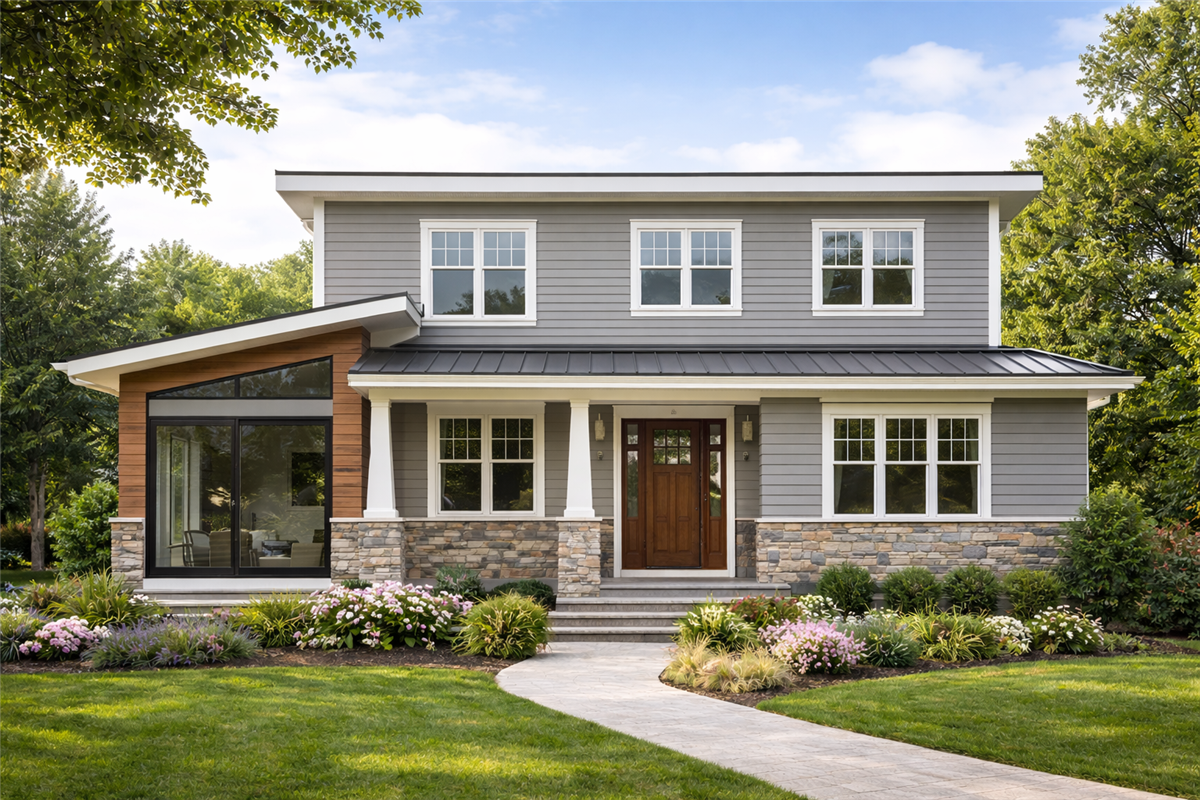
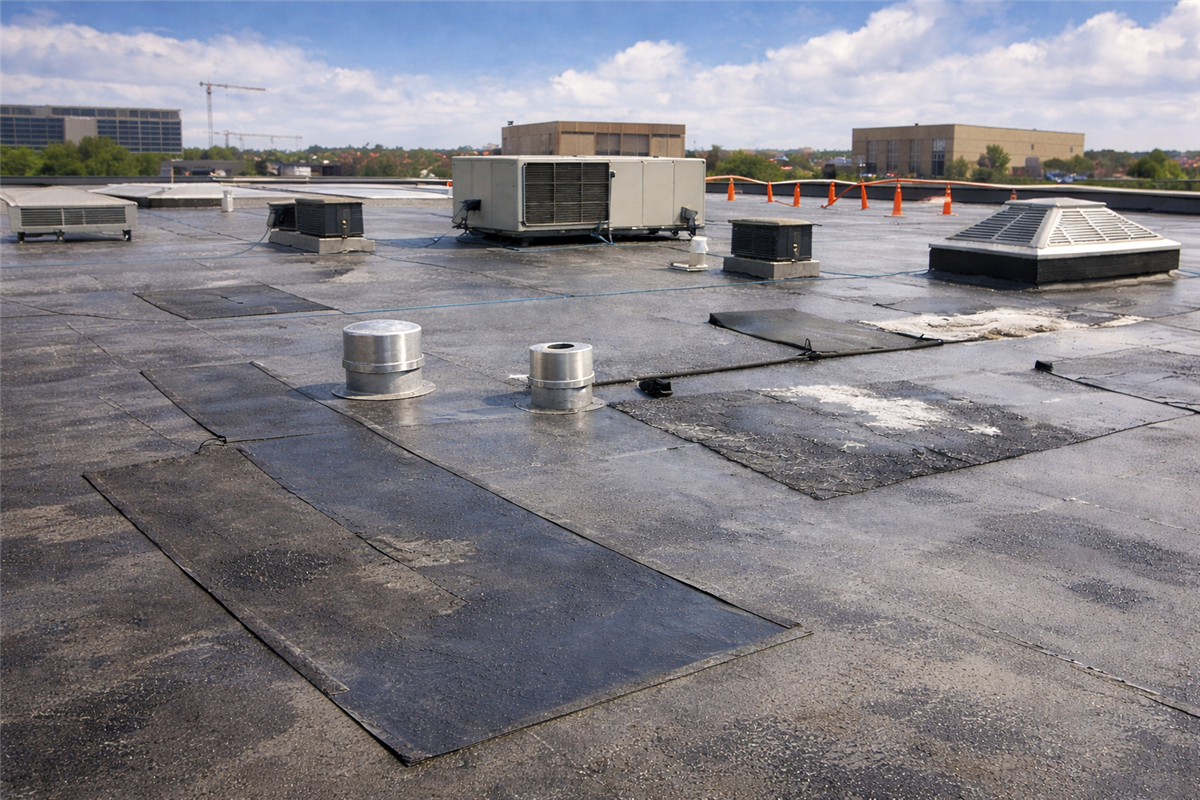
Flat roofs aren't actually flat - they carry a slight pitch for drainage - but they sit much lower than traditional peaked designs. Shed roofs use a single sloping plane and show up frequently on additions, porches, or homes aiming for a clean, angular look. Both options are well-suited for rooftop installations like solar panels or HVAC equipment.
The biggest concern with flat and low-slope roofs is water pooling. Without proper drainage, standing water leads to leaks and membrane damage over time. Material choice matters a lot here - TPO, EPDM, and PVC membranes are the standard options for flat applications, and each one comes with different lifespans and price points.
Roofing Styles at a Glance
Here's a side-by-side comparison to help you weigh the key differences between each roof style quickly:
| Roof Style | Best For | Wind Resistance | Relative Cost | Attic Space |
| Gable | Colonial, Cape Cod, traditional homes | Moderate (needs bracing) | Low to moderate | Good |
| Hip | Ranch, single-story, storm-prone areas | High | Moderate to high | Limited |
| Mansard | Townhomes, maximizing livable space | Low to moderate | High | Excellent |
| Gambrel | Farmhouse, Dutch Colonial styles | Low | Moderate | Excellent |
| Flat / Shed | Additions, contemporary designs, rooftop use | Varies by material | Low to moderate | Minimal |
How to Choose a Roofing Style: 5 Factors That Should Drive Your Decision
Understanding the different roof shapes is only half the battle. Picking the one that actually works for your home - your specific home, in your specific location - is where the real decision-making happens. These five factors will help you cut through the noise and land on a roof style you won't regret.
Climate and Weather Patterns in Your Region
If you're in the DMV area, your roof needs to stand up to humid summers, ice storms, heavy downpours, and the occasional nor'easter. A steep-pitched gable does a great job shedding snow and water, but it can act like a sail in strong wind gusts if the framing isn't properly reinforced. A hip roof, with slopes on all four sides, distributes wind loads much more evenly. When you're weighing your options, think about what your roof will face most often over the next 20-30 years - not just what caught your eye on a Pinterest board.
Architectural Style of Your Home
A mansard roof on a mid-century ranch looks about as fitting as a barn door on a brownstone. Your roof shape should work with the bones of your home, not fight against them. Colonials pair naturally with side gables. Craftsman bungalows tend to look best with cross gables or low-pitched hip designs. If you're second-guessing yourself, take a walk around your neighborhood and look at homes that share your architectural DNA - that visual context is surprisingly grounding.
Budget and Long-Term Maintenance Costs
The price tag at installation and the total cost over a roof's lifetime are two very different numbers. A simple gable roof is the least expensive to frame and put up, but if your area batters it with wind damage every few years, those repair bills start adding up fast. A hip roof costs more upfront yet tends to need fewer emergency fixes down the road. When figuring out how to choose a roofing style, always account for maintenance - not just the installation quote sitting on your kitchen counter.
| A roof that costs less to build but more to maintain isn't a bargain - it's a slow leak in your budget. |
Local Building Codes and HOA Requirements
Before you get attached to a gambrel or a flat roof addition, find out what's actually allowed. Plenty of HOAs across Northern Virginia and Maryland place restrictions on roof shapes, materials, and even pitch angles. County building codes may also require minimum wind-resistance ratings or specific fire-class designations. As Legacy Home Remodeling points out, researching local regulations early prevents costly delays, fines, and forced redesigns once work is already underway.
Roofing Material Compatibility
Not every material plays well with every roof shape. Asphalt shingles perform best on slopes of 4:12 or steeper, but they aren't suitable for flat or very low-slope applications. Metal panels handle a wide range of pitches without issue. Membrane systems like TPO or EPDM are built specifically for flat and near-flat surfaces. Your chosen roof style will effectively narrow the material options on the table, and that directly affects durability, warranty coverage, and overall cost.
Here's a practical sequence for putting all five factors together when you're deciding on a roof style:
- Audit your local climate risks: list the two or three weather threats your home faces most (wind, snow load, heavy rain, heat) and eliminate roof shapes that perform poorly against them.
- Identify your home's architectural family: confirm whether your property is Colonial, ranch, Cape Cod, contemporary, or another style, then shortlist roof shapes that historically pair well with it.
- Set a realistic total budget: include installation, projected maintenance over 25 years, and potential insurance premium differences between roof types.
- Review HOA covenants and county building codes: request written guidelines so you know exactly which designs and materials are permitted before signing any contract.
- Match materials to your chosen shape: confirm that the roofing products you prefer are rated for the pitch and exposure your selected style requires.
Working through these steps in order keeps you from making the most common (and expensive) mistake homeowners make: falling for a roof that looks great but doesn't hold up where they actually live.
How NV Roofing Helps Homeowners Find the Right Fit
Knowing how to choose a roofing style is one thing. Actually pulling it off - matching the right shape to your home's structure, your local weather patterns, and a material that will hold up for decades - is where hands-on experience makes all the difference. That's where working with a contractor who's done this thousands of times really pays off.
From Residential Roofing Services Built on 60+ Years of Experience Tarping to Full Repair
NV Roofing is a family-owned company that has been serving homeowners across Northern Virginia, Maryland, and Washington, D.C. since 1963. Over six decades of work in the DMV region means the team has installed and replaced roofs on just about every architectural style you'll find here - Colonials, Cape Cods, ranches, split-levels, and everything in between. That kind of track record matters because the "right" roof style depends heavily on the specific home, and there's no substitute for having seen what works (and what doesn't) across thousands of projects.
Residential services cover the full scope of what your home's exterior needs. Roofing includes repairs, full replacements, and new installations using high-quality shingles, metal, and specialty systems - all handled by factory-certified crews and backed by strong warranties. Beyond the roof itself, NV Roofing also takes care of seamless gutters and gutter guards, premium siding, energy-efficient replacement windows, and storm damage restoration with insurance claim support.
| The best roofing decisions happen when your contractor understands both the structure of your home and the weather patterns it faces year after year. |
From Inspection to Installation: What to Expect
One of the biggest frustrations homeowners run into with roofing projects is not knowing what comes next. NV Roofing handles every detail from the initial inspection through final installation, with clear communication at each stage so there are no surprises. The process starts with a thorough roof assessment where the team evaluates your current structure, discusses which roof styles and materials suit your home's architecture and climate exposure, and walks you through realistic budget expectations - including long-term maintenance costs, not just the upfront number.
Here's a breakdown of the residential services NV Roofing offers and how each one ties back to making the right roof style decision for your home:
NV Roofing Residential Services Overview
| Service | What's Included | Why It Matters for Your Roof Style Decision |
| Roofing | Repairs, replacements, new installations (shingles, metal, specialty systems) | Material and style are matched to your home's pitch, architecture, and local code requirements |
| Gutters | Seamless gutters and gutter guards | Drainage design is coordinated with roof shape to prevent water damage |
| Siding | James Hardie fiber cement, vinyl, and wood alternatives | Ensures a cohesive exterior that complements your chosen roofline |
| Windows | Energy-efficient replacement windows | Supports the energy efficiency gains from proper roof ventilation and shape |
| Storm Damage | Emergency tarping, inspections, insurance claim support | Fast response protects your home while you evaluate repair vs. full replacement options |
If you're weighing your options and want guidance specific to your home, contact us for a free estimate and a straightforward conversation about what makes sense for your property.
FAQs
Which roof type is best for areas with high winds?
Hip roofs tend to perform best in windy regions because their four sloping sides distribute wind loads evenly, reducing the chance of uplift compared to gable designs that expose flat vertical ends to gusts.
What roof style gives the most usable attic space?
Mansard and gambrel roofs offer the most attic space thanks to their steep lower slopes, which create nearly vertical walls that can be finished into full living areas or extra bedrooms.
Are flat roofs a good choice in rainy climates?
Flat roofs can work in rainy areas, but only with a high-quality membrane system and well-designed drainage. Without consistent maintenance, water pooling becomes a serious risk that leads to leaks and structural damage over time.
What is the most cost-effective roof shape for a residential home?
A standard gable roof is typically the least expensive to build because it requires less framing material and labor than more complex designs. When figuring out how to choose a roofing style on a budget, factor in long-term repair costs too, since a cheaper build does not always mean lower total spending.
How does roof shape affect energy efficiency?
Steeper roof pitches create more attic volume, which improves natural airflow and helps reduce heat buildup in warmer months. Understanding how to choose a roofing style that supports proper ventilation and insulation can meaningfully lower your heating and cooling bills year-round.
Subscribe to NV Roofing's Blog